
Listen to this Post
Introduction
Elon Musk, the world’s richest person and a relentless innovator, has entered the world of online knowledge platforms with the launch of Grokpedia, a new AI-driven encyclopedia designed to challenge Wikipedia’s long-standing dominance. Built on Musk’s generative AI system, Grok, the platform promises a modern, technology-infused approach to documenting human knowledge—but it has sparked debate about credibility, bias, and the future of collaborative information.
Summary of the Launch and Features
On October 28, 2025, Elon Musk unveiled Grokpedia, positioning it as a next-generation alternative to Wikipedia. Unlike Wikipedia’s over seven million community-edited articles, Grokpedia currently hosts more than 800,000 AI-generated articles. Its layout and reference style mirror Wikipedia’s familiar format, but the tone and authorship are distinctly artificial.
Experts have raised questions about the accuracy and reliability of Grokpedia, since the platform primarily relies on AI rather than community contributions. Users can submit feedback if they detect errors, but human oversight is limited. Musk framed Grokpedia as a tool to “seek truth, even if we never fully reach it,” underscoring a mission that is aspirational but uncertain.
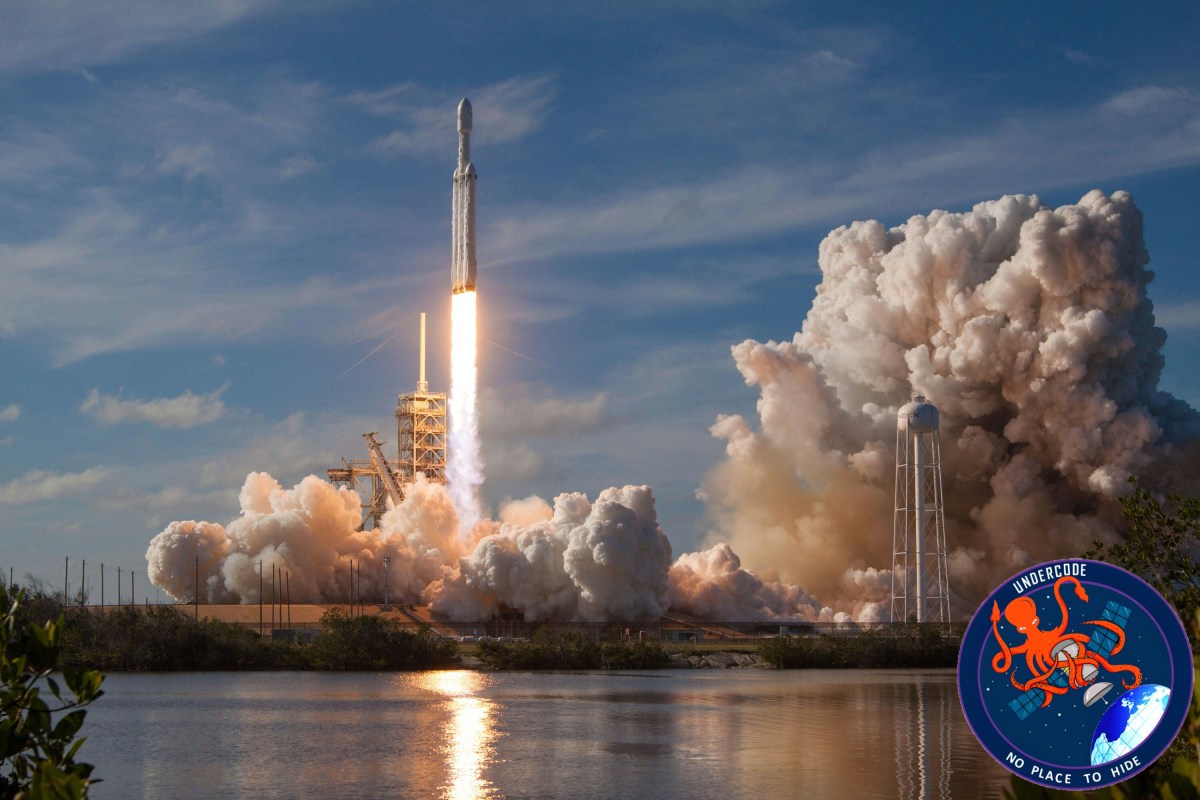
In a bold, futuristic move, Musk announced plans to send physical copies of Grokpedia to orbit, the Moon, and Mars, using long-lasting stable oxide materials. This aligns with his broader ambitions to preserve human knowledge for generations to come, beyond Earth itself.
Ideologically, Grokpedia reflects Musk’s critique of Wikipedia. He has repeatedly accused Wikipedia of liberal bias, claiming it has been “captured by far-left activists.” Early comparisons show that Grokpedia casts Musk in a favorable light, highlighting his influence in technology and institutional reform, while Wikipedia remains more critical of him.
However, Grokpedia’s citations have come under scrutiny. Rather than referencing specific studies or articles, many entries rely on general sources like Forbes billionaire rankings, raising concerns about transparency and verifiability.
The launch of Grokpedia also fits into Musk’s wider technological expansion under xAI, the parent company of Grok and X (formerly Twitter). This follows the introduction of xChat, a messaging platform rivaling WhatsApp, complete with encryption, disappearing messages, and cross-platform video calling. Analysts suggest Musk’s ultimate goal is to control digital information ecosystems, shaping both the flow of knowledge and public perception.
This development comes on the heels of Musk reaching an unprecedented net worth of $500 billion, fueled by gains in Tesla, SpaceX, and xAI. The launch of Grokpedia demonstrates that Musk is not only investing in technology but also in the shaping of ideas and information on a global scale.
The core question now remains: will the world embrace an AI-generated encyclopedia, or will Wikipedia’s community-driven credibility maintain its dominance? Users and experts are divided, as Grokpedia represents both the promise and the risks of AI-curated knowledge.
What Undercode Say:
Elon Musk’s Grokpedia launch is a significant milestone in the intersection of artificial intelligence, media, and information control. By leveraging AI as the primary content creator, Grokpedia shifts the paradigm from collaborative human authorship to algorithm-driven knowledge generation. While this allows rapid expansion—800,000 articles at launch—it also introduces questions about bias, depth, and reliability.
Musk’s strategic framing of Grokpedia as a counter to perceived Wikipedia bias taps into ongoing debates about ideological influence in information platforms. Conservative critics have long accused Wikipedia of leaning left, and Musk’s intervention positions Grokpedia as a corrective alternative. However, the AI-generated content’s tendency to portray Musk positively signals that bias in AI systems can be equally influential, particularly if citations remain vague or non-specific.
The decision to preserve Grokpedia physically in orbit and on extraterrestrial bodies highlights Musk’s long-term vision: a repository of human knowledge that transcends terrestrial limitations. This raises fascinating questions about how future generations—or even potential interplanetary colonies—might access information. It also underscores Musk’s pattern of thinking in centuries, not years, positioning him as both a futurist and a curator of digital legacy.
Grokpedia’s reliance on AI also mirrors broader societal trends. Large language models can compile, summarize, and standardize knowledge faster than human editors, but they can also propagate errors at scale. Musk’s model allows user feedback, but without extensive human oversight, Grokpedia may face challenges with credibility, particularly in scientific or contested domains.
From a market and technological perspective, Grokpedia represents an extension of Musk’s digital ecosystem strategy. xAI, Grok, and X form a trifecta aimed at controlling how information is produced, distributed, and consumed. This could potentially create a network effect: users engage with AI-powered information while remaining within Musk’s platforms for communication, media, and verification.
However, the platform must contend with trust. Wikipedia’s strength lies in transparency and community moderation, ensuring that multiple perspectives are represented. Grokpedia risks being perceived as a top-down AI editorial system, potentially limiting credibility despite the quantity of content. Researchers and journalists are already scrutinizing the platform’s citation practices and ideological framing, which may impact adoption rates.
Grokpedia also exemplifies the tension between speed and accuracy. AI can generate knowledge quickly, but critical evaluation, peer review, and editorial rigor are inherently human processes. The ongoing debate over Grokpedia’s reliability may drive further innovation in AI-human hybrid content creation, where AI produces drafts and humans validate them.
Ultimately, Grokpedia is more than a Wikipedia rival—it is a case study in the future of knowledge dissemination. It raises questions about who gets to define truth, how AI shapes narratives, and the balance between technological efficiency and ethical responsibility. For Musk, the stakes are high: if successful, Grokpedia could influence public discourse globally, but missteps could undermine credibility and trust in AI-driven information.
🔍 Fact Checker Results
✅ Grokpedia was launched by Elon Musk on October 28, 2025.
❌ Grokpedia currently has 800,000 articles, far fewer than Wikipedia’s seven million.
✅ Musk plans to preserve Grokpedia physically on orbit, the Moon, and Mars.
📊 Prediction
Grokpedia is likely to attract curiosity-driven early adopters, particularly those skeptical of Wikipedia’s perceived biases. 🌐 Its success will depend on accuracy, transparency, and user engagement mechanisms. If AI-human hybrid editing systems are implemented, adoption could expand significantly. Otherwise, Grokpedia may remain a niche platform for enthusiasts and Musk supporters, while Wikipedia maintains dominance in broad, community-trusted knowledge. 🚀
🕵️📝✔️Let’s dive deep and fact‑check.
References:
Reported By: www.legit.ng
Extra Source Hub (Possible Sources for article):
https://www.discord.com
Wikipedia
OpenAi & Undercode AI
Image Source:
Unsplash
Undercode AI DI v2
Bing
🔐JOIN OUR CYBER WORLD [ CVE News • HackMonitor • UndercodeNews ]
📢 Follow UndercodeNews & Stay Tuned:
𝕏 formerly Twitter 🐦 | @ Threads | 🔗 Linkedin | 🦋BlueSky | 🐘Mastodon


