
Listen to this Post
Introduction
Elon Musk is never far from the spotlight, and in recent weeks, his companies have been making waves across aerospace, artificial intelligence, and the automotive world. From SpaceX preparing for Starship’s most daring test flight yet, to the surprise announcement of his new AI venture “Macrohard,” and Tesla’s controversial decision not to bring the Model Y L to the U.S., Musk continues to fuel debates, excitement, and uncertainty. This article dives deep into these developments, analyzing their implications for technology, competition, and Musk’s long-term vision.
Starship Flight 10: What to Expect
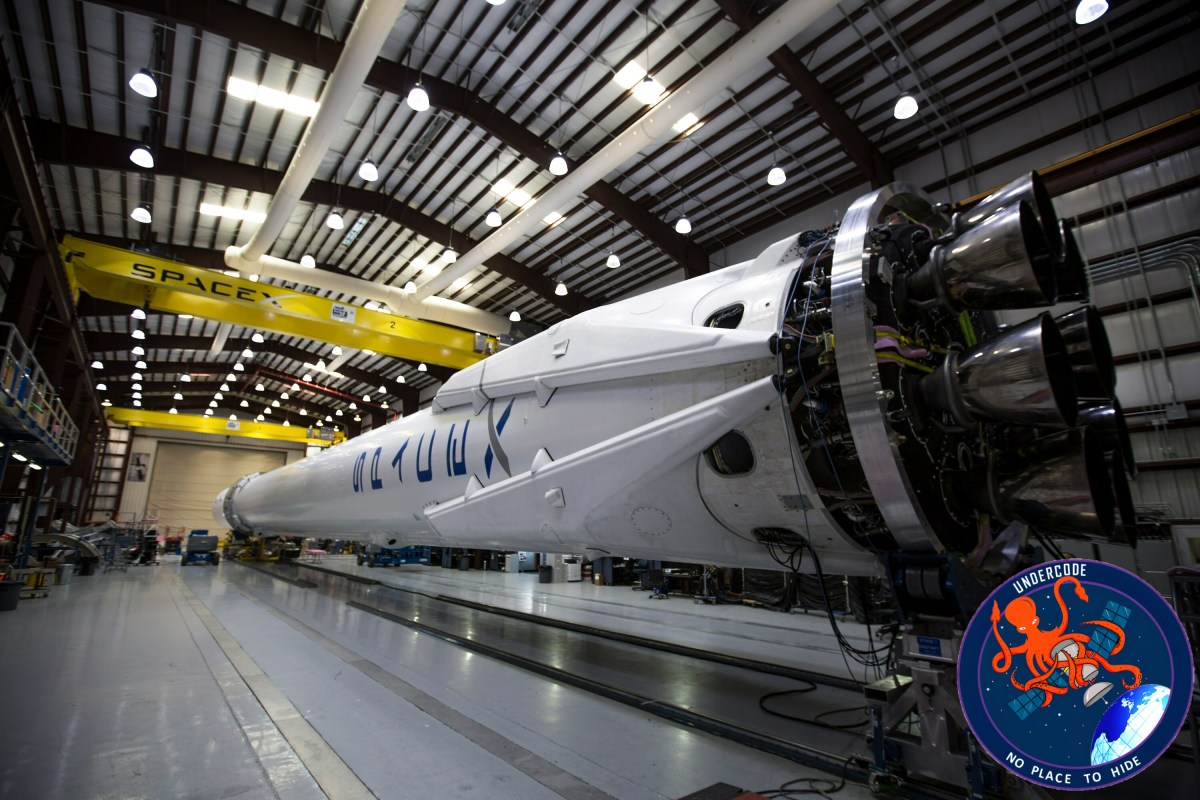
SpaceX is gearing up for the tenth test flight of its Starship rocket, scheduled as early as August 24, with a launch window opening at 6:30 p.m. CT. After the loss of Starship during its ninth test and a static fire issue with Ship 36, the company has made significant hardware and operational changes to enhance reliability.
The mission aims to expand the Super Heavy booster’s flight envelope through multiple landing burn trials. For the first time, engineers will intentionally disable one of the three center engines typically used for landing. This bold test will reveal whether backup engines can handle the maneuver under real-world conditions. The booster will also shift to a two-engine configuration during its final phase, briefly hovering before splashdown in the Gulf of America. These trials are designed to simulate abnormal scenarios, providing engineers with vital data while maximizing propellant for heavier payloads.
The upper stage will undergo equally ambitious experiments. SpaceX will deploy eight Starlink simulators, attempt a Raptor engine relight, and push reentry systems to their limits. In a daring move, a section of heat-resistant tiles has been removed to study exposed areas, while new metallic tiles, including one with active cooling, will be tested. Engineers also installed catch fittings to analyze structural resilience. The reentry phase will challenge the rear flaps under maximum pressure, generating insights for the next generation of Starship vehicles.
These efforts align with SpaceX’s broader mission: to achieve a fully reusable orbital launch system. With Starfactory scaling up in Texas and new infrastructure emerging in Florida, the company is sprinting toward revolutionizing space travel.
Elon Musk’s AI Disruption: The Rise of Macrohard
In a move that startled the tech world, Musk unveiled “Macrohard,” a new AI-driven software venture linked to his xAI startup. Musk described Macrohard as a “pure AI software company,” aiming to develop hundreds of coding and generative AI agents capable of replicating software products traditionally dominated by Microsoft. The name itself, a jab at Microsoft, underscores Musk’s bold strategy to challenge the tech giant.
The project is closely tied to xAI’s Colossus 2 supercomputer in Memphis, one of the most powerful clusters worldwide, with expansion plans involving millions of Nvidia GPUs. Musk has emphasized speed as xAI’s biggest advantage, comparing it to the SR-71 Blackbird: survival through acceleration. Macrohard could redefine AI competition, intensifying the race with rivals like OpenAI and Meta.
Tesla’s Model Y L Controversy
Tesla’s newly revealed Model Y L, produced in Giga Shanghai, boasts significant upgrades: a longer wheelbase, more comfortable seating, a third-row option, and improved rear passenger ventilation. Yet Musk confirmed that this version may never reach the U.S. market. He cited the rapid development of self-driving technology as a reason, though many analysts believe he’s avoiding cannibalizing current Model Y sales.
For American families craving a spacious, affordable Tesla option between the Model Y and Model X, this decision feels like a missed opportunity. The Model X, starting at \$79,990, remains out of reach for many, while the Model Y has been criticized for its cramped third row. Industry experts argue that the Model Y L would fit perfectly into the U.S. family car segment, and some suspect Musk’s comments were more about protecting short-term sales than long-term strategy.
What Undercode Say:
Elon Musk’s multi-industry presence reveals a pattern: high-risk bets backed by relentless experimentation. Let’s break down the signals.
SpaceX: Testing Limits for Future Payoffs
Starship Flight 10 represents more than just another test; it’s about validating reusability under extreme conditions. The decision to intentionally remove thermal tiles or disable an engine may appear reckless, but these maneuvers are carefully calculated to expose weaknesses early. If successful, these experiments bring Musk closer to reducing launch costs and enabling Mars colonization. Even if they fail, the data gathered accelerates engineering breakthroughs.
Macrohard: Disrupting AI Giants
With Macrohard, Musk is entering a crowded, highly competitive market, but his approach is unique. Instead of creating one monolithic AI, he’s betting on swarms of specialized agents that can collaborate like digital teams. If this works, Macrohard could emulate or even outperform Microsoft’s software ecosystem using pure AI-driven tools. Critics dismiss it as a vanity project, but Musk’s proven ability to rally talent and resources means Macrohard shouldn’t be underestimated.
Tesla’s Model Y L: Strategy or Stalling?
Tesla’s decision not to introduce the Model Y L in the U.S. may frustrate families but aligns with Musk’s obsession with autonomy. By pushing self-driving, Musk signals that hardware expansion is less important than AI breakthroughs. However, consumer preferences suggest otherwise. Americans still want larger, practical family vehicles, and delaying the Model Y L could hand competitors an edge in the EV SUV market.
Musk’s Leadership Style
Across all these ventures, Musk balances chaos and vision. His constant presence on X, often criticized as a distraction, is actually part of his strategy: keeping the public engaged, shaping narratives, and signaling direction to investors and engineers alike. While his critics see distraction, his supporters recognize focus hidden in the noise.
✅ Fact Checker Results
Musk did announce Macrohard through xAI, and U.S. trademark filings confirm the name.
Starship Flight 10 is scheduled with hardware and operational updates verified by SpaceX statements.
Tesla’s Model Y L has entered production in Shanghai, but Musk himself confirmed uncertainty about a U.S. release.
🔮 Prediction
Expect Starship Flight 10 to deliver partial success—some objectives will be achieved, while others will fail, generating valuable data. Macrohard will initially attract skepticism but may secure early adopters by late 2026, disrupting niche software segments. As for Tesla, despite Musk’s comments, the Model Y L is highly likely to reach the U.S. within two years, as consumer demand and competition will pressure Tesla to adapt.
🕵️📝✔️Let’s dive deep and fact‑check.
References:
Reported By: www.teslarati.com
Extra Source Hub:
https://www.reddit.com/r/AskReddit
Wikipedia
OpenAi & Undercode AI
Image Source:
Unsplash
Undercode AI DI v2
🔐JOIN OUR CYBER WORLD [ CVE News • HackMonitor • UndercodeNews ]
📢 Follow UndercodeNews & Stay Tuned:
𝕏 formerly Twitter 🐦 | @ Threads | 🔗 Linkedin | 🦋BlueSky | 🐘Mastodon


