
Listen to this Post
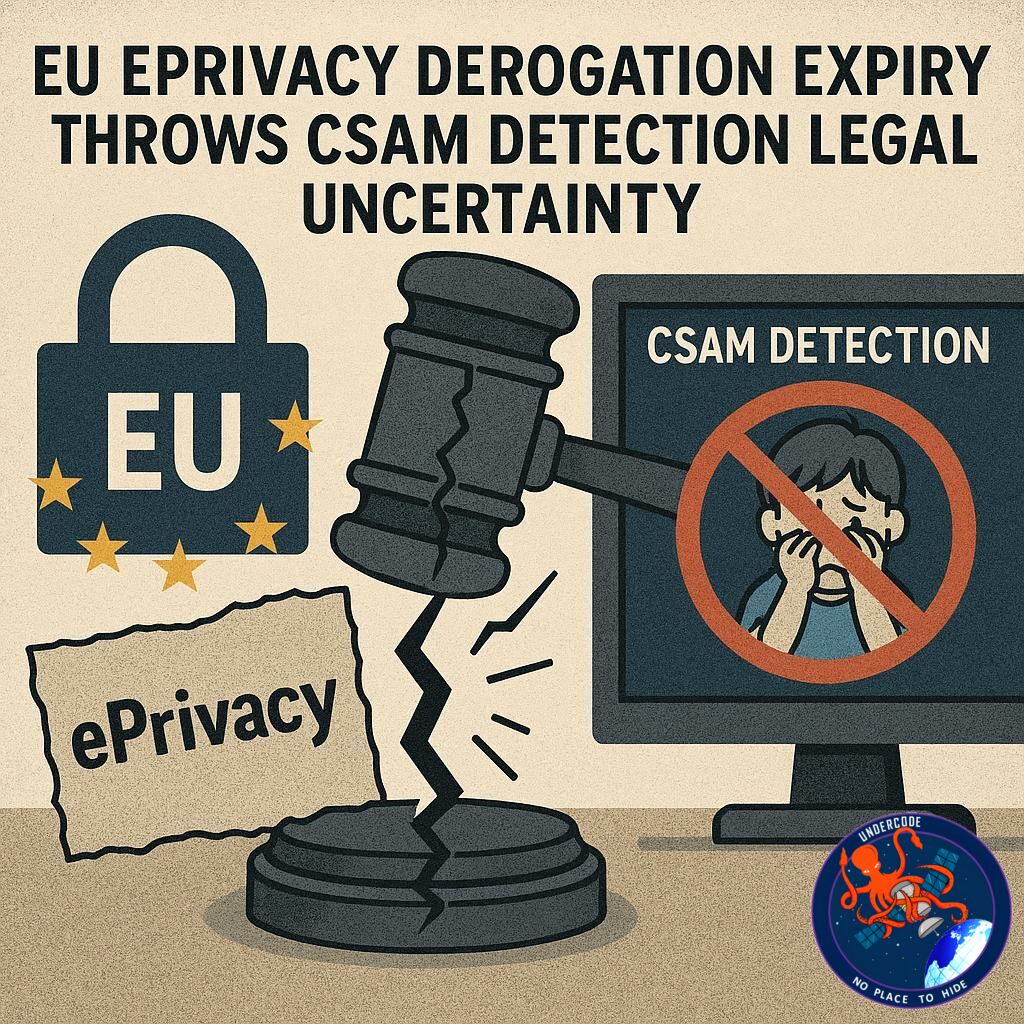
The sudden lapse of the European Union’s temporary ePrivacy derogation on April 3, 2026, has stirred significant concerns across the cybersecurity and child protection landscape. Platforms like Google, Meta, and Microsoft, which rely on this legal framework to detect Child Sexual Abuse Material (CSAM), now face an unclear regulatory environment. This uncertainty threatens the efficiency of reporting to law enforcement agencies such as Europol and the U.S.-based National Center for Missing & Exploited Children (NCMEC). As authorities and tech companies scramble to navigate these new waters, the safety of vulnerable children online could be inadvertently compromised.
The recent updates highlight a broader trend of legal and operational friction between tech platforms and EU digital privacy law. Microsoft has already made adjustments in its operational tools, removing the Support and Recovery Assistant (SaRA) from all supported Windows updates as of March 10. IT administrators are now encouraged to transition to the Get Help tool for Microsoft 365 troubleshooting, which offers better security and scriptability. Such operational shifts indicate how rapidly tech infrastructure must adapt in response to both legal changes and cybersecurity threats.
Reports from cybersecurity monitors indicate that this limbo could result in a slowdown of CSAM detection and reporting. Tech platforms, cautious of legal liability, may temporarily limit automated scanning of user-generated content, directly impacting the timeliness of identifying harmful material. This tension between privacy regulation and child safety is a recurring challenge in digital law, illustrating the delicate balance that policymakers and platforms must maintain.
The situation underscores the critical importance of clear and consistent legal frameworks for online safety. With the EU’s derogation expired, companies now face uncertainty over whether automated detection systems for illegal content remain compliant. Delays in addressing these issues could indirectly affect law enforcement’s ability to respond swiftly to threats against children. Moreover, the broader cybersecurity ecosystem must remain agile, as changes in law or regulation can directly affect both operational practices and public trust in digital services.
What Undercode Says:
Legal Grey Zones Create Operational Hesitation: Companies are likely to adopt a cautious approach in scanning user data due to fear of legal repercussions. This could lead to decreased CSAM reports, creating temporary safety gaps online.
Shift in IT Tools Signals Broader Trend: Microsoft’s transition from SaRA to the Get Help tool demonstrates a shift toward more secure, scriptable solutions, reflecting industry adaptation to both regulatory and cybersecurity pressures.
Impact on Child Safety: While regulatory compliance is crucial, delayed CSAM detection could expose children to greater risk. Stakeholders must prioritize rapid legal guidance to ensure platforms continue to operate effectively.
Long-Term Regulatory Implications: The expiry highlights a pressing need for permanent frameworks that reconcile digital privacy rights with the necessity of safeguarding vulnerable populations online. A temporary solution may no longer suffice in a landscape of evolving threats.
Cybersecurity Ecosystem Vulnerabilities: Platforms are increasingly reliant on automated detection; disruption of these systems demonstrates how fragile current defenses can be under legal uncertainty.
Operational Risks for Multinational Platforms: Tech giants operating across multiple jurisdictions must constantly navigate conflicting legal frameworks, increasing operational complexity and potential for compliance errors.
Technological Adaptation Pressure: Platforms must continually upgrade detection tools and operational processes to ensure compliance without sacrificing efficacy.
Public Perception and Trust: Users may lose confidence if platforms are seen as failing to protect vulnerable populations, highlighting reputational risk alongside legal concerns.
Balancing Innovation and Regulation: The tension illustrates the difficulty of innovating detection algorithms while remaining legally compliant, especially in sensitive areas like child protection.
Policy Recommendations: A coordinated EU-level approach to permanent ePrivacy provisions would provide much-needed clarity and stability for tech operators.
Fact Checker Results
✅ Platforms like Google, Meta, and Microsoft do indeed rely on legal frameworks for CSAM detection.
✅ Microsoft officially deprecated the SaRA tool as of March 10, 2026.
❌ Claims suggesting immediate child safety collapse are exaggerated; mitigation measures are still operational.
Prediction 📊
Looking ahead, the EU may introduce a permanent update to its ePrivacy framework within 12–18 months to restore regulatory clarity. Tech companies are likely to accelerate the deployment of enhanced AI-driven content detection tools, aiming to maintain reporting levels even amidst legal uncertainty. Short-term delays in CSAM reports may occur, but the long-term trend points toward faster, more sophisticated detection capabilities aligned with robust privacy protections.
🕵️📝✔️Let’s dive deep and fact‑check.
References:
Reported By: x.com
Extra Source Hub (Possible Sources for article):
https://www.facebook.com
Wikipedia
OpenAi & Undercode AI
Image Source:
Unsplash
Undercode AI DI v2
Bing
🔐JOIN OUR CYBER WORLD [ CVE News • HackMonitor • UndercodeNews ]
📢 Follow UndercodeNews & Stay Tuned:
𝕏 formerly Twitter 🐦 | @ Threads | 🔗 Linkedin | 🦋BlueSky | 🐘Mastodon


