
Listen to this Post
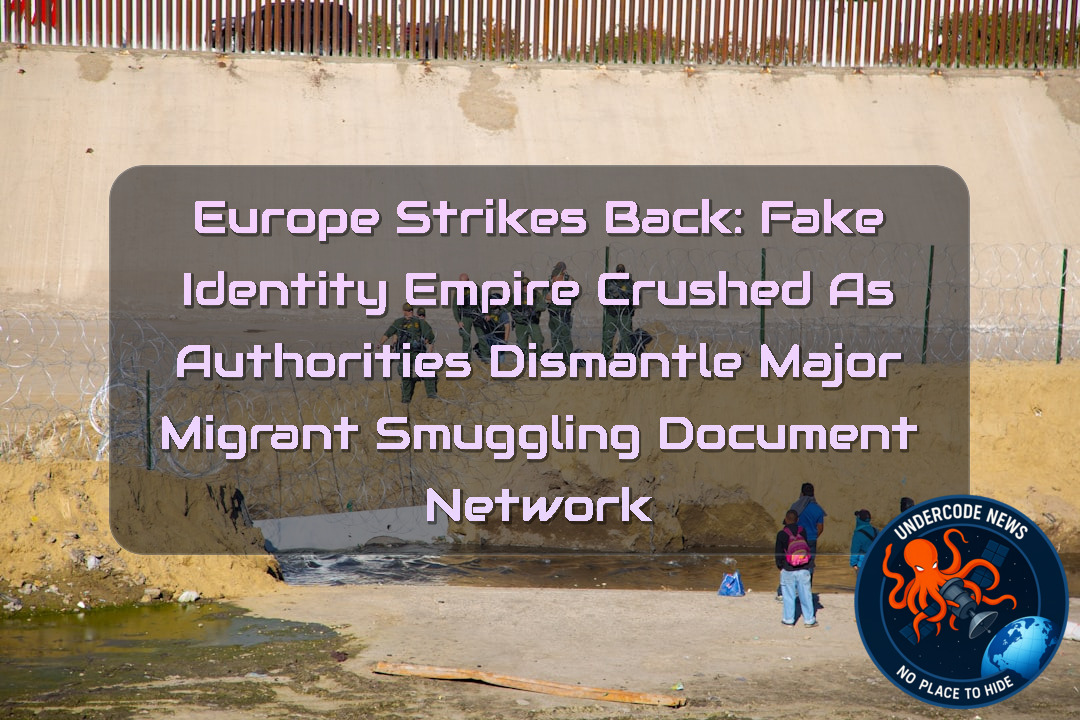 Introduction: The Hidden Industry Powering Illegal Migration Across Europe
Behind many migrant smuggling operations lies a less visible but highly profitable criminal service: document fraud. While public attention often focuses on border crossings and human trafficking routes, forged passports, residency permits, identity cards, and administrative documents have become the backbone of many illegal migration networks operating across Europe.
In a significant victory for European law enforcement, French and Spanish authorities have dismantled an online marketplace that allegedly supplied counterfeit identity documents to migrant smuggling organizations throughout the European Union. The operation highlights how modern criminal enterprises increasingly rely on digital platforms to facilitate illegal activities while exploiting weaknesses in international border and residency systems.
The case also demonstrates the growing determination of European institutions to target not only smugglers themselves but also the infrastructure that enables their operations. With the European Union strengthening its anti-smuggling capabilities through newly established agencies and regulations, authorities are signaling that document fraud networks are becoming a top enforcement priority.
European Authorities Dismantle Online Forgery Marketplace
French and Spanish investigators successfully dismantled an online marketplace believed to have supplied counterfeit identity documents to criminal organizations operating across Europe.
On May 27, law enforcement officers arrested a suspect in Alicante, Spain. During the operation, investigators seized sophisticated document-production equipment alongside approximately 800 counterfeit European identity documents. Authorities reported that the apartment used for the operation had been rented under a false identity, further illustrating the suspect’s alleged involvement in document fraud activities.
The investigation began when French authorities discovered a website openly advertising forged identity documents. Through extensive digital tracing and intelligence gathering, investigators eventually linked the operation to an individual residing in Alicante since 2024.
According to Europol, the suspect allegedly managed a large-scale online marketplace offering forged administrative and identity documents in both physical and digital formats. Customers reportedly came from multiple European countries, making the platform a transnational criminal service rather than a localized operation.
How Fake Documents Fuel Migrant Smuggling Networks
Counterfeit documents play a critical role in modern migrant smuggling operations. Criminal organizations use forged passports, residence permits, work authorizations, and identification cards to help individuals bypass immigration controls and establish unlawful residency.
According to
The Schengen Area, which allows passport-free movement across many European countries, offers enormous economic and social benefits. However, criminal networks frequently attempt to exploit this freedom of movement by using fraudulent documentation to conceal identities and facilitate unauthorized travel.
Document fraud often serves as a gateway offense that enables broader criminal activities. Once individuals obtain convincing forged identities, criminal groups may use those identities for financial fraud, employment fraud, benefit fraud, money laundering, and other illicit activities.
The Growing Threat of Digital Criminal Marketplaces
One of the most concerning aspects of this case is the use of an online marketplace model.
Traditional document forgery operations typically relied on personal contacts and localized criminal networks. Today’s cyber-enabled criminals operate with far greater reach. Through websites, encrypted communications, and digital payment systems, forged documents can now be advertised, ordered, customized, and distributed across international borders with unprecedented efficiency.
This evolution mirrors trends seen in cybercrime, illegal streaming, counterfeit goods, and financial fraud. Criminal organizations increasingly function like legitimate businesses, offering customer support, product catalogs, digital delivery options, and international logistics.
The Alicante operation demonstrates how digital technology continues to transform organized crime, creating new challenges for investigators attempting to identify and dismantle criminal infrastructure.
Europol Expands Its Fight Against Migrant Smuggling
The timing of this operation aligns with a broader European strategy to combat migrant smuggling.
In March 2026, Europol expanded its capabilities following the implementation of new European Union regulations adopted in December 2025. These reforms established the European Centre Against Migrant Smuggling (ECAMS), a specialized body designed to strengthen cooperation among European law enforcement agencies.
ECAMS focuses on intelligence sharing, financial investigations, operational coordination, and strategic analysis. The center works closely with border protection agencies, prosecutors, and national police services to create a unified response against organized smuggling networks.
European officials hope that enhanced coordination will allow authorities to identify criminal organizations earlier, disrupt financial flows more effectively, and target key facilitators operating behind the scenes.
Why Document Fraud Remains a Major Security Concern
Europol’s 2025 EU Serious and Organised Crime Threat Assessment identified document fraud as one of the most significant enablers of migrant smuggling and illegal residency schemes throughout Europe.
Counterfeit identity documents allow criminal organizations to generate substantial profits while reducing the effectiveness of immigration enforcement mechanisms. Unlike many traditional crimes, document fraud creates a multiplier effect. A single forged identity can facilitate numerous additional offenses across multiple jurisdictions.
Authorities emphasize that document production facilities such as the one uncovered in Alicante represent critical infrastructure for organized crime. By targeting these facilities, investigators can disrupt entire criminal ecosystems rather than simply arresting individual participants.
The seizure of approximately 800 counterfeit documents suggests the operation may have served a large customer base and potentially supported multiple criminal networks simultaneously.
Wider European Crackdown on Organized Crime
The document fraud operation is part of a broader European effort targeting organized criminal enterprises.
Just one day before announcing the Alicante operation, Europol revealed that law enforcement agencies from 13 countries had dismantled nine organized crime groups involved in illegal streaming services and arrested 29 suspects.
These parallel investigations reflect a growing trend among European authorities: attacking criminal ecosystems rather than focusing solely on isolated crimes. Whether dealing with cybercrime, document fraud, financial scams, or migrant smuggling, investigators are increasingly targeting the technological and logistical infrastructure that enables criminal operations.
The strategy aims to maximize disruption while reducing the ability of criminal organizations to quickly rebuild after arrests.
Deep Analysis: Technical Investigation and Digital Forensics Perspective
Modern investigations into online criminal marketplaces depend heavily on advanced digital forensic techniques and cyber intelligence operations.
Linux-based investigators frequently rely on tools such as:
whois suspicious-domain.com
dig suspicious-domain.com
nslookup suspicious-domain.com
curl -I https://target-site.com
traceroute target-site.com
netstat -tulnp
ss -tulpn
tcpdump -i eth0
wireshark
nmap -sV target-host
grep "suspicious activity" /var/log/
journalctl -xe
find / -name ".pem"
hashdeep -r evidence_folder
sha256sum seized_file.iso
exiftool suspicious_document.jpg
strings recovered_file.bin
Investigators may combine domain intelligence, metadata analysis, payment tracing, cryptocurrency monitoring, cloud infrastructure examination, and digital evidence correlation to identify operators behind online criminal services.
The Alicante case likely involved extensive cyber investigations, including website attribution, communication tracking, hosting analysis, financial intelligence gathering, and international intelligence cooperation.
As criminal networks become increasingly digital, successful law enforcement operations require a combination of traditional police work and advanced cybersecurity expertise.
What Undercode Say:
The Alicante operation represents much more than the arrest of a single suspect.
European authorities are clearly shifting toward an infrastructure-focused enforcement model.
Instead of concentrating only on migrant movements, investigators are targeting service providers.
Document forgers often operate as suppliers within larger criminal ecosystems.
Removing suppliers creates disruption across multiple criminal organizations simultaneously.
The seizure of 800 documents suggests industrial-scale production capability.
Such volume indicates organized logistics rather than casual forgery.
The online marketplace element is particularly important.
Criminal services increasingly mirror legitimate e-commerce platforms.
Digital transformation has lowered barriers for transnational crime.
Customers can access illegal services without direct personal connections.
This increases scalability and profitability.
Europol’s focus on document fraud is strategically justified.
Identity remains the foundation of modern governance systems.
Compromised identity systems affect immigration, banking, taxation, employment, and social services.
Counterfeit documents undermine trust across all these sectors.
The creation of ECAMS appears timely.
Cross-border crime requires cross-border enforcement.
National agencies acting independently often struggle against multinational criminal networks.
Centralized intelligence sharing improves operational effectiveness.
The investigation also demonstrates growing cyber-law enforcement maturity.
Modern criminal investigations increasingly start online.
Digital evidence often provides the first investigative lead.
Online advertisements create a discoverable attack surface for authorities.
Criminals frequently underestimate the amount of metadata they expose.
Hosting infrastructure, payment channels, and communication records leave traces.
International cooperation remains essential.
No single European country can effectively combat transnational smuggling networks alone.
Joint investigations reduce jurisdictional blind spots.
The operation also sends a deterrence message.
Criminal marketplaces are no longer hidden as effectively as before.
Law enforcement agencies have become significantly more capable in cyber investigations.
Future criminal operations may migrate toward more encrypted environments.
However, greater secrecy typically reduces scalability.
This creates pressure on criminal profitability.
The broader lesson is clear.
Document fraud is not merely a supporting crime.
It is a force multiplier for organized criminal activity.
Disrupting document production can generate security benefits far beyond immigration enforcement.
European authorities appear increasingly aware of this reality.
✅ French and Spanish authorities arrested a suspect in Alicante and seized approximately 800 counterfeit European identity documents.
✅ Europol stated that the alleged online marketplace supplied forged identity and administrative documents to customers across Europe.
✅ The European Centre Against Migrant Smuggling (ECAMS) was established following EU regulatory changes aimed at strengthening anti-smuggling cooperation and intelligence-sharing efforts.
The reported facts align with official Europol statements and reflect broader concerns identified in European organized crime threat assessments regarding document fraud and migrant smuggling networks.
Prediction
(+1) Stronger European Intelligence Integration 📈
European agencies will likely increase intelligence-sharing capabilities through ECAMS, leading to more coordinated investigations and faster disruption of cross-border smuggling networks.
(+1) Increased Targeting of Criminal Infrastructure 🔍
Authorities will continue focusing on document producers, payment processors, hosting providers, and digital facilitators rather than targeting only end-users and smugglers.
(-1) Migration of Criminal Services to Darker Networks 🌑
As enforcement pressure grows, criminal organizations may shift toward encrypted platforms, invitation-only marketplaces, and decentralized communication systems that are more difficult to infiltrate.
(-1) Rising Sophistication of Forged Documents ⚠️
Advances in printing technology, AI-assisted image generation, and digital editing tools may make future counterfeit documents harder to detect, requiring continuous investment in verification technologies.
▶️ Related Video (78% Match):
🕵️📝Let’s dive deep and fact‑check.
🎓 Live Courses & Certifications:
Join Undercode Academy for Verified Certifications
🚀 Request a Custom Project:
Secure, high-velocity infrastructure and disruptive technological engineering. Contact our engineering team for high-tier development and proprietary systems:
[email protected]
💎 Smart Architecture | 🛡️ Secure by Design | ⭐ Trusted by Thousands
References:
Reported By: www.bleepingcomputer.com
Extra Source Hub (Possible Sources for article):
https://www.digitaltrends.com
Wikipedia
OpenAi & Undercode AI
Image Source:
Unsplash
Undercode AI DI v2
🔐JOIN OUR CYBER WORLD [ CVE News • HackMonitor • UndercodeNews ]
📢 Follow UndercodeNews & Stay Tuned:
𝕏 formerly Twitter 🐦 | @ Threads | 🔗 Linkedin | 🦋BlueSky | 🐘Mastodon | 📺Youtube


