
Listen to this Post
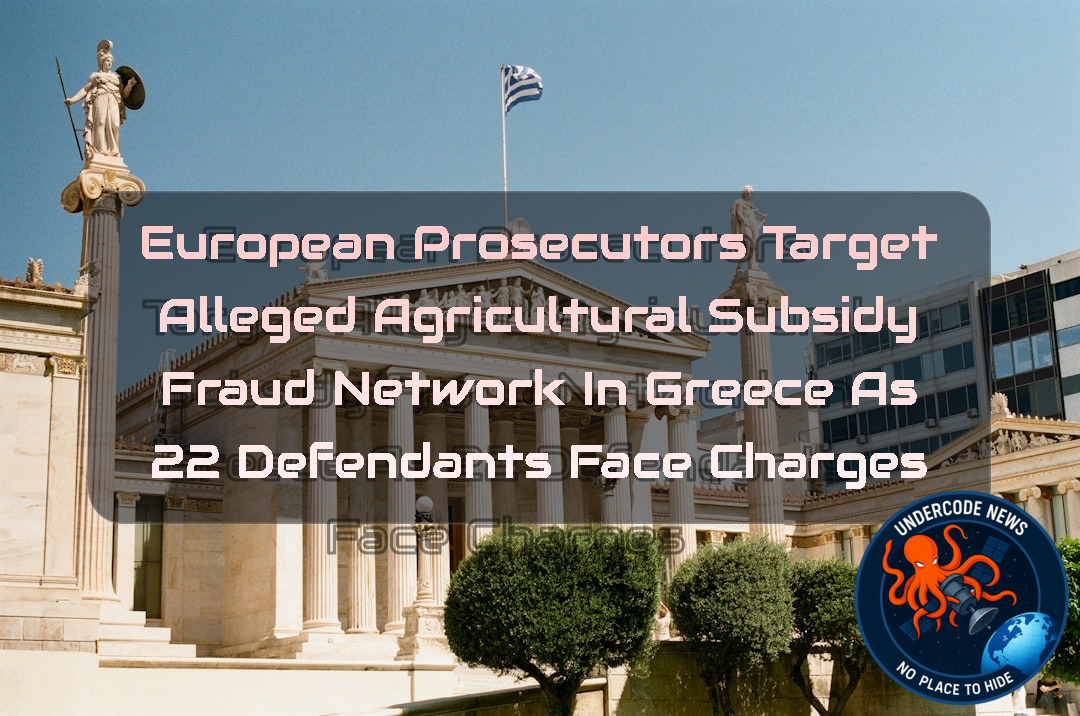 A Major Investigation Into Public Funds, Political Influence, and Alleged Corruption
A major corruption investigation in Greece has reached a new stage after the European Public Prosecutor’s Office (EPPO) in Athens filed charges against 22 individuals accused of involvement in an alleged organised fraud scheme connected to European agricultural subsidies. The case has drawn attention because it involves former senior officials, political figures, public employees, and sitting members of the Greek Parliament.
The investigation focuses on allegations that officials connected to Greece’s agricultural payment agency, OPEKEPE, manipulated procedures linked to European Union agricultural funding. Authorities believe that administrative systems designed to distribute Common Agricultural Policy (CAP) subsidies may have been abused through false declarations, altered records, and improper interventions during inspections.
While 22 defendants will now face legal proceedings, authorities confirmed that investigations against seven sitting members of parliament were closed due to insufficient evidence. The European Public Prosecutor’s Office emphasized that every case was examined using both incriminating and exculpatory evidence before decisions were made.
EPPO Investigation Reveals Alleged Abuse of Agricultural Subsidy Systems
The European Public Prosecutor’s Office launched the investigation after identifying patterns suggesting possible systematic manipulation of agricultural subsidy management. The alleged offences relate specifically to actions carried out in 2021, when officials responsible for supervising subsidy applications and inspections are accused of interfering with established procedures.
According to investigators, the alleged misconduct involved multiple methods of bypassing normal controls, including interference with administrative processes, changes to official records after inspections had already been completed, and attempts to influence the results of field inspections.
European agricultural funds represent billions of euros in financial support distributed among farmers and rural communities. Because these funds originate from EU budgets, fraudulent management can affect taxpayers across multiple member states.
Parliamentary Immunity Lifted to Allow Full Investigation
On 24 April 2026, the Hellenic Parliament approved a request from the European Chief Prosecutor to remove parliamentary immunity from 11 sitting MPs. The decision allowed investigators to continue examining potential criminal conduct linked to events from 2021.
The removal of immunity did not represent a declaration of guilt. Instead, it allowed prosecutors to investigate allegations more deeply and evaluate evidence from all sides.
The EPPO stated that investigators examined both evidence supporting accusations and information that could clear individuals of wrongdoing, highlighting the importance of maintaining an impartial judicial process.
Alleged Crimes Identified During the Investigation
Investigators reported several recurring practices that raised concerns during the examination of agricultural subsidy management.
Illegal Administrative Interference
Authorities allege that some individuals interfered with official procedures designed to ensure fair distribution of EU agricultural funds. Such interference could undermine the reliability of subsidy approval systems.
Manipulation of Inspection Data
Investigators identified cases where data was allegedly modified after mandatory checks had already been completed. If proven, such actions could represent an attempt to hide irregularities or create inaccurate records.
Improper Influence Over Field Inspections
The investigation also examined allegations that officials attempted to influence on-site inspections, potentially affecting whether subsidy applications were approved or rejected.
False Statements and Document Manipulation
Authorities identified alleged cases involving false attestations and inaccurate information provided in official documents. These actions could have allowed individuals to receive funds they were not legally entitled to obtain.
Charges Filed Against Former Officials and Political Figures
The EPPO has brought several serious charges against former OPEKEPE officials and other individuals connected to the subsidy system.
Former OPEKEPE Leadership Accused of Breach of Trust
The former President of OPEKEPE faces five counts of breach of trust. The former Director General responsible for direct payments faces two similar charges.
Two former regional directors of OPEKEPE are also accused of breach of trust and unlawful management of European Union funds.
These allegations focus on whether individuals responsible for protecting public resources failed to perform their duties properly.
Sitting Members of Parliament Among Defendants
Four current members of the Greek Parliament are among those charged.
Three MPs are accused of incitement to commit breach of trust.
Another MP faces allegations involving incitement related to unlawful management of European funds, false attestations, and attempted computer fraud.
The inclusion of serving lawmakers has increased public attention around the case, as it raises questions about political connections and oversight of government-funded programs.
Other Individuals Also Face Legal Action
The defendants include people from different professional backgrounds, including:
An employee working in the political office of a sitting MP
An associate connected to a former minister
A government-employed veterinarian
Several agricultural subsidy beneficiaries
The charges include subsidy fraud, attempted computer fraud, false statements in public documents, and alleged encouragement of offences committed by public officials.
Potential Penalties If Convicted
If found guilty, defendants could face prison sentences of up to five years along with financial penalties under Greek law.
However, the charges remain allegations, and all defendants are presumed innocent until proven guilty through the judicial process.
Cases Against Several MPs Closed Due to Lack of Evidence
The European Public Prosecutor’s Office confirmed that investigations involving seven additional sitting MPs and two former MPs were closed because prosecutors determined that available evidence was insufficient to justify criminal charges.
EPPO stressed that the decision followed an objective review process, where both evidence supporting accusations and evidence contradicting them were considered.
This decision demonstrates that the investigation is not focused solely on securing convictions, but on determining whether sufficient legal grounds exist for prosecution.
Additional Investigations Remain Active
Although some cases have been closed, EPPO confirmed that investigations involving other individuals, including three former MPs, remain ongoing.
Authorities are also examining alleged offences from other years, but details have not been released to avoid interfering with active criminal proceedings.
The broader investigation suggests that European authorities are continuing to examine possible weaknesses in agricultural subsidy management systems.
The Wider Impact on European Agricultural Funding
The case highlights a growing concern across Europe: protecting public money from organized fraud.
The Common Agricultural Policy is one of the European Union’s largest financial programs, supporting millions of farmers and rural businesses. Because of its size, it has historically attracted attempts at fraudulent claims and manipulation.
Strong monitoring systems, digital verification tools, and independent investigations are becoming increasingly important as governments attempt to prevent misuse of public funds.
Deep Analysis: Investigating Fraud Networks Through Digital Evidence and Security Methods
Understanding Financial Fraud Investigation Techniques
Modern corruption investigations increasingly depend on digital evidence. Authorities often examine databases, communication records, financial transactions, and government systems to identify irregular patterns.
Linux-Based Investigation Environment Example
Security researchers and forensic analysts often use Linux tools to examine digital evidence:
sudo apt update
sudo apt install sleuthkit autopsy
These tools help investigators analyze filesystems and recover digital evidence.
Searching Government Records for Suspicious Patterns
Investigators can analyze large datasets using command-line tools:
grep -i "subsidy" records.log
This helps identify repeated references to specific applications or transactions.
Checking File Integrity
When investigators suspect document manipulation, they may compare file hashes:
sha256sum document.pdf
Changes in file hashes can indicate that a document was modified.
Reviewing System Activity
Potential unauthorized access attempts can be analyzed through logs:
journalctl -xe
System records can reveal unusual activity or unauthorized changes.
Database Analysis
Large subsidy databases require careful auditing:
mysql -u analyst -p
Investigators can search for duplicate claims, unusual payment patterns, or suspicious account activity.
Network Monitoring During Investigations
Authorities may examine suspicious communication patterns:
tcpdump -i eth0
Network monitoring can reveal connections between systems involved in questionable activity.
Digital Transparency Becomes Essential
The case demonstrates that financial fraud is no longer limited to paper documents. Modern fraud networks can involve databases, digital approvals, automated systems, and electronic records.
Governments increasingly need stronger cybersecurity practices alongside traditional financial controls.
What Undercode Say:
The Greek agricultural subsidy investigation represents a deeper challenge facing governments across Europe: protecting public money in an increasingly digital world.
Public funding systems depend on trust. Citizens expect that money collected through taxation or European budgets reaches the people and organizations it was designed to support.
When officials or connected individuals allegedly manipulate those systems, the damage extends beyond financial losses.
It can weaken confidence in institutions.
The OPEKEPE case is significant because it involves multiple layers of responsibility.
The alleged scheme does not only concern subsidy recipients, but also people responsible for approving, monitoring, and protecting financial processes.
Fraud involving government programs often succeeds because it exploits weaknesses between different systems.
A dishonest applicant alone may not create large-scale damage.
However, when administrative controls are weakened, false information can move through official channels.
This investigation highlights why independent oversight bodies like EPPO are important.
National institutions may sometimes face political pressure, conflicts of interest, or limited resources.
A European-level prosecutor can provide additional independence when cases involve EU funds.
The decision to close cases against several MPs also shows the importance of evidence-based investigations.
A strong justice system must not only prosecute wrongdoing but also protect individuals when evidence does not support accusations.
Digital transformation has changed how financial crimes are committed.
Modern fraud can involve database manipulation, unauthorized system access, fake electronic records, and coordinated communication networks.
Governments must treat cybersecurity and financial oversight as connected issues.
A secure payment system requires both accurate accounting and strong technical protection.
Future investigations will likely rely more heavily on artificial intelligence, automated auditing systems, and advanced data analysis.
Machine learning tools can identify unusual subsidy patterns faster than traditional manual reviews.
However, technology alone cannot solve corruption.
Human oversight, transparency, independent investigations, and accountability remain essential.
The Greek case serves as a warning that public funding systems require constant monitoring.
Fraud prevention must happen before money disappears, not only after investigations begin.
The future of government trust depends on stronger digital defenses and stronger institutional responsibility.
✅ EPPO has confirmed charges against 22 individuals connected to an investigation into alleged agricultural subsidy fraud.
✅ Investigations involve alleged misuse of EU agricultural funds and OPEKEPE-related procedures.
❌ Charges do not mean defendants are guilty. Final responsibility depends on court decisions.
Prediction
(+1) Positive Outlook: European investigations could lead to stronger protection systems for EU agricultural funds and encourage governments to improve subsidy monitoring.
Digital auditing tools may become more widely adopted to detect suspicious financial activity earlier.
Independent oversight agencies may receive greater support after high-profile investigations.
Political pressure and public distrust could increase if investigations reveal deeper institutional weaknesses.
Fraud networks may continue evolving as criminals adapt to stronger controls.
Final Perspective: A Test for Transparency and Accountability
The investigation into alleged agricultural subsidy fraud in Greece represents more than a single criminal case. It reflects a broader European challenge: ensuring that public funds are protected from manipulation.
As authorities continue examining evidence, the outcome will depend on the strength of the judicial process and the ability of institutions to maintain transparency.
Whether the allegations result in convictions or dismissals, the case highlights the importance of accountability, digital security, and independent oversight in protecting public resources.
▶️ Related Video (78% Match):
🕵️📝Let’s dive deep and fact‑check.
🎓 Live Courses & Certifications:
Join Undercode Academy for Verified Certifications
🚀 Request a Custom Project:
Secure, high-velocity infrastructure and disruptive technological engineering. Contact our engineering team for high-tier development and proprietary systems:
[email protected]
💎 Smart Architecture | 🛡️ Secure by Design | ⭐ Trusted by Thousands
References:
Reported By: www.euronews.com
Extra Source Hub (Possible Sources for article):
https://www.instagram.com
Wikipedia
OpenAi & Undercode AI
Image Source:
Unsplash
Undercode AI DI v2
🔐JOIN OUR CYBER WORLD [ CVE News • HackMonitor • UndercodeNews ]
📢 Follow UndercodeNews & Stay Tuned:
𝕏 formerly Twitter 🐦 | @ Threads | 🔗 Linkedin | 🦋BlueSky | 🐘Mastodon | 📺Youtube


