
Listen to this Post
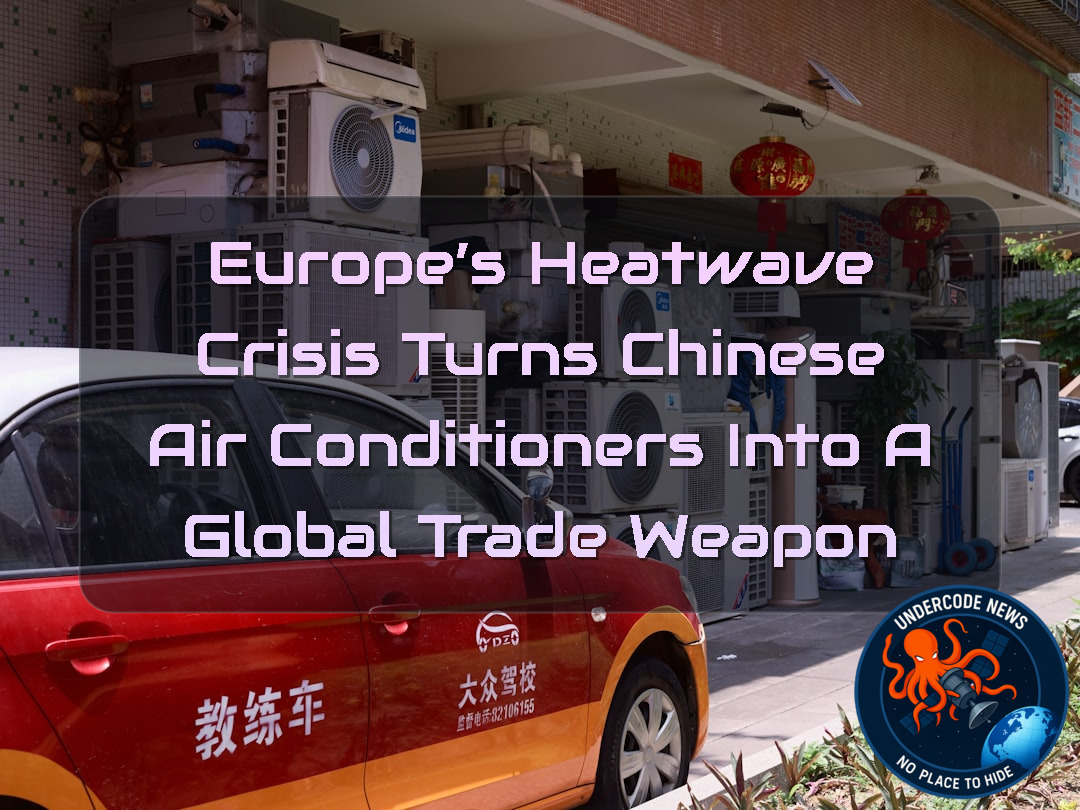 Introduction: When Extreme Heat Changes the Rules of Global Commerce
Europe is facing a new reality. Summers that were once considered manageable are becoming increasingly dangerous, with record-breaking temperatures, devastating wildfires, and prolonged heatwaves forcing millions of people to rethink how they protect themselves from extreme weather.
For decades, air conditioning was viewed in much of Europe as unnecessary, expensive, or even environmentally controversial. Many European homes were built around the assumption that cooler summers did not require widespread cooling systems. But as climate change pushes temperatures beyond historical limits, that assumption is rapidly collapsing.
The unexpected winner of this transformation is China’s air-conditioning industry. Companies such as Midea, Gree, and Haier are experiencing a surge in demand as European consumers search for affordable ways to survive increasingly intense summers. At the same time, governments in Europe are debating whether Chinese imports should face additional restrictions, creating a complicated conflict between trade policy and consumer needs.
The air-conditioning boom reveals a larger global economic battle. Europe wants to reduce dependence on Chinese manufacturing, but consumers facing rising costs and extreme weather are increasingly relying on Chinese products. The question now is whether climate change will reshape international trade faster than governments can respond.
The Heatwave Driving Europe Toward Chinese Cooling Technology
Europe’s relationship with air conditioning is changing faster than many expected. During recent summers, temperatures in several countries have exceeded 100 degrees Fahrenheit, causing health risks, wildfires, and increased demand for cooling solutions.
Countries including France, Germany, Belgium, and Spain have seen growing interest in portable and residential air-conditioning units. Consumers who previously avoided installation costs or worried about energy consumption are now prioritizing comfort and safety.
Chinese manufacturers have been prepared for this shift. Their ability to produce affordable cooling systems at massive scale has allowed them to quickly respond to Europe’s sudden increase in demand.
Companies including Midea Group, Gree, and Haier have reported stronger overseas sales, especially in regions experiencing hotter summers. Their success demonstrates how climate change is creating entirely new consumer markets.
China’s Air Conditioner Industry Finds a New Opportunity Overseas
China has long been one of the world’s largest manufacturers of household appliances. However, the domestic market has faced challenges due to slower economic growth, a weakened housing sector, and declining consumer confidence.
As domestic demand becomes more difficult, Chinese companies are increasingly searching for international customers.
Air conditioners represent a unique opportunity because Europe has historically been an underdeveloped market. While the United States has extremely high air-conditioning adoption rates, Europe remains far behind.
Research from market analysts has shown that European air-conditioning penetration remains around 20%, compared with approximately 90% in the United States. This gap represents a massive potential market for Chinese manufacturers.
For Chinese companies, Europe is not just another export destination. It is a strategic opportunity to establish long-term dominance in a growing industry.
Trade War Pressure Meets Consumer Reality
The growing popularity of Chinese air conditioners arrives at a sensitive moment in Europe-China relations.
European leaders have expressed concerns about China’s industrial policies, excess manufacturing capacity, and the impact of low-cost Chinese imports on European companies.
The European Union has already introduced or considered trade measures targeting several Chinese industries, particularly electric vehicles, where European automakers fear increasing competition.
However, air conditioners create a difficult political challenge.
Governments can argue that certain imports threaten domestic industries, but consumers facing dangerous heatwaves may not support policies that increase prices or reduce availability.
A government cannot easily tell citizens that affordable cooling products should become more expensive during a climate emergency.
This creates a conflict between economic protectionism and public demand.
Midea’s European Strategy Shows China’s Manufacturing Advantage
One of the clearest examples of China’s approach is Midea’s PortaSplit air conditioner.
Instead of simply exporting existing products, Midea designed a system specifically for European consumers. The company focused on challenges unique to Europe, including smaller apartments, strict building rules, noise concerns, and window designs.
The portable and quieter design helped the product gain popularity. Midea reported selling more than 200,000 units during the year, representing significant growth compared with the previous year.
This strategy highlights a broader advantage of Chinese manufacturers: speed and flexibility.
Chinese companies often have large supply chains, extensive manufacturing capacity, and the ability to quickly adapt products for different markets.
This allows them to move faster than many traditional Western appliance companies.
European Brands Face a New Competitive Challenge
For decades, European consumers trusted established appliance companies such as Bosch, Electrolux, and Miele.
However, the changing climate is creating a new competitive environment.
Chinese companies are entering markets where European brands historically had less pressure because demand was limited.
The air-conditioning market demonstrates how technological shifts can suddenly challenge established industries.
A product category that was once considered secondary in Europe has become strategically important.
If extreme heat continues, cooling technology could become as essential as heating systems are in colder climates.
The Climate Crisis Is Becoming an Economic Force
The air-conditioning boom is not only a consumer trend. It represents a deeper transformation caused by climate change.
Extreme weather is changing purchasing decisions worldwide.
Consumers are no longer buying cooling systems only for convenience. Many are purchasing them for health protection, elderly care, workplace safety, and survival during dangerous heat events.
Climate change is therefore influencing global supply chains.
Industries that once depended on predictable seasonal demand are now facing new patterns driven by environmental instability.
The companies capable of adapting quickly will likely gain the largest advantages.
Why Europe Is Considered the “Prize” Market
Chinese manufacturers view Europe as especially attractive because it combines several advantages.
Europe has:
High consumer purchasing power.
Low air-conditioning adoption.
Increasing temperatures.
Demand for affordable solutions.
Unlike some developing markets where consumers may struggle with affordability, Europe offers a large middle-class customer base willing to invest in home cooling.
However, analysts warn that demand may remain seasonal.
When temperatures fall, some consumers may forget the urgency created by heatwaves.
The challenge for manufacturers is transforming temporary panic buying into a permanent market.
China’s Export Strategy and the Search for Growth
China’s economy has increasingly depended on exports to compensate for weaker domestic activity.
The country recorded a massive trade surplus, with exports becoming a critical driver of economic growth.
While electric vehicles, batteries, and solar panels are often described as China’s new export engines, traditional industries such as appliances remain important.
Air conditioners represent a possible revival of China’s older manufacturing strengths.
The industry could become another example of Chinese companies using manufacturing scale to expand global influence.
What Undercode Say:
The Hidden Battle Behind Europe’s Air Conditioner Boom
The air-conditioning surge is not simply about summer temperatures. It represents a much larger geopolitical and economic transformation.
Climate change is forcing countries to reconsider their industrial priorities.
For years, Europe focused on reducing dependence on Chinese manufacturing. However, extreme weather is creating situations where Chinese products become difficult to replace.
The contradiction is clear.
Europe wants strategic independence, but consumers want affordable solutions.
The air conditioner market exposes this tension perfectly.
Chinese companies have developed a powerful global manufacturing model.
They combine low-cost production, supply chain efficiency, government-supported industrial ecosystems, and rapid product innovation.
European manufacturers often compete through quality, branding, and regulation compliance.
Chinese manufacturers compete through speed, scale, and affordability.
The future of global trade may depend on which model proves stronger.
The climate crisis is also changing consumer psychology.
People who previously considered air conditioning unnecessary are now viewing it as essential infrastructure.
This creates opportunities for companies that can deliver solutions quickly.
The same pattern may appear in other industries.
Heat-resistant construction materials, energy storage systems, cooling technologies, and climate adaptation products could become major global markets.
The air-conditioning boom also reveals how trade restrictions can create unintended consequences.
Tariffs may protect some industries, but they can also increase costs for consumers during emergencies.
Governments must balance industrial policy with real-world needs.
The biggest question is whether Europe can develop competitive cooling industries fast enough.
If not, Chinese manufacturers may establish long-term dominance before European companies respond.
The next decade could see climate adaptation become one of the biggest battlegrounds in global manufacturing.
Countries will compete not only over technology but also over who controls the solutions needed for a warmer planet.
The air conditioner may appear to be a simple household appliance.
But behind it is a global struggle involving climate change, manufacturing power, supply chains, and international politics.
The companies that control cooling technology may influence the future of how humanity adapts to rising temperatures.
Deep Analysis: Monitoring Global Cooling Industry Trends With Linux Commands
Tracking Market and Technology Data
Security researchers, analysts, and business intelligence teams can monitor industry information using simple Linux tools.
Example:
curl -L https://example.com/report.txt
This command retrieves public market information from online sources.
Searching Industry Data
Large datasets can be filtered using:
grep -i "air conditioner" market_data.txt
This helps identify mentions related to cooling technology.
Monitoring Export Trends
Analysts can process trade information:
awk '{print $1,$3}' export_data.csv
This extracts important fields from export records.
Comparing Company Growth
Simple calculations can be automated:
python3 analyze_sales.py
Python scripts can compare yearly sales performance from manufacturers.
Tracking Climate Events
Researchers can collect temperature information:
wget https://example.com/weather-data.csv
Historical weather data helps explain demand changes.
Building Automated Reports
Linux scheduling tools can automate monitoring:
crontab -e
A scheduled task can regularly collect industry updates.
Protecting Business Intelligence Systems
Organizations analyzing trade data should secure systems:
sudo apt update
sudo apt upgrade
Keeping systems updated reduces cybersecurity risks.
✅ China’s major air-conditioning manufacturers, including Midea, Gree, and Haier, have expanded international sales as global cooling demand rises.
✅ Europe has historically had lower air-conditioning adoption compared with regions such as the United States.
✅ Trade tensions between Europe and China have increased due to concerns about Chinese industrial competition.
Prediction
(+1) Positive Outlook: Climate adaptation demand will likely continue increasing, creating major growth opportunities for cooling technology companies.
Chinese manufacturers may strengthen their position in Europe by offering affordable and customized products.
Smart, energy-efficient air-conditioning systems could become one of the fastest-growing home technology categories.
European companies may increase investment in local cooling solutions to compete with Chinese suppliers.
Seasonal demand fluctuations could prevent some air-conditioning growth from becoming permanent.
New tariffs or trade restrictions may increase prices and slow market expansion.
The Future of Cooling: A New Global Competition
The rise of Chinese air conditioners in Europe represents more than a business opportunity. It is a symbol of how climate change is rewriting global economic relationships.
As temperatures continue rising, cooling technology will become increasingly important.
The companies that can provide affordable, efficient, and environmentally responsible solutions will shape the next era of global manufacturing.
The battle for the future may not only be about cars, chips, or artificial intelligence.
It may also be about something much simpler.
Who keeps the world cool.
▶️ Related Video (84% Match):
🕵️📝Let’s dive deep and fact‑check.
🎓 Live Courses & Certifications:
Join Undercode Academy for Verified Certifications
🚀 Request a Custom Project:
Secure, high-velocity infrastructure and disruptive technological engineering. Contact our engineering team for high-tier development and proprietary systems:
[email protected]
💎 Smart Architecture | 🛡️ Secure by Design | ⭐ Trusted by Thousands
References:
Reported By: edition.cnn.com
Extra Source Hub (Possible Sources for article):
https://www.instagram.com
Wikipedia
OpenAi & Undercode AI
Image Source:
Unsplash
Undercode AI DI v2
🔐JOIN OUR CYBER WORLD [ CVE News • HackMonitor • UndercodeNews ]
📢 Follow UndercodeNews & Stay Tuned:
𝕏 formerly Twitter 🐦 | @ Threads | 🔗 Linkedin | 🦋BlueSky | 🐘Mastodon | 📺Youtube


