
Listen to this Post
Introduction
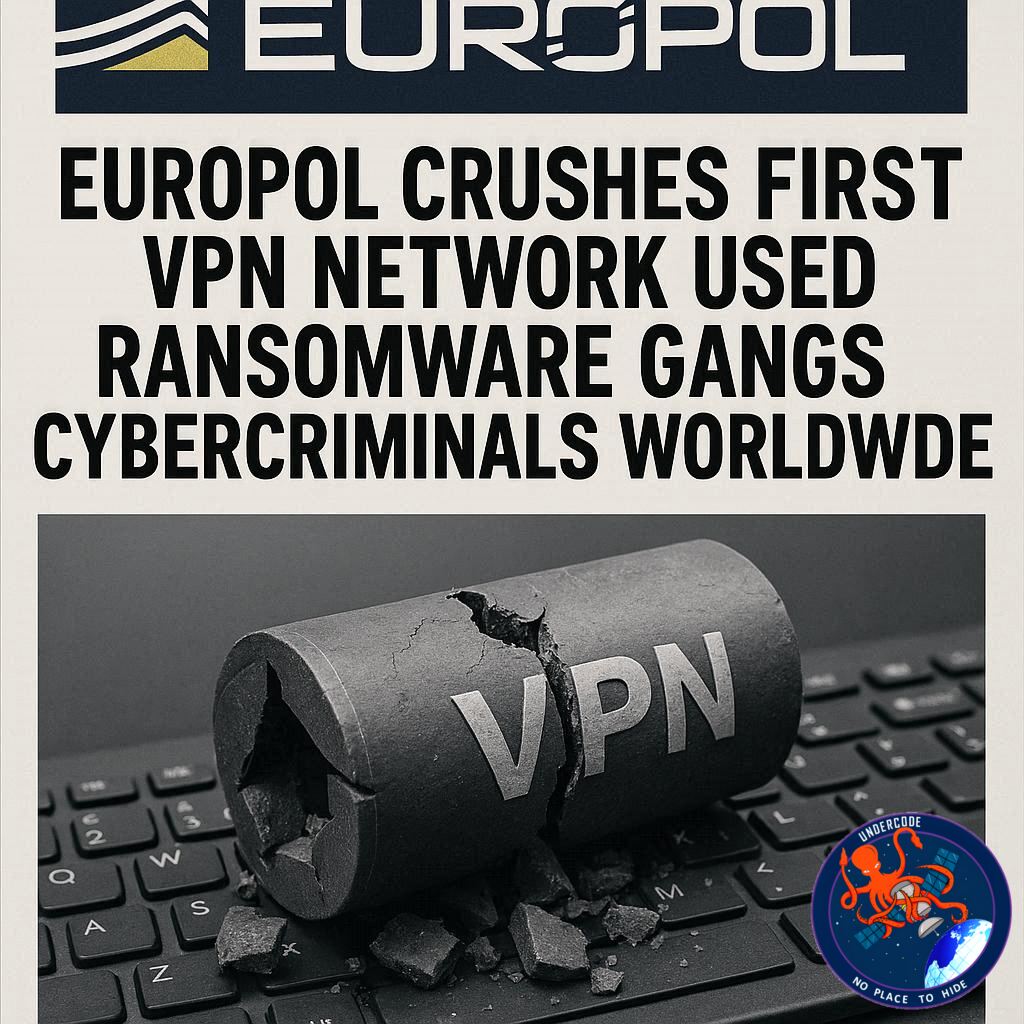
A massive international cybercrime operation has shaken the underground hacking world after authorities dismantled “First VPN,” a service long considered a trusted anonymity shield for ransomware gangs, fraud networks, and digital thieves. Europol confirmed that the operation involved coordinated raids across dozens of countries, leading to server seizures, arrests, and the disruption of infrastructure heavily tied to global cybercrime activity.
For years, cybercriminals viewed VPN services like First VPN as an invisible cloak that could hide their locations, encrypt their communications, and make investigations nearly impossible. That illusion has now been shattered. Investigators not only shut the service down, but reportedly gained access to internal infrastructure and intelligence that may expose thousands of users connected to serious cyber offenses.
The takedown represents another major escalation in the growing war between international law enforcement agencies and organized cybercrime groups.
International Cybercrime Crackdown Hits First VPN
Europol announced that a coordinated law enforcement operation between May 19 and May 20 targeted the backbone infrastructure behind First VPN, a service widely promoted across Russian-speaking cybercrime forums.
Authorities described the VPN as one of the most heavily used anonymity tools in the criminal underground. Unlike legitimate privacy-focused VPN providers aimed at average users, First VPN allegedly built its reputation around features designed specifically for cybercriminal activity.
The platform reportedly supported anonymous payment systems, concealed hosting infrastructure, and strict non-cooperation policies with law enforcement agencies. These features made it highly attractive to ransomware operators, fraud groups, phishing campaigns, and data theft organizations seeking to stay hidden while conducting attacks worldwide.
Servers Seized Across 27 Countries
The operation was not limited to a single country. Investigators coordinated across 27 nations, resulting in the seizure of dozens of servers connected to the service.
Authorities confirmed that 33 servers and related infrastructure were dismantled during the raids. Investigators also conducted searches in Ukraine and arrested the service administrator linked to the VPN network.
Several domains tied to the operation were seized, including:
1vpns.com
1vpns.net
1vpns.org
Associated dark web onion services were also taken offline, further disrupting the platform’s hidden ecosystem.
The international coordination behind the operation highlights how cybercrime investigations now operate on a global scale. Modern cybercriminal networks rarely stay within one jurisdiction, forcing law enforcement agencies to work together through organizations like Europol and Eurojust.
A VPN Trusted by Cybercriminals
VPN services themselves are not illegal. Millions of normal users rely on them every day for online privacy, secure browsing, and protection against surveillance or insecure public Wi-Fi networks.
However, services like First VPN crossed into dangerous territory by allegedly marketing directly toward criminal communities.
According to Europol, the service became deeply embedded in cybercrime operations over recent years. Investigators claimed the VPN appeared repeatedly in nearly every major cybercrime investigation supported by Europol.
Threat actors allegedly used the service to:
Hide real IP addresses
Route malicious traffic internationally
Conceal ransomware infrastructure
Mask phishing campaigns
Protect stolen data operations
Evade digital attribution
This allowed attackers to create layers of separation between themselves and their criminal operations, making investigations far more difficult.
Investigators May Have Captured Critical User Data
One of the most significant aspects of the takedown is that authorities reportedly gained internal access to the VPN infrastructure before it disappeared.
That detail changes everything.
In many cybercrime operations, investigators can only seize servers after suspects attempt to wipe evidence or shut systems down. In this case, officials strongly suggested they accessed operational intelligence while the infrastructure was still active.
That could potentially include:
User connection records
Payment details
Server activity logs
Communication metadata
Device identifiers
Linked cybercrime infrastructure
If accurate, this intelligence could trigger a wave of future arrests and investigations targeting ransomware groups and fraud operators that relied on the service.
Authorities also confirmed they directly notified users and shared account information with international partners, suggesting ongoing investigations are already expanding.
Europol Sends a Warning to the Underground
Edvardas Šileris, head of Europol’s European Cybercrime Centre, made it clear that the operation was intended to send a message.
For years, cybercriminals believed First VPN provided complete anonymity and protection from law enforcement. Europol now claims that confidence was misplaced.
The agency described the VPN as a “critical layer of protection” used by criminal networks to communicate, coordinate attacks, and evade investigators.
By dismantling the platform, authorities hope to disrupt not only active criminal operations but also the broader trust hackers place in underground infrastructure providers.
That psychological effect matters almost as much as the technical disruption itself.
Cybercriminal ecosystems depend heavily on trust. Once a supposedly secure service becomes compromised, paranoia spreads rapidly across underground communities.
The Growing Fragility of Criminal Infrastructure
This case also demonstrates a broader trend in cybercrime enforcement. Authorities are no longer simply reacting to attacks after they occur. Increasingly, they are targeting the services that support criminal ecosystems behind the scenes.
Instead of focusing only on ransomware gangs themselves, investigators are attacking:
Bulletproof hosting providers
Criminal VPN services
Encrypted communication platforms
Malware distribution systems
Cryptocurrency laundering services
Removing these support layers can severely weaken criminal operations at scale.
The strategy mirrors how governments fight organized crime in the physical world. Taking down logistics networks often causes more disruption than arresting individual participants.
The Privacy Debate Becomes More Complicated
The takedown of First VPN will also intensify debates around online privacy tools.
Privacy advocates frequently argue that VPNs are essential for protecting freedom, personal security, and digital rights. That remains true for journalists, activists, businesses, and ordinary users concerned about surveillance.
But cases like this reveal the uncomfortable reality that the same technologies can also become shields for criminal organizations.
This creates a difficult balance for governments and regulators.
Aggressive action against criminal VPN operators may be justified, but overly broad crackdowns on privacy tools could also threaten legitimate users who rely on encryption and anonymity for entirely lawful reasons.
The distinction often depends less on the technology itself and more on how the service is operated and marketed.
What Undercode Say:
The collapse of First VPN is more important than many people realize because this was not just another VPN provider disappearing from the internet. This was infrastructure deeply woven into the modern cybercrime economy.
Cybercrime today functions much like multinational business operations. Ransomware gangs outsource infrastructure, buy services from underground vendors, rent servers, hire coders, and rely heavily on anonymity providers. VPN platforms such as First VPN became a core utility layer inside that ecosystem.
What makes this operation especially dangerous for criminals is the intelligence exposure factor.
Most cybercriminals assume that privacy-focused services either keep no logs or are technically incapable of tracing activity. But history repeatedly shows that many underground providers exaggerate their security promises.
Some services secretly log users. Others become compromised internally. Some cooperate after arrests. Others are infiltrated long before takedowns become public.
That uncertainty creates fear inside underground communities.
The psychological damage from this operation could last longer than the technical disruption itself. Cybercriminal forums will now likely experience waves of distrust, accusations, and operational panic.
Ransomware affiliates may abandon infrastructure. Fraud operators may burn servers. Criminals may migrate to alternative VPN providers while wondering whether those platforms are already compromised too.
That paranoia weakens coordination.
Another major issue is the potential chain reaction from seized data. If investigators truly obtained operational logs or metadata, this could evolve into a multi-year intelligence goldmine.
Modern cyber investigations rarely stop with one service seizure.
Instead, investigators build maps:
Who connected where
Which servers communicated together
Which wallets paid for services
Which malware campaigns used the infrastructure
Which aliases reused credentials
Tiny technical breadcrumbs often expose entire criminal networks.
The VPN sector itself may also feel pressure after this incident. Legitimate VPN companies will likely face renewed scrutiny over transparency, logging policies, and infrastructure security.
Consumers increasingly ask whether “no-log” claims are actually verifiable or simply marketing slogans.
This is where trust becomes critical.
The VPN market has exploded over the last decade, but many providers remain opaque regarding ownership, jurisdiction, and operational practices. Some are operated by shell companies. Others rely on rented infrastructure in multiple countries.
When law enforcement successfully infiltrates one major provider, users naturally begin questioning the reliability of the entire industry.
There is also a geopolitical dimension here.
The repeated reference to Russian-speaking cybercrime forums is significant because many global ransomware ecosystems still heavily overlap with Eastern European underground communities. That does not mean governments directly control these actors, but the region remains a central hub for sophisticated cybercriminal operations.
International coordination against those ecosystems has intensified dramatically in recent years.
Governments now treat ransomware less like ordinary cybercrime and more like a national security threat. Hospitals, pipelines, public infrastructure, and major corporations have all suffered devastating attacks tied to organized ransomware operations.
That pressure is pushing agencies toward more aggressive offensive disruption strategies.
Another overlooked aspect is operational complacency among criminals.
Many cybercriminals eventually start believing their own mythology. When a platform survives for years without disruption, users begin assuming it is untouchable.
That false confidence becomes dangerous.
Law enforcement agencies are becoming far more technically advanced than underground communities often admit publicly. Investigators now deploy sophisticated traffic analysis, cryptocurrency tracing, infrastructure infiltration, malware reverse engineering, and long-term intelligence collection campaigns.
Cybercriminals still innovate rapidly, but the gap between offensive criminals and defensive investigators is narrowing.
The First VPN takedown symbolizes that shift.
For ordinary users, the broader lesson is not that VPNs are unsafe. The lesson is that anonymity online is never absolute.
Every digital system leaves traces somewhere:
Payment trails
Metadata
Infrastructure logs
Human mistakes
Timing correlations
Device fingerprints
People often confuse privacy with invisibility. Those are not the same thing.
This operation will likely push underground communities toward decentralized services, self-hosted infrastructure, and invite-only privacy tools. But history suggests the cycle repeats constantly. Criminal ecosystems adapt, investigators infiltrate, trust collapses, and new services emerge again.
That cat-and-mouse dynamic is now permanent in global cybersecurity.
Fact Checker Results
✅ Europol confirmed a coordinated operation targeting First VPN infrastructure across multiple countries.
✅ Authorities seized servers, domains, and conducted arrests connected to the VPN operation.
❌ There is still no publicly released evidence showing exactly how much user data investigators successfully captured from the service.
Prediction
🔮 More underground VPN and hosting providers will likely disappear over the next 12 months as law enforcement expands infrastructure-focused cyber operations.
🔮 Cybercriminal groups may shift toward decentralized anonymity systems and smaller invite-only services to reduce infiltration risks.
🔮 Legitimate VPN providers will face increasing pressure to prove transparency through independent audits and stronger public accountability.
▶️ Related Video (84% Match):
🕵️📝Let’s dive deep and fact‑check.
References:
Reported By: securityaffairs.com
Extra Source Hub (Possible Sources for article):
https://www.instagram.com
Wikipedia
OpenAi & Undercode AI
Image Source:
Unsplash
Undercode AI DI v2
Bing
🔐JOIN OUR CYBER WORLD [ CVE News • HackMonitor • UndercodeNews ]
📢 Follow UndercodeNews & Stay Tuned:
𝕏 formerly Twitter 🐦 | @ Threads | 🔗 Linkedin | 🦋BlueSky | 🐘Mastodon | 📺Youtube


