
Listen to this Post
Introduction: The Collapse of a Millennial Retail Dream
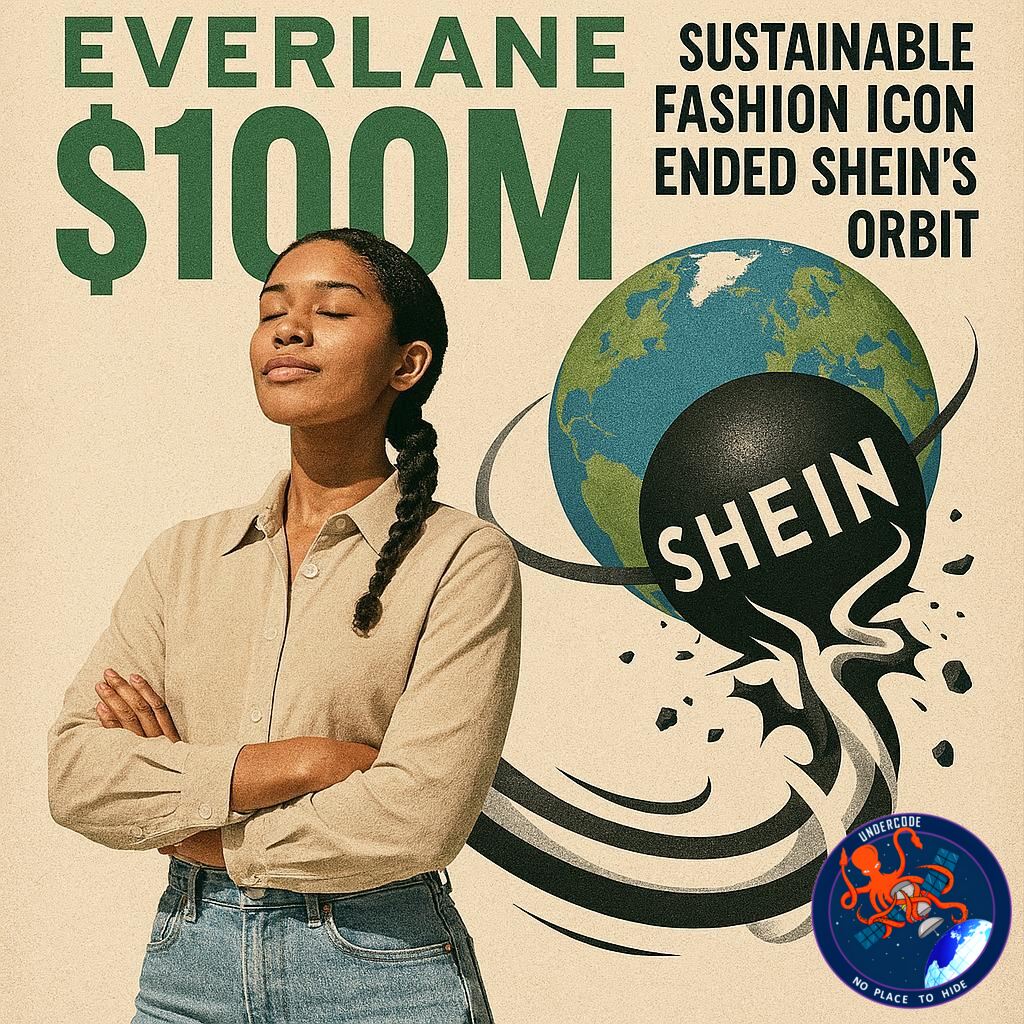
What once looked like the future of ethical shopping is now colliding with the realities of survival in modern retail. Everlane, a brand that built its entire identity around transparency, sustainability, and Millennial-friendly minimalism, is reportedly being sold to Shein — the ultra-fast-fashion giant often criticized for environmental damage and aggressive production cycles. The reported $100 million valuation doesn’t just mark a business transaction; it symbolizes the fading idealism of 2010s direct-to-consumer (DTC) culture. A decade ago, brands like Everlane promised consumers they could change the world through their wardrobe choices. Today, those same brands are being absorbed, restructured, or quietly erased from independence.
the Original
Everlane, once a leading ethical fashion brand, is reportedly being sold to Shein for around $100 million. Everlane built its reputation on transparency, sustainable materials, and ethical manufacturing practices aimed at Millennial consumers who valued responsible shopping. Shein, in contrast, is widely known as a fast-fashion powerhouse producing large volumes of inexpensive clothing, often criticized for environmental and labor concerns.
The potential acquisition highlights a broader collapse in the 2010s direct-to-consumer (DTC) retail boom. Many brands that once promised ethical disruption have either been sold to private equity firms, gone bankrupt, or pivoted into entirely new industries such as AI infrastructure. Examples include Allbirds shifting toward tech infrastructure, Casper being acquired by private equity, and companies like SmileDirectClub collapsing entirely.
Not all DTC brands have failed. Warby Parker stands out as a rare success story, maintaining strong market value and expanding into AI-driven smart eyewear technology through partnerships like Google. However, most brands that once relied heavily on venture capital funding have struggled to maintain profitability.
Everlane’s decline has been linked to several factors, including declining product quality perceptions, pandemic-era demand shifts, and rising interest rates that dried up venture funding. The company also accumulated significant debt, reportedly around $90 million, which made it increasingly difficult to operate independently.
Private equity firm L Catterton previously held a stake in Everlane and reportedly helped explore sale options. Shein’s interest is strategic: acquiring Everlane could help it diversify beyond fast fashion and improve its global brand positioning, especially as regulatory pressure and tariffs increase.
Despite financial logic, analysts warn that Everlane’s core customers—largely Millennial consumers drawn to ethical branding—may react negatively to the association with Shein. While the deal could save Everlane financially, it risks alienating the very audience that built its identity.
What Undercode Say:
The End of Ethical Branding as a Business Model
Everlane’s trajectory shows how difficult it is to sustain “ethical branding” when it becomes the core selling point. In the early 2010s, transparency was a differentiator. Today, it is expected — and rarely enough to protect margins. The collapse suggests that morality-driven marketing works best as an acquisition tool, not a long-term financial engine.
The Brutal Economics Behind DTC Failure
Direct-to-consumer brands grew rapidly on venture capital fuel, not necessarily on stable profitability. Once interest rates rose and funding tightened, many of these companies were exposed. Everlane’s $90 million debt is not an anomaly but a pattern repeated across the entire DTC ecosystem, where growth was prioritized over resilience.
Shein’s Strategic Expansion Beyond Fast Fashion
Shein’s move toward acquiring Everlane is not just about clothing — it is about repositioning. By absorbing a “sustainable” brand, Shein gains access to a different consumer demographic and potentially softens its global image. This is brand laundering through acquisition, not reinvention.
The Collapse of Millennial Consumer Idealism
The same consumers who once bought Everlane to “vote with their wallet” are now witnessing those brands being absorbed by companies they originally rejected. This reflects a broader cultural shift: idealism in consumption is being replaced by convenience, price sensitivity, and algorithm-driven shopping habits.
Private Equity’s Quiet Takeover of Lifestyle Brands
A consistent pattern emerges across Casper, Outdoor Voices, and others — private equity firms step in when growth stalls. These firms are less interested in brand philosophy and more focused on restructuring, liquidation, or resale. Everlane fits neatly into this lifecycle of acquisition and extraction.
Warby Parker as the Rare Exception, Not the Rule
Warby Parker’s success is often cited as proof that DTC can work, but it is increasingly the exception. Its pivot into AI-powered smart glasses shows that survival requires technological expansion, not just better branding or ethical messaging.
Sustainability Messaging vs Operational Reality
Many DTC brands built identity-first businesses, where storytelling outweighed operational efficiency. Everlane’s case highlights the gap between sustainable messaging and sustainable economics — a gap that becomes fatal when capital tightens.
The AI Pivot Era Begins
The mention of Allbirds shifting toward AI infrastructure signals a broader trend: failing consumer brands are not disappearing — they are mutating. The future of retail survivors may depend less on clothing or physical goods and more on technology integration.
Consumer Trust Erosion in Ethical Labels
As more “ethical” brands struggle or get acquired by controversial companies, consumer trust in sustainability claims weakens. This creates a feedback loop where branding becomes less credible and price becomes the dominant decision factor.
🔍 Fact Checker Results
Acquisition Status and Reporting Accuracy
The reported Everlane–Shein deal is described as “reported,” meaning it is not fully confirmed by official final acquisition documentation.
Industry Pattern Verification
The decline of multiple DTC brands (Casper, Allbirds, SmileDirectClub) aligns with widely documented venture capital market contraction trends after 2021.
Shein Market Position
Shein is correctly identified as a dominant global fast-fashion retailer with significant controversy around environmental and labor practices, as widely reported by academic and industry studies.
📊 Prediction
The likely outcome of the Everlane–Shein alignment is a gradual dilution of Everlane’s original identity, followed by restructuring to fit Shein’s scale-driven model. Over time, Everlane may either become a sub-label for “premium fast fashion” or disappear entirely as an independent identity. Meanwhile, the broader DTC ecosystem will continue consolidating, with surviving brands either merging into tech-driven ecosystems or pivoting into AI-integrated retail systems where physical product branding becomes secondary to platform control and data advantage.
🕵️📝Let’s dive deep and fact‑check.
References:
Reported By: edition.cnn.com
Extra Source Hub (Possible Sources for article):
https://www.digitaltrends.com
Wikipedia
OpenAi & Undercode AI
Image Source:
Unsplash
Undercode AI DI v2
Bing
🔐JOIN OUR CYBER WORLD [ CVE News • HackMonitor • UndercodeNews ]
📢 Follow UndercodeNews & Stay Tuned:
𝕏 formerly Twitter 🐦 | @ Threads | 🔗 Linkedin | 🦋BlueSky | 🐘Mastodon


