
Listen to this Post
Introduction: The Charging Surprise You Didn’t See Coming
Apple’s AirPods Pro 3 have landed, and while everyone expected an upgrade in sound and features, there’s one detail that might catch buyers off guard: the charging cable isn’t included. In today’s tech world, we often assume new devices come ready to charge straight out of the box, but Apple’s latest move continues its trend of minimal packaging. Here’s what you need to know before unboxing your AirPods Pro 3.
Bring Your Own USB-C Cable or Wireless Charger 🔌
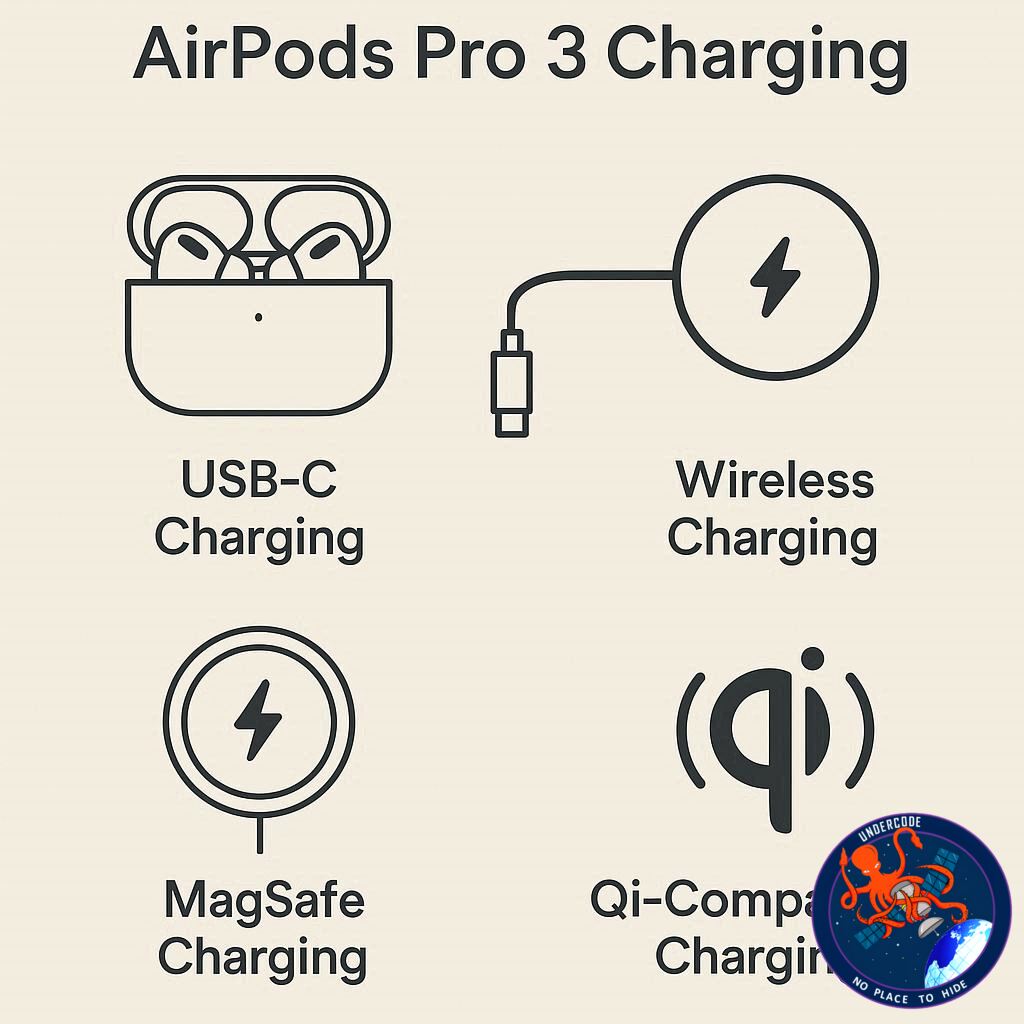
Apple clearly states in the AirPods Pro 3 tech specs: “USB‑C Charge Cable sold separately.” While many users have spare cables or wireless chargers at home, this could surprise those who rely solely on what’s included in the package. If you don’t have a compatible charger, you may need to spend extra to power up your AirPods Pro 3 case.
Apple’s Shift Toward Minimalism 🌱
The AirPods Pro 3 join a growing list of Apple products shipped without cables or power bricks. Apple cites environmental reasons for this change, claiming it reduces electronic waste. However, the move has faced legal scrutiny, and in some cases, courts have required Apple to provide a cable or power brick for free.
Accessory Deals You Might Consider 🛒
For those looking to prep for charging, Amazon offers deals on related accessories:
AirPods Pro 3 – Preorder
Apple AirTag 4 Pack – 24% off
Apple AirTag Single – 17% off
Beats USB-C to USB-C Woven Short Cable – 29% off
Wireless CarPlay Adapter
Convenience vs Cost: What You Should Know 💰
The missing cable may seem minor, but it reflects Apple’s broader philosophy of encouraging users to invest in accessories separately. While it may be inconvenient, it aligns with Apple’s approach to reducing packaging and shipping size, which also impacts logistics and environmental footprint.
What Undercode Say: In-Depth Analysis 🔍
Apple’s decision to exclude charging cables continues a controversial trend that balances environmental goals with customer inconvenience. The environmental argument is compelling—fewer included cables mean less plastic, reduced shipping weight, and lower carbon emissions—but it’s not universally embraced by consumers. Many view it as a strategy to generate additional sales through accessory purchases.
Financially, Apple has effectively shifted part of the product cost onto the consumer. While AirPods Pro 3 are priced at a premium, the necessity of buying a USB-C cable or wireless charger adds to the total expenditure, impacting perceived value. This could influence purchasing behavior, especially among first-time AirPods buyers.
From a legal standpoint, Apple’s minimal packaging has triggered lawsuits over consumer rights, highlighting a tension between environmental initiatives and mandatory product inclusions. The brand’s consistent messaging focuses on sustainability, but critics argue it borders on cost-saving disguised as green innovation.
User convenience also takes a hit. With the transition from Lightning to USB-C, users with older cables may be forced to buy additional adapters. While some tech enthusiasts appreciate standardization, casual consumers might find the shift frustrating, leading to potential dissatisfaction.
Marketing-wise, Apple’s strategy keeps accessories in the spotlight. Promotions for cables, wireless chargers, and related products serve dual purposes: they complement the AirPods experience and generate incremental revenue for the company. This is evident in Amazon deals highlighted alongside the AirPods Pro 3.
Technologically, the AirPods Pro 3 offer significant improvements in audio performance, active noise cancellation, and spatial audio. Yet, the charging limitation underscores a paradox: cutting-edge tech requires extra effort from users to access its full potential. For some, this minor inconvenience could affect brand loyalty, particularly if competitors provide bundled accessories.
The broader industry trend mirrors Apple’s move. Many electronics manufacturers are adopting minimalist packaging, citing environmental benefits. This positions Apple as a leader in sustainable product design, yet it also opens debates about consumer rights, cost transparency, and user experience.
Overall, the AirPods Pro 3 highlight the balance between innovation, environmental responsibility, and customer satisfaction. While the tech advancements are impressive, the missing cable demonstrates that even small details can influence public perception and purchasing decisions.
Fact Checker Results ✅❌
✅ Apple officially confirms USB-C cable is sold separately.
✅ Environmental reasons are cited for minimal packaging.
❌ The product does not include a charging cable or power brick in the box.
Prediction 🔮
Expect Apple to continue this trend of selling fewer included accessories in future product launches. Consumers may adapt by investing in third-party chargers, while Apple leverages accessory sales as a steady revenue stream. The conversation around sustainability versus convenience will likely intensify, potentially shaping the design and packaging of upcoming devices.
🕵️📝✔️Let’s dive deep and fact‑check.
References:
Reported By: 9to5mac.com
Extra Source Hub:
https://www.facebook.com
Wikipedia
OpenAi & Undercode AI
Image Source:
Unsplash
Undercode AI DI v2
🔐JOIN OUR CYBER WORLD [ CVE News • HackMonitor • UndercodeNews ]
📢 Follow UndercodeNews & Stay Tuned:
𝕏 formerly Twitter 🐦 | @ Threads | 🔗 Linkedin | 🦋BlueSky | 🐘Mastodon


