
Listen to this Post
Introduction
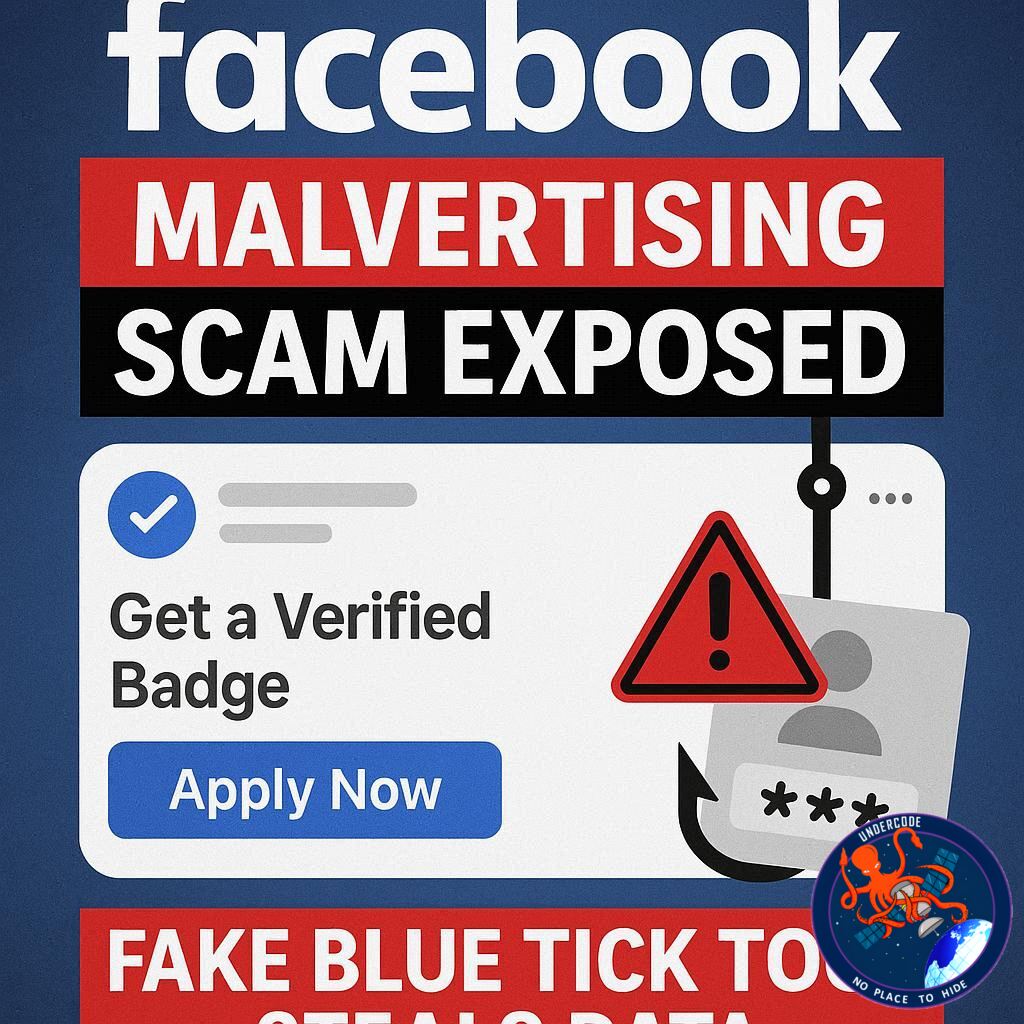
Cybercriminals are getting smarter, and their latest trick is hitting creators and businesses where it hurts most — their social media accounts. A new wave of malvertising on Meta is fooling unsuspecting users with tutorial-style ads that appear to offer a shortcut to the coveted blue verification tick. Instead of unlocking exclusive features, the so-called browser extension delivers a nasty surprise: stolen data, hijacked accounts, and more scams funded by your own identity.
Full Breakdown of the Scam
Threat actors have launched a dangerous malvertising campaign on Meta targeting businesses and content creators. The attack revolves around fake video tutorials that claim to show how to download and install a browser extension that supposedly unlocks Facebook’s blue verification badge or other exclusive perks.
At first glance, the ads look convincing. The attackers went as far as recording step-by-step tutorials, making the scheme appear authentic. However, the extension is purely malicious, designed to steal sensitive data from victims’ browsers.
At least 37 ads promoting this fraudulent extension were linked back to a single Facebook account. Research from Bitdefender’s Ionut Baltariu shows strong ties to Vietnamese-speaking cybercriminals. The video narration, code snippets, and even comments inside the extension are all written in Vietnamese. The code shows signs of being AI-generated: messy, weakly protected, and using basic variable names — but still effective enough to carry out its purpose.
Inline comments in the malicious script reveal “adjustable sections,” allowing attackers to quickly tweak settings like the size and placement of the fake verification tick. This flexibility makes it easy for scammers to redeploy new versions, ensuring the campaign stays alive.
The distribution method adds another dangerous twist. Instead of shady hosting, the malware is delivered via Box.com, a legitimate and trusted file-sharing platform. This gives the campaign credibility while making it harder for users to suspect foul play. By embedding links into tutorials, attackers automate mass distribution at scale, creating an industrialized chain of deception.
Once installed, the extension executes its real mission: stealing Facebook session cookies and sending them directly to a Telegram bot under the attackers’ control. It also collects the victim’s IP address through ipinfo.io, giving scammers additional data. Some advanced variants go further, interacting with Facebook’s Graph API using stolen tokens. This lets them identify Facebook Business accounts — prime targets since they hold more value than individual profiles.
These hijacked accounts are either resold on Telegram markets or repurposed to fuel future scams, creating a vicious cycle. Criminals essentially turn stolen accounts into ad machines for spreading more malware, multiplying the damage exponentially.
This campaign is not an isolated case. Earlier this year, researchers uncovered similar schemes where fake Facebook ads impersonated popular brands like cryptocurrency firms, Bitwarden, Photoshop, and CapCut. The trend is clear: instead of directly hacking, attackers now trick victims into infecting themselves.
The scam preys on the universal desire for the blue verification badge. Since Meta moved to a subscription model for verification, scammers exploit this shift by offering shortcuts that appear free but come with devastating consequences. Small businesses and creators are particularly vulnerable, as losing access to accounts can cause financial setbacks, loss of visibility, and severe reputational harm.
What Undercode Say:
From an analytical standpoint, this campaign reveals several alarming trends in cybercrime.
First, industrialized malvertising is becoming a dominant strategy. Attackers no longer need complex zero-day exploits when they can mass-produce fake ads, tutorials, and tools with the help of AI. Automation allows them to scale their operations globally with minimal effort.
Second, trusted platforms as attack vectors represent a major security gap. Hosting malicious files on reputable sites like Box.com makes it harder for victims to spot danger. The reliance on cloud services gives scammers both credibility and distribution efficiency.
Third, session cookie theft remains one of the most profitable attack methods. By hijacking browser cookies, criminals bypass passwords and multi-factor authentication, instantly gaining access to high-value accounts.
Fourth, the economic motive behind Facebook Business accounts shows how deeply integrated cybercrime is with social media ecosystems. Business accounts are not just tools for marketing but valuable commodities in underground markets. Their resale fuels a cycle where stolen profiles are weaponized to steal more.
Fifth, psychological manipulation is central to this campaign’s success. By tapping into people’s desire for validation, status, and cost-free benefits, scammers exploit the human factor — the weakest link in cybersecurity.
This incident also highlights the rise of AI-generated malicious code. While sloppy and amateurish, AI-assisted code is good enough to carry out theft. Combined with human social engineering tactics, it creates a hybrid threat that is harder to counter.
Moreover, the shift to subscription-based services by tech giants indirectly fuels scams. When official verification requires payment, hackers swoop in with “free alternatives” to exploit those unwilling or unable to pay. This creates fertile ground for deception campaigns.
Finally, the cyclical nature of malvertising ensures its persistence. Each stolen account funds the next wave of scams, meaning even small lapses in security can snowball into massive campaigns. Unless platforms like Meta take stronger measures to detect and stop malicious ads, these schemes will continue thriving.
For creators and small businesses, the lesson is simple: there are no shortcuts to authenticity. Any tool, extension, or tutorial claiming to unlock verification or exclusive features for free should be treated as a red flag. Cybersecurity awareness must be considered as vital as content creation itself.
✅ Fact Checker Results
This malvertising campaign is real and documented by Bitdefender.
The malicious code and tutorials originated from Vietnamese-speaking actors.
Claims of free blue verification tools are 100% scams.
🔮 Prediction
Given the growing reliance on AI, automation, and cloud platforms, these types of scams will likely intensify in the coming years. Expect more fake tutorials, more hijacked accounts, and more “free” tools promising quick fixes. If Meta doesn’t strengthen its ad screening, malvertising could evolve into one of the biggest threats to social media integrity.
🕵️📝✔️Let’s dive deep and fact‑check.
References:
Reported By: www.bitdefender.com
Extra Source Hub:
https://www.reddit.com/r/AskReddit
Wikipedia
OpenAi & Undercode AI
Image Source:
Unsplash
Undercode AI DI v2
🔐JOIN OUR CYBER WORLD [ CVE News • HackMonitor • UndercodeNews ]
📢 Follow UndercodeNews & Stay Tuned:
𝕏 formerly Twitter 🐦 | @ Threads | 🔗 Linkedin | 🦋BlueSky | 🐘Mastodon


