
Listen to this Post
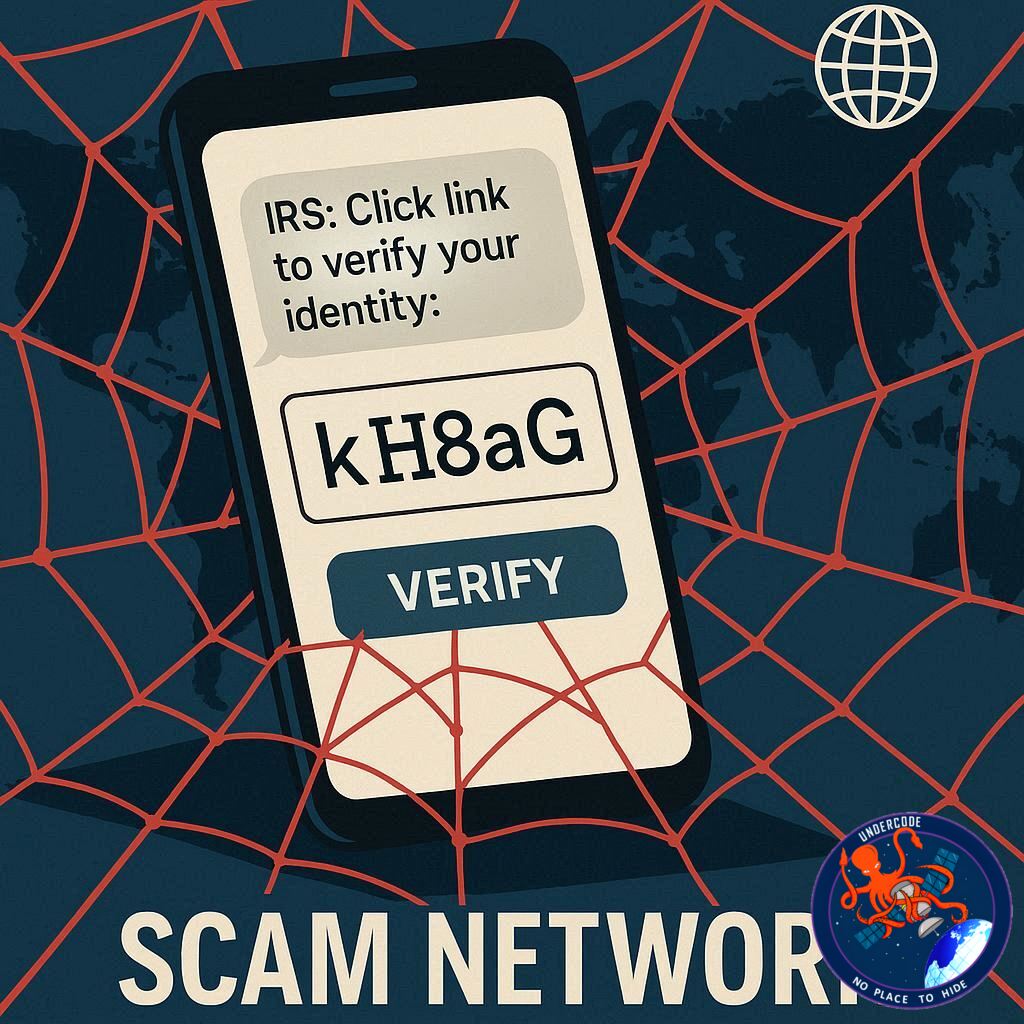 Introduction: When “I’m Not a Robot” Becomes a Financial Trap
Fake CAPTCHA pages have evolved far beyond simple phishing tricks. A growing cybersecurity concern shows attackers using convincing verification screens to manipulate users into sending international SMS messages that generate revenue through International Revenue Share Fraud (IRSF) systems. Instead of stealing passwords directly, these schemes quietly convert user actions into monetized telecom traffic. By combining fake CAPTCHA interfaces with affiliate tracking, redirects, and SMS-trigger triggers, attackers build a hidden revenue pipeline that benefits fraud networks while victims remain unaware of what they are doing. This tactic reflects a broader shift in cybercrime where human behavior itself becomes the product being exploited.
Summary: How Fake CAPTCHA Pages Drive SMS-Based Revenue Fraud
Fake CAPTCHA pages are designed to look like legitimate verification systems such as “I am not a robot” checks. Once a user interacts with them, the page often initiates hidden scripts or redirects that push the user into additional actions.
In this case, the key mechanism is not malware installation but SMS abuse.
Users are tricked into sending international SMS messages, often under the impression they are completing a verification step or unlocking content.
These SMS messages are routed through premium or revenue-sharing telecom networks.
Fraudsters earn money from termination fees or shared telecom revenue generated by each message.
The system is linked to International Revenue Share Fraud (IRSF), a known telecom exploitation model.
Affiliate tracking systems are used to measure and monetize user actions.
Redirection chains mask the final destination of the request.
The scam often mimics legitimate CAPTCHA flows to avoid suspicion.
The interface may appear harmless, similar to standard bot checks used on websites.
These attacks exploit user familiarity with CAPTCHA systems.
Users assume the process is normal because CAPTCHAs are widely used for security.
The fraud relies on behavioral manipulation rather than technical exploitation.
Many victims unknowingly trigger SMS charges or subscriptions.
The infrastructure often spans multiple countries, making enforcement difficult.
Attackers use automation to scale SMS generation requests.
Revenue is accumulated through high-volume micro-transactions.
Telecom intermediaries play a role in routing and monetization.
The system is difficult to detect in real time due to legitimate-looking traffic patterns.
These schemes are increasingly tied to broader mobile fraud ecosystems.
Fake CAPTCHA scams are becoming part of hybrid fraud strategies combining web and telecom abuse.
What Undercode Say: Analysis of the Fake CAPTCHA IRSF Fraud Model
The evolution of fake CAPTCHA scams into telecom-driven fraud marks a shift from traditional phishing into infrastructure exploitation.
Instead of stealing credentials, attackers now monetize user interaction itself.
The CAPTCHA interface is not the target but the delivery mechanism.
It provides legitimacy, reducing user suspicion during interaction.
This psychological trust is the core vulnerability being exploited.
IRSF schemes allow fraudsters to profit from SMS routing fees.
Each SMS becomes a micro-revenue event in a global billing chain.
Affiliate tracking systems act as attribution layers for fraud networks.
They help attackers measure conversion efficiency like legitimate advertisers.
This creates a dark mirror of digital marketing ecosystems.
Redirection chains ensure the user does not see the final monetization endpoint.
The attack flow is deliberately fragmented to avoid detection systems.
Security tools often focus on malware, not billing manipulation.
This allows SMS pumping and revenue fraud to bypass traditional defenses.
The use of CAPTCHA adds legitimacy because users associate it with safety.
This is a psychological exploitation of web trust infrastructure.
Mobile networks become unwilling participants in fraud monetization.
IRSF abuse highlights weaknesses in telecom billing transparency.
The convergence of web scams and telecom fraud is accelerating.
Fake CAPTCHA systems are now part of multi-layer fraud architectures.
These architectures blend UX manipulation, affiliate tracking, and telecom revenue abuse.
Detection requires cross-industry cooperation between web security and telecom providers.
Without it, these scams remain highly scalable and profitable.
Fact Checker Results
Fake CAPTCHA scams are widely recognized as a modern phishing vector used for manipulation and malware delivery.
IRSF (International Revenue Share Fraud) is a documented telecom fraud model involving revenue-sharing number abuse.
The combination of CAPTCHA abuse and SMS monetization is an emerging hybrid fraud technique confirmed in cybersecurity reporting.
Prediction: Where Fake CAPTCHA SMS Fraud Is Heading Next
The next evolution of this scam model is likely to integrate AI-driven adaptive CAPTCHA pages that adjust behavior based on user interaction patterns. Fraud networks may increasingly use real-time affiliate optimization systems to maximize SMS conversion rates across regions. Telecom fraud will likely become more automated, with bots simulating human verification flows at scale. As detection improves on traditional phishing, attackers will continue shifting toward infrastructure-level monetization strategies that are harder to trace and block.
🕵️📝✔️Let’s dive deep and fact‑check.
References:
Reported By: x.com
Extra Source Hub (Possible Sources for article):
https://www.digitaltrends.com
Wikipedia
OpenAi & Undercode AI
Image Source:
Unsplash
Undercode AI DI v2
Bing
🔐JOIN OUR CYBER WORLD [ CVE News • HackMonitor • UndercodeNews ]
📢 Follow UndercodeNews & Stay Tuned:
𝕏 formerly Twitter 🐦 | @ Threads | 🔗 Linkedin | 🦋BlueSky | 🐘Mastodon


