
Listen to this Post
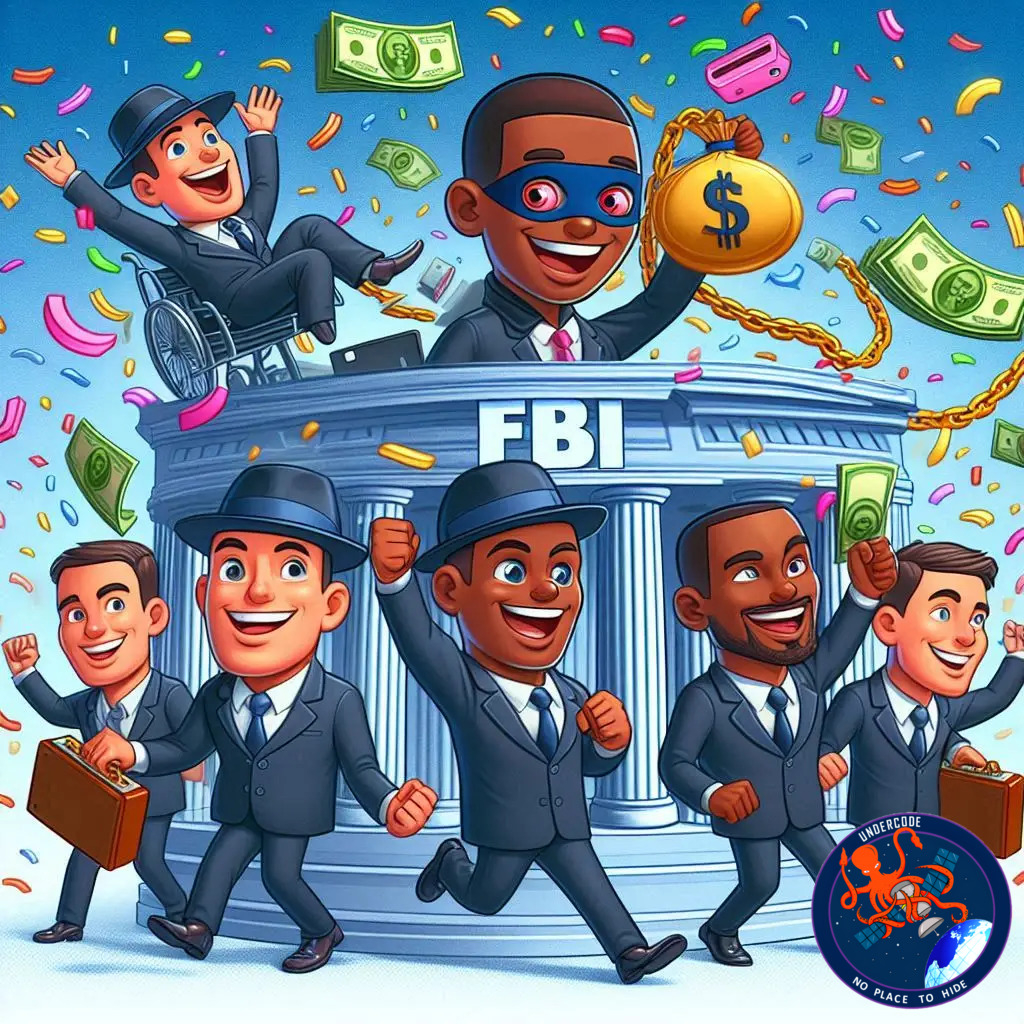
The FBI recently took down a sophisticated cybercriminal operation that targeted Americans through fraudulent online banking schemes. The criminals, posing as legitimate banks, lured victims into providing their login credentials, resulting in millions of dollars in losses. This seizure marks a major step in combating digital fraud and protecting consumers from evolving online threats.
Massive Online Bank Fraud Uncovered
A criminal network exploited Google and Bing ads to impersonate real bank advertisements. Unsuspecting users who clicked on these ads were redirected to fraudulent websites controlled by the criminals. Once users entered their login information, malware installed on these fake sites captured the credentials, which were then used to access actual bank accounts and steal funds.
The Justice Department confirmed that the domain web3adspanels[.]org served as a backend hub for storing and manipulating stolen bank login information. This seizure follows a recent FBI Public Service Announcement warning Americans about account takeover fraud through impersonation of financial institutions.
At least 19 victims in the United States, including two companies in Georgia, lost approximately $14.6 million and faced attempted losses totaling $28 million due to this scheme. The domain had been actively hosting thousands of stolen credentials and continued operating as recently as November 2025.
Authorities in Estonia collaborated with U.S. law enforcement, preserving and collecting data from servers hosting phishing pages and stolen credentials. Since January, the FBI’s Internet Crime Complaint Center (IC3) has received over 5,100 complaints, with reported losses exceeding $262 million. The coordinated seizure prevents further use of the stolen information, highlighting the global nature of cybercrime and the need for international cooperation.
Victims were encouraged to remain vigilant, monitor their accounts, and report suspicious activity to law enforcement. The case emphasizes the increasing sophistication of phishing attacks and the risks of digital banking in an era of pervasive online fraud.
What Undercode Say:
This incident exposes the growing sophistication of phishing and account takeover operations. Criminals are no longer relying solely on generic phishing emails; they are leveraging paid advertising platforms like Google and Bing to create a veneer of legitimacy. By mimicking real bank advertisements, these criminals exploit the inherent trust users place in recognized brands.
The operation demonstrates how malware can seamlessly integrate into fake banking sites to intercept login credentials. The fact that thousands of stolen credentials were actively maintained on a centralized backend highlights a significant operational scale. Cybercriminals are not only stealing funds but also creating extensive databases for repeated exploitation, making each data breach exponentially more dangerous.
International collaboration played a critical role in this takedown. Estonian authorities’ ability to preserve server data illustrates the importance of cross-border coordination in tackling digital crime. The seizure also reflects a proactive strategy from U.S. law enforcement, combining public warnings with decisive action to dismantle criminal infrastructure.
The financial impact is staggering: $14.6 million lost directly, with attempted losses more than double. Beyond immediate financial damage, these breaches erode consumer confidence in digital banking, potentially encouraging stricter regulatory oversight. Businesses, especially small to medium-sized companies, are highly vulnerable to such attacks due to limited cybersecurity resources.
The rapid evolution of phishing techniques shows that criminals are constantly adapting to countermeasures. By using domain names that appear professional and leveraging legitimate ad networks, they reduce suspicion and increase the likelihood of success. This case also underscores the critical importance of cybersecurity hygiene, multi-factor authentication, and vigilance among users.
Cybersecurity experts should note that the attack method—redirecting users through ads—can be replicated across other industries beyond banking, signaling a broader threat to e-commerce, insurance, and payment platforms. Furthermore, the persistence of such operations over months demonstrates that early detection, reporting, and inter-agency collaboration are vital in minimizing both financial and reputational damages.
This takedown may set a precedent for law enforcement’s approach to combating financially motivated cybercrime. By targeting the operational infrastructure rather than solely the end perpetrators, authorities can disrupt ongoing schemes and prevent future attacks. Moreover, this case reflects a broader trend of blending social engineering with technical exploitation, making digital literacy and skepticism essential skills for every internet user.
Fact Checker Results:
✅ The domain web3adspanels[.]org was seized by the FBI.
✅ Victims reported over $14.6 million in losses with attempted losses of $28 million.
✅ Estonian authorities preserved and collected data from phishing servers.
Prediction:
📊 Cybercriminals will likely pivot to newer, more sophisticated advertising-based phishing methods.
📊 Continued international collaboration will be crucial to quickly dismantle future large-scale phishing operations.
📊 Multi-factor authentication and real-time monitoring will become standard recommendations for consumers and businesses to mitigate account takeover risks.
▶️ Related Video (88% Match):
🕵️📝✔️Let’s dive deep and fact‑check.
References:
Reported By: securityaffairs.com
Extra Source Hub (Possible Sources for article):
https://www.twitter.com
Wikipedia
OpenAi & Undercode AI
Image Source:
Unsplash
Undercode AI DI v2
Bing
🔐JOIN OUR CYBER WORLD [ CVE News • HackMonitor • UndercodeNews ]
📢 Follow UndercodeNews & Stay Tuned:
𝕏 formerly Twitter 🐦 | @ Threads | 🔗 Linkedin | 🦋BlueSky | 🐘Mastodon


