
Listen to this Post
Introduction: The Attack That Hit Where Trust Lives
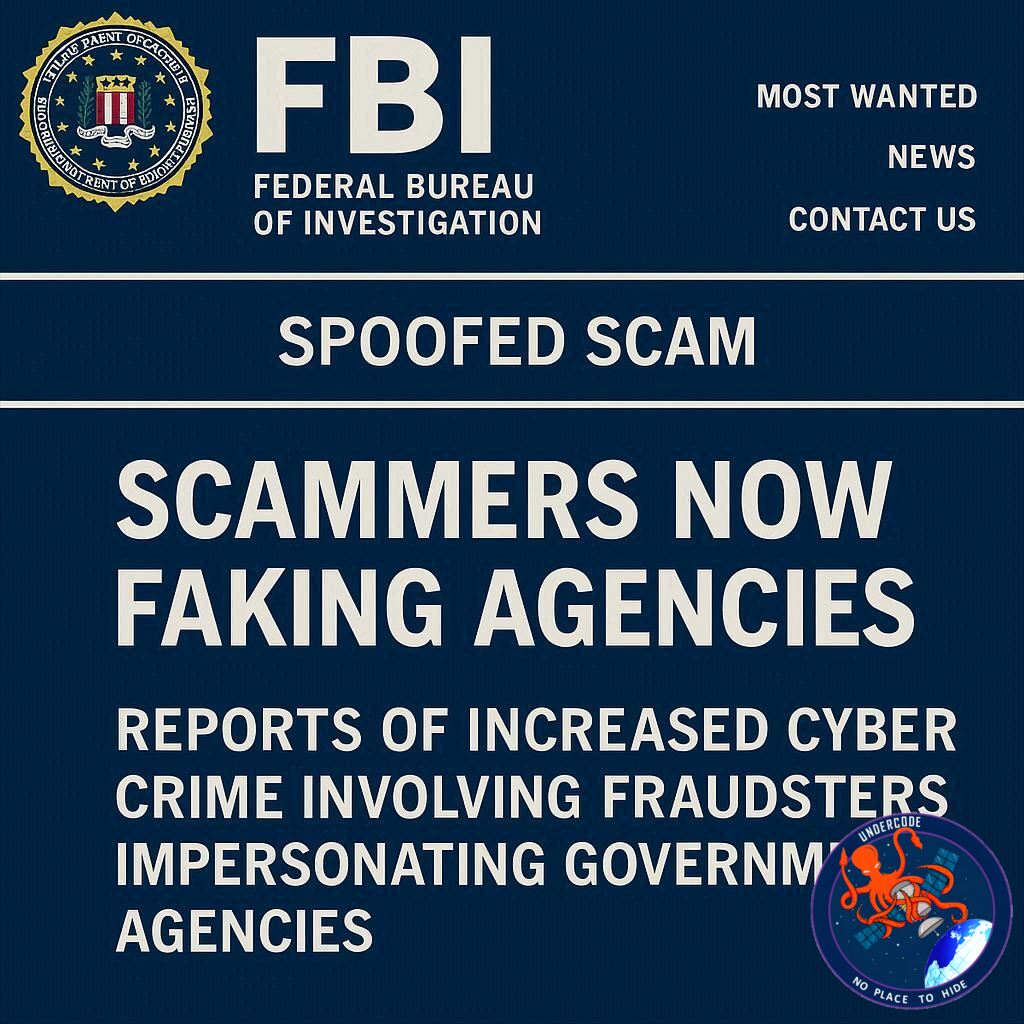
In a digital world where deception thrives, scammers have taken their audacity to a new level—by faking the FBI’s own website. Yes, even the Internet Crime Complaint Center (IC3), the very place meant to protect people from online crime, has become a target. The FBI is sounding the alarm after detecting multiple fraudulent versions of its IC3 platform circulating online. These spoofed sites are designed to trick victims into handing over personal information, money, and trust—all while wearing the mask of law enforcement itself.
This revelation underscores a disturbing reality: cybercriminals are now targeting not just individuals or companies, but the very institutions built to defend against them. Here’s what’s happening, why it matters, and how to stay safe.
The Rise of FBI Spoofing Scams
According to a public service announcement released on September 19, the FBI confirmed that scammers are creating fake versions of the IC3 website to deceive victims. These fraudulent sites imitate the real IC3.gov domain, luring unsuspecting users into entering sensitive data—names, phone numbers, home addresses, and even banking details.
The goal, as always, is identity theft and financial fraud. Once a user submits information to the fake site, it becomes a digital goldmine for hackers who can use it to drain accounts, open credit lines, or sell the data on dark web markets.
The FBI explained, “A spoofed website is designed to impersonate a legitimate website and may be used for illegal conduct, such as personal information theft and to facilitate monetary scams.”
While the agency hasn’t released specific fake domain names, it did provide examples of how such schemes typically operate. Cybercriminals often alter just a single character in the domain name or change the domain ending—like swapping ic3.gov for ic3gov.com, ic3.com, or icc3.com—to fool users who glance too quickly.
A Trusted Gateway Under Siege
The Internet Crime Complaint Center, or IC3, has been one of the most trusted gateways for Americans to report online crimes since its inception in 2000. Over 9 million complaints have been filed through the platform, covering everything from phishing to ransomware. But this new scam weaponizes that trust.
The real IC3 warns visitors that it never collaborates with private entities like law firms or cryptocurrency services to recover lost money. Nor will it ever directly contact individuals asking for funds or personal details. Any such message is a red flag.
This isn’t the first time scammers have used the FBI’s name for malicious gain. Back in April, over 100 reports of IC3 impersonation scams surfaced. The difference now is the sophistication—fraudsters are building fully functional mirror sites that look nearly identical to the real thing.
The Psychology Behind Spoofing
Why does this tactic work so well? Because trust is the currency of the internet. When a site looks official, complete with government logos, legal disclaimers, and familiar interfaces, people let their guard down. Spoofed domains prey on human instinct—the assumption that what looks legitimate must be legitimate.
The FBI emphasizes that users should always manually type www.ic3.gov
into their browser and avoid using search engines, as sponsored ads might lead to fraudulent pages. Even a single click on a fake link can expose users to malware, phishing attempts, or identity theft.
The Global Ripple Effect
This incident reflects a broader pattern of cyber threats escalating worldwide. Spoofing isn’t just limited to the FBI—it’s affecting banks, hospitals, and even tech giants. Each new attack chips away at digital trust, blurring the line between what’s real and what’s counterfeit.
VPNs, passkeys, and encryption tools can offer layers of defense, but the core issue remains awareness. Users must be vigilant, because the weakest link in any cybersecurity chain isn’t the software—it’s human trust.
What Undercode Say:
This case is not merely about a cloned website—it’s about the erosion of digital credibility in the age of hyperreal cybercrime. When attackers can convincingly mimic the FBI’s own reporting platform, it signals a profound shift in cyber strategy. Criminals are no longer breaking into systems; they’re building replicas of them.
The implications are enormous. First, it challenges the idea that official domains are inherently safe. The “.gov” suffix was once considered bulletproof, but as spoofing becomes more sophisticated, even that confidence is fading.
Second, it reveals a deeper human vulnerability: the psychology of authority. People are far more likely to trust communications that appear to come from an entity of power. The FBI’s logo, the word “government,” or a familiar .gov format can override skepticism in an instant.
Third, the timing of these scams is strategic. With cybercrime reports skyrocketing and billions lost annually, desperate victims are more likely to fall for recovery scams—websites or “agencies” claiming they can retrieve lost crypto or stolen funds. The fake IC3 platforms exploit that desperation perfectly.
The solution lies not in fear, but in education and design resilience. Government and corporate websites must adopt stronger domain verification systems, including visible trust seals and cryptographic verification. Meanwhile, users must develop digital literacy—the ability to spot subtle domain changes, check SSL certificates, and distrust urgency-driven messages.
This incident also raises an uncomfortable question: what happens when deepfakes and AI-generated voices enter this equation? Imagine receiving a phone call from a voice that sounds exactly like an FBI agent, directing you to a spoofed website. The convergence of AI and cybercrime could make these scams almost indistinguishable from reality.
The lesson here isn’t just “be careful online.” It’s a wake-up call about the fragility of digital truth itself. The next evolution of cybersecurity won’t just be about firewalls or encryption—it will be about verifying authenticity in a world where everything can be convincingly faked.
🔍 Fact Checker Results
✅ The FBI officially confirmed the existence of IC3 website spoofing in a PSA dated September 19, 2024.
✅ Legitimate IC3 domain is www.ic3.gov
, and the agency warns against alternate spellings or extensions.
❌ There is no evidence that the FBI partners with private firms or contacts users for money recovery.
📊 Prediction
🧠 Expect an escalation in government-domain spoofing over the next year as cybercriminals exploit public trust in institutions.
⚠️ Fake “fund recovery” websites and impersonation scams will surge, especially in crypto-related cases.
🔐 The next wave of cybersecurity will focus on digital authenticity—tools that prove a site, voice, or email is truly real.
🕵️📝✔️Let’s dive deep and fact‑check.
References:
Reported By: www.zdnet.com
Extra Source Hub (Possible Sources for article):
https://www.facebook.com
Wikipedia
OpenAi & Undercode AI
Image Source:
Unsplash
Undercode AI DI v2
Bing
🔐JOIN OUR CYBER WORLD [ CVE News • HackMonitor • UndercodeNews ]
📢 Follow UndercodeNews & Stay Tuned:
𝕏 formerly Twitter 🐦 | @ Threads | 🔗 Linkedin | 🦋BlueSky | 🐘Mastodon


