
Listen to this Post
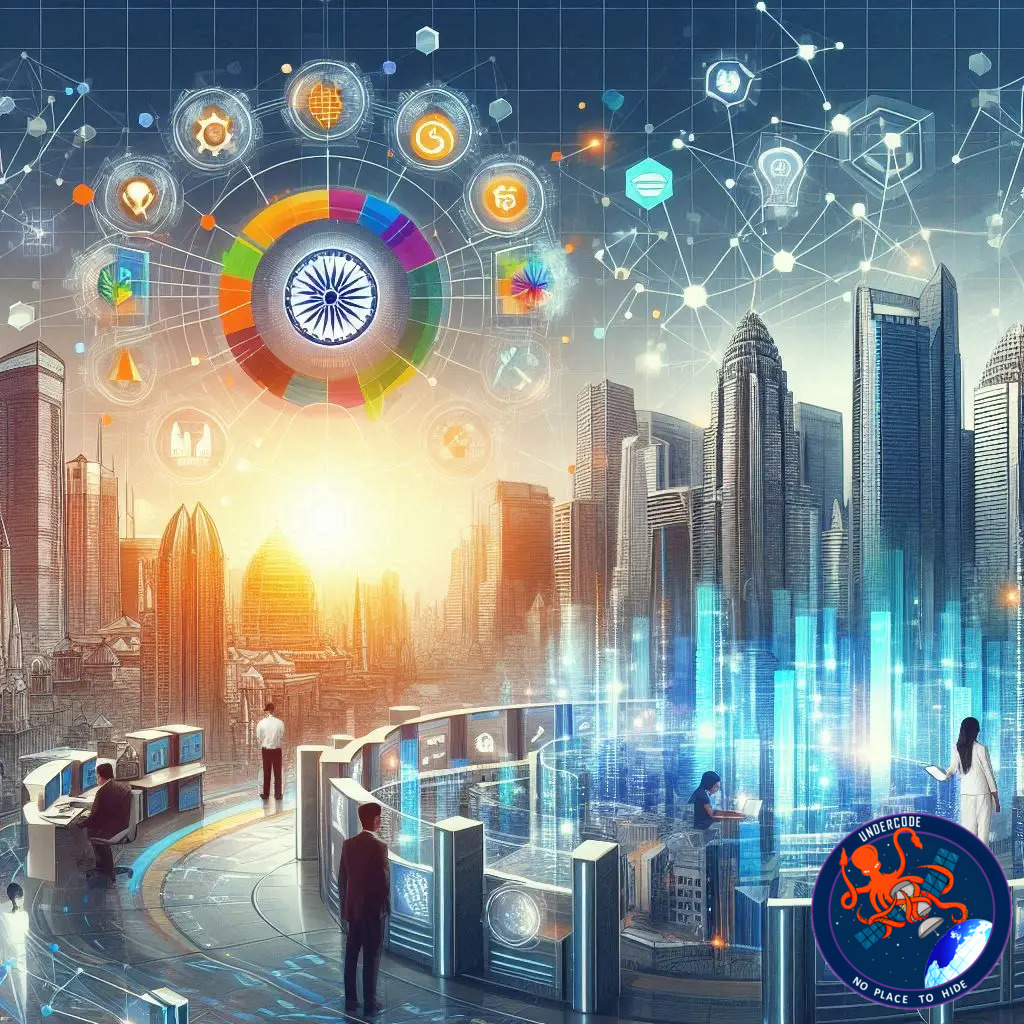
Introduction: The Rise of a Programmable Financial Economy
India is preparing for a structural leap in its financial architecture, one that could reshape how assets move, settle, and interact across borders. The upcoming launch of Finternet, envisioned as the nation’s next major digital public infrastructure after UPI, signals a shift toward programmable finance built on shared ledgers, tokenised instruments, and unified settlement systems. Designed around the Bank for International Settlements’ blueprint for unified ledgers and championed by Nandan Nilekani and architect Siddharth Shetty, the project aims to integrate money, identity, and assets within a single programmable stack. This is not merely an incremental reform, it is a foundational redesign of the rails on which India’s financial future will run.
the Original
Finternet’s Strategic Debut in Capital Markets
Finternet will begin its rollout in the capital markets next year, marking its first application in a highly regulated sector where securities and issuers already operate under established oversight. Regulators consider this domain a practical entry point before expanding into more complex terrains like land and real estate.
Unified Ledgers as the Core Innovation
The system is built around unified ledgers, shared programmable environments where tokenised money and financial assets can coexist and interact under common rules. This design eliminates fragmentation and time delays in settlements by enabling real-time transactions.
Shift from Land Tokenisation to Market-Ready Assets
While early discussions focused on transforming India’s vast and opaque property ecosystem, Finternet’s architects now prioritise sectors with clearer title systems. Shetty explains that commercial real estate and primary projects may adopt tokenisation earlier, but legacy residential properties will require lengthy processes due to complex state-level title histories.
An Operating System for Finance
Shetty describes Finternet as a universal operating layer that replaces the existing patchwork of siloed financial infrastructures. Instead of building separate systems for each financial product, the platform introduces a single wallet holding identity credentials, tokenised money, and assets. This unified design enables users to navigate property, credit, or investment apps without repeated integration barriers.
New Possibilities for MSMEs and AI Agents
In this architecture, AI-driven agents or MSME platforms can tap multiple lenders through programmable interactions rather than bespoke integrations. Tokenisation allows assets like invoices to move with the user, opening access to a wider credit universe.
Cautious Approach to Land and Real Estate
Land tokenisation faces political and legal barriers because land is a state subject. The rollout is expected to vary widely between proactive states and those with more complex legal histories, reinforcing why Finternet begins with capital markets rather than property dossiers.
A Small Team with Global Ambition
Despite the project’s long-term multi-trillion-dollar potential, Finternet is currently developed by a small network of laboratories across India, the US, Singapore, and Switzerland. The protocols are engineered to be asset-agnostic and jurisdiction-agnostic, enabling global financial ecosystems to interoperate.
A Global Vision
The long-term ambition is a world where tokenised assets, programmable money, and cross-border flows travel as seamlessly as internet data packets. India’s capital markets will serve as the proving ground before the platform expands to land, gold, and global consumer transactions.
What Undercode Say:
Tokenised Markets as India’s Architectural Advantage
India’s financial rise has often been driven by infrastructure rather than regulation. UPI changed payments by solving fragmentation. Finternet aims to repeat that success in assets, but its scope is far broader. Instead of tackling one financial vertical at a time, it introduces a universal programmable substrate that could reduce settlement friction across the entire economy.
Unified Ledgers Signal the End of Siloed Financial Systems
Unified ledgers are more than technological experimentation. They represent a conceptual shift. By placing money and assets on the same programmable layer, they eliminate the invisible frictions that currently define capital movement. Real-time clearing becomes the default state, not a premium service.
Why Capital Markets Provide the Fastest Path to Scale
The choice to begin in capital markets is strategic. Securities already operate under clear rules, high transparency, and strong issuer–investor governance. Tokenising fund units or enabling CBDC-based settlements can be implemented without navigating the political labyrinth of land ownership.
The Silent Revolution in Identity and Asset Portability
A single wallet holding identity and tokenised assets is not a minor convenience. It transforms the user’s relationship with the system. Today, assets are trapped in isolated vaults of banks, registrars, and brokers. Tokenisation turns them into portable objects. The user becomes the true owner, not merely an account holder.
Programmable Access for MSMEs Will Rewrite Credit Dynamics
India’s MSMEs are credit starved because lenders cannot access real-time, verified collateral streams. In a unified ledger model, an invoice or receivable can be connected instantly to numerous lenders without repetitive integration work. This is a leap from a bespoke ecosystem to a programmatic marketplace.
AI Agents as Autonomous Financial Actors
Finternet anticipates a future where AI does not just analyse portfolios, it interacts with financial systems directly. With programmable assets, an AI agent can refinance debt, switch collateral, or discover new funding sources autonomously within safe parameters. This is the invisible layer where automation meets finance.
Why Land Will Be the Long War
Land remains India’s most politically sensitive and administratively inconsistent asset class. Each state maintains its own laws, formats, legacy disputes, and title complexities. Tokenisation demands unbroken clarity of ownership. That standard is easily met for new commercial projects but not for decades-old residential plots shaped by local bureaucracy.
A Global System with a Small Core
The fact that Finternet is being designed by small, distributed teams is not a weakness. It mirrors how the internet itself emerged from lean research groups using interoperable protocols. The goal is to create an infrastructure that scales through rules, not workforce size.
India’s Global Bet: Infrastructure as Foreign Policy
If
The Long-Term Potential
As the system matures, it may eventually unify money, securities, property rights, and cross-border flows. This transforms India’s economy from a fragmented organism into a software-defined network of assets. The eventual beneficiaries will be investors, entrepreneurs, and consumers who gain unprecedented financial mobility.
Fact Checker Results
✅ Finternet is confirmed as India’s next major DPI project after UPI.
✅ The initial rollout will focus on capital markets due to clearer regulatory frameworks.
❌ Land tokenisation is not expected in the near term due to complex state-level title systems.
Prediction
Finternet will likely become the backbone of India’s programmable finance era, first reshaping securities markets then extending into trade finance, MSME lending, and cross-border flows. Over the next decade, early adopter states may create isolated pockets of land tokenisation, but financial assets will dominate the first wave of growth. Eventually, India may export these digital rails globally, establishing a network where assets flow with the same freedom as information.
🕵️📝✔️Let’s dive deep and fact‑check.
References:
Reported By: timesofindia.indiatimes.com
Extra Source Hub (Possible Sources for article):
https://www.reddit.com/r/AskReddit
Wikipedia
OpenAi & Undercode AI
Image Source:
Unsplash
Undercode AI DI v2
Bing
🔐JOIN OUR CYBER WORLD [ CVE News • HackMonitor • UndercodeNews ]
📢 Follow UndercodeNews & Stay Tuned:
𝕏 formerly Twitter 🐦 | @ Threads | 🔗 Linkedin | 🦋BlueSky | 🐘Mastodon


