
Listen to this Post
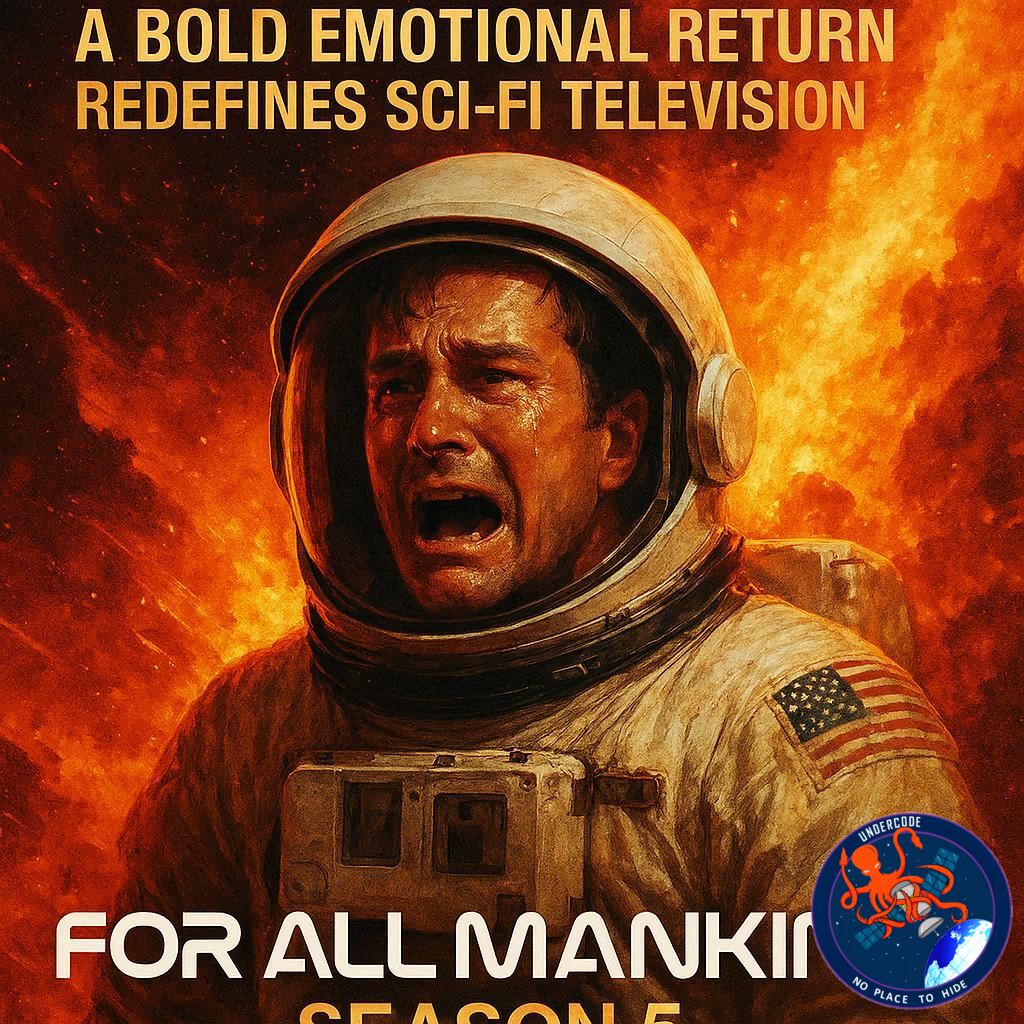
A Long-Awaited Return to Form for a Sci-Fi Epic
After years of building an ambitious alternate-history universe, For All Mankind returns with its fifth season on Apple TV, delivering a powerful reminder of why the series once stood among the most compelling sci-fi dramas on television. Premiering this Friday, the new season doesn’t just continue the story—it reignites the emotional depth and narrative strength that initially captivated audiences.
Set in a world where the space race never truly ended, the show has always thrived on its ability to blend speculative fiction with deeply human storytelling. Season five continues that tradition, but with higher stakes, broader themes, and a renewed sense of purpose that had arguably faded in later seasons.
A Story That Evolves Beyond Earth
Season five picks up years after the dramatic “Goldilocks asteroid heist,” placing viewers in a future where Mars is no longer just a frontier—it’s a functioning colony. Happy Valley has transformed into a bustling settlement, home to thousands, and serves as a launchpad for even more ambitious missions deeper into the solar system.
But with growth comes conflict. Earth’s governments now demand authority over Mars, creating rising tensions between colonists seeking independence and the institutions that funded their journey. The result is a narrative that mirrors historical revolutions, particularly the struggle for autonomy and identity in a new world.
Familiar Themes in an Unfamiliar Setting
While the premise grows increasingly futuristic, the emotional core remains grounded. Season five explores themes of legacy, family, and moral ambiguity in times of conflict. The show cleverly uses its sci-fi lens to reflect modern societal issues—power struggles, generational divides, and the cost of progress.
The idea that “no one is innocent in war” becomes a recurring motif, adding complexity to characters on all sides. It’s not just about space exploration anymore—it’s about what it means to build a civilization from scratch, and who gets to decide its rules.
The Challenge of Longevity—and How Season Five Meets It
After five seasons and six years, the biggest challenge for the series is staying relevant and engaging. To succeed, it must accomplish three critical goals: maintain emotional investment in its world, bridge the stories of original characters, and introduce new ones that feel equally compelling.
Season five delivers on all fronts. It reconnects viewers with long-standing characters while seamlessly integrating newer faces into the narrative. The balance feels natural, avoiding the forced transitions that often plague long-running shows.
A Return to Emotional Depth
One of the most striking aspects of this season is its emotional impact. Moments that genuinely move the audience—something that had been missing since earlier seasons—are back in full force. Scenes are crafted with care, encouraging reflection rather than rushing through plot points.
At times, the storytelling becomes so powerful that it invites rewatching, not for clarity but for emotional resonance. This is a clear sign that the show has rediscovered its narrative confidence.
Imperfections That Add Character
Not everything is flawless. The aging of Ed Baldwin, portrayed by Joel Kinnaman, occasionally feels exaggerated, bordering on distracting. Yet, despite these quirks, his character remains central to the story’s emotional weight.
Rather than detracting from the experience, these imperfections highlight the show’s ambition. It’s willing to take risks—even if they don’t always land perfectly—to tell a richer story.
A Slightly Shaky Start That Quickly Stabilizes
The first episode may leave viewers uncertain about the direction of the season. There’s a tonal shift that briefly suggests a different genre altogether. However, by the second episode, the show firmly reestablishes its identity, returning to the blend of drama, suspense, and emotional storytelling that defines it.
From there, the season builds steadily, culminating in a cinematic experience by the eighth episode. The narrative threads tighten, and the theme of family becomes the glue that holds everything together.
A Universe That Keeps Expanding
Season five doesn’t exist in isolation. It sets the stage for a broader universe, including the upcoming spin-off Star City. This new series will revisit the space race from the Soviet perspective, offering a fresh angle on familiar events.
While crossover between the two shows may be limited, the expansion signals a growing franchise with the potential to explore multiple timelines and perspectives within the same alternate history.
Streaming Details and Accessibility
Season five premieres on March 27, with new episodes released weekly through May 29. All previous seasons are currently available for streaming, making it easy for new viewers to catch up or for longtime fans to revisit earlier chapters.
What Undercode Says:
The Revival of Narrative Discipline
Season five represents more than just a continuation—it’s a course correction. The series had begun to drift in seasons three and four, losing the tight narrative focus that made its early years so compelling. This latest installment shows a renewed commitment to storytelling discipline, where every scene feels intentional and every character arc serves a larger purpose.
Sci-Fi as a Mirror of Modern Politics
What makes this season particularly relevant is its reflection of contemporary geopolitical tensions. The Mars independence storyline echoes real-world debates about sovereignty, governance, and the ethics of expansion. By placing these issues in a sci-fi context, the show creates enough distance for viewers to engage critically without feeling overwhelmed.
Emotional Storytelling as a Competitive Edge
In an era where spectacle often overshadows substance, “For All Mankind” distinguishes itself through emotional depth. The decision to slow down and let moments breathe is a bold one, especially in a genre typically driven by action. This approach not only enhances character development but also strengthens audience attachment.
The Risk of Overexpansion
However, the growing universe introduces risks. Expanding into spin-offs like “Star City” could dilute the core narrative if not managed carefully. Franchises often struggle when they prioritize quantity over quality, and maintaining consistency across multiple series will be a significant challenge.
Character Legacy vs. Innovation
Balancing legacy characters with new additions is another tightrope. While season five handles this well, the long-term sustainability of the series depends on its ability to let go of the past when necessary. Clinging too tightly to original characters could hinder the introduction of fresh perspectives.
Visual Storytelling and Cinematic Quality
The cinematic feel of later episodes signals a shift in production ambition. The show increasingly resembles a feature film in both scope and execution. This evolution enhances immersion but also raises expectations for future seasons.
Audience Engagement in the Streaming Era
The weekly release schedule is a strategic choice. In a binge-driven culture, spacing out episodes encourages discussion and anticipation. It transforms viewing into an event rather than a passive experience, which can significantly boost long-term engagement.
The Importance of Thematic Consistency
Despite its expanding scope, the show remains anchored by its core themes—family, legacy, and moral complexity. This consistency is crucial for maintaining identity, especially as the narrative ventures into more speculative territory.
A Subtle Return to Roots
Interestingly, season five rekindles the spirit of the first two seasons. It doesn’t replicate them but builds upon their strengths. This balance between nostalgia and innovation is key to its success.
Final Analytical Take
Ultimately, season five proves that long-running series can reinvent themselves without losing their essence. It’s a reminder that strong writing and emotional authenticity will always outperform gimmicks and spectacle.
🔍 Fact Checker Results
Accuracy of Release and Platform
✅ Season five is confirmed to premiere on Apple TV with weekly episodes.
Narrative Premise Validation
✅ The Mars colony and political tension storyline aligns with official plot descriptions.
Spin-off Series Confirmation
✅ “Star City” has been announced as a companion series exploring the Soviet perspective.
📊 Prediction
The Future of the Franchise
Season five is likely to mark the beginning of a larger interconnected universe, with spin-offs expanding the timeline and perspectives.
Audience Reception Outlook
If the emotional depth continues, the series could regain its early critical acclaim and attract a new wave of viewers.
Long-Term Impact on Sci-Fi TV
“For All Mankind” may set a new standard for character-driven sci-fi, proving that emotional storytelling can coexist with high-concept narratives.
🕵️📝✔️Let’s dive deep and fact‑check.
References:
Reported By: 9to5mac.com
Extra Source Hub (Possible Sources for article):
https://www.digitaltrends.com
Wikipedia
OpenAi & Undercode AI
Image Source:
Unsplash
Undercode AI DI v2
Bing
🔐JOIN OUR CYBER WORLD [ CVE News • HackMonitor • UndercodeNews ]
📢 Follow UndercodeNews & Stay Tuned:
𝕏 formerly Twitter 🐦 | @ Threads | 🔗 Linkedin | 🦋BlueSky | 🐘Mastodon


