
Listen to this Post
Introduction
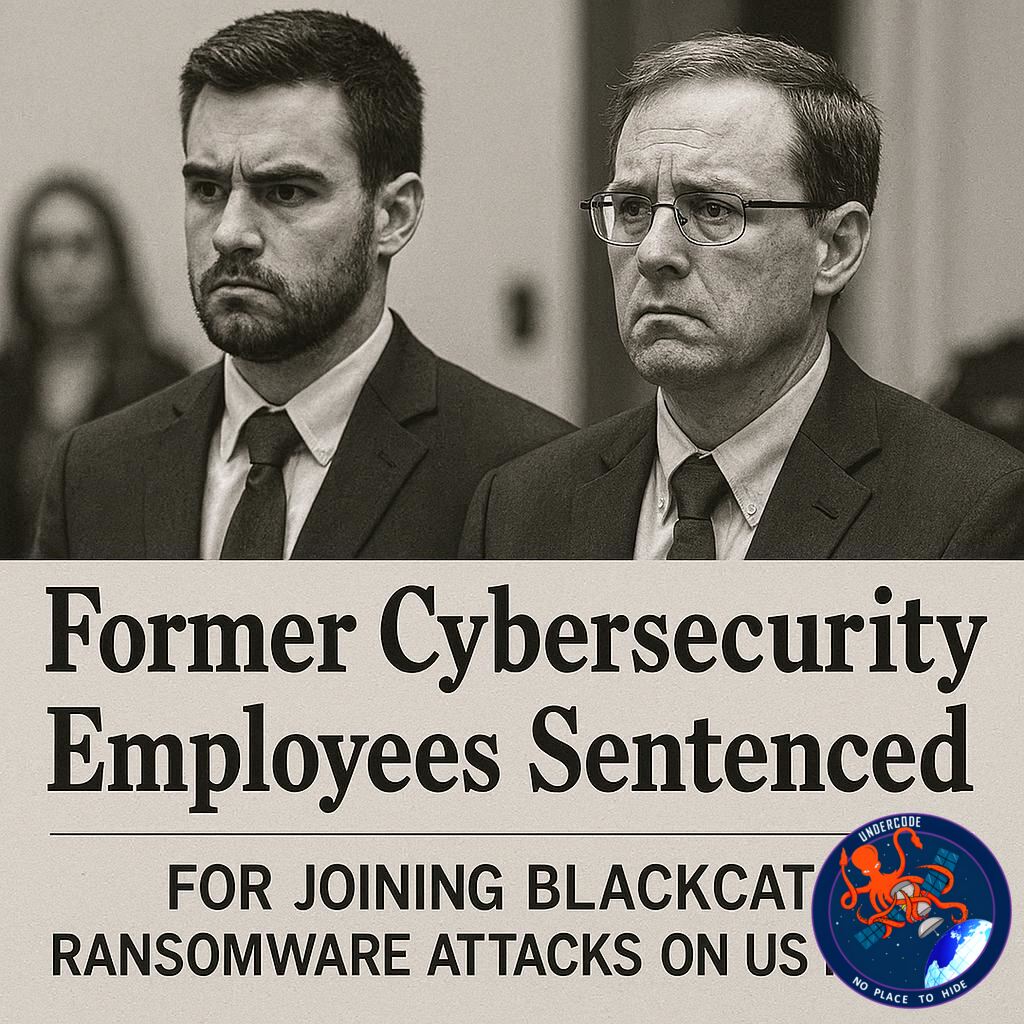
A shocking case has exposed how trusted insiders from the cybersecurity industry crossed the line into cybercrime. Two former employees from respected incident response companies, firms normally hired to help organizations recover from ransomware attacks, have now been sentenced to prison after participating in BlackCat (ALPHV) ransomware operations targeting American businesses.
The case has raised serious concerns across the cybersecurity world. When professionals with defensive expertise decide to work for criminal groups, the damage can be far greater than traditional hackers can cause. Their insider knowledge, understanding of incident response procedures, and awareness of victim behavior make them especially dangerous adversaries.
Former Security Workers Become BlackCat Affiliates
Ryan Clifford Goldberg, 40, a former incident response manager at Sygnia, and Kevin Tyler Martin, 36, a former ransomware negotiator at DigitalMint, were each sentenced to four years in prison.
Both men were charged in November and later pleaded guilty in December to conspiracy to obstruct commerce through extortion. Authorities said they became affiliates of the BlackCat ransomware gang and actively participated in attacks against multiple U.S. organizations.
They were joined by a third accomplice, Angelo Martino, 41, who also pleaded guilty earlier this year. Together, the three allegedly operated as part of the BlackCat ransomware ecosystem between May 2023 and November 2023.
How the Scheme Worked
According to court filings, the group paid BlackCat operators a 20% commission in exchange for access to the gang’s ransomware platform and extortion infrastructure.
This reflects the growing “ransomware-as-a-service” business model, where malware developers lease their tools to affiliates who perform the attacks. The profits are then shared between both sides.
Instead of building malware themselves, affiliates can simply rent access, compromise victims, deploy encryption tools, and split ransom revenue with the core gang.
Victims Across the United States
Authorities identified several businesses impacted by the attacks, including:
A pharmaceutical company in Maryland
A medical device manufacturer in Tampa
A California engineering company
A Virginia drone manufacturer
A California doctor’s office
The variety of targets shows how ransomware groups continue attacking any organization likely to pay quickly, especially companies where downtime could cause severe business disruption.
$1.27 Million Ransom Payment
One of the most serious incidents involved the Tampa medical device company.
After the company’s servers were encrypted in May 2023, it reportedly received a $10 million ransom demand. Prosecutors said the victim eventually paid $1.27 million.
That money was allegedly laundered and divided among the conspirators, including Martino.
Other victims reportedly faced ransom demands ranging from $300,000 to $10 million, although investigators did not specify whether further payments were made.
Government Response
U.S. Attorney Jason A. Reding Quiñones strongly criticized the defendants, saying they used their cybersecurity skills not to defend victims, but to extort them.
He noted that the attackers locked critical systems, stole sensitive data, and pressured businesses into paying to regain access to their own information.
DigitalMint also publicly condemned the actions of its former employee, stating that both individuals were terminated immediately after the conduct was discovered.
BlackCat’s Massive Criminal Impact
BlackCat, also known as ALPHV, has been one of the most destructive ransomware groups in recent years.
The FBI previously linked the gang to more than 60 breaches between November 2021 and March 2022.
In a separate advisory, authorities said the operation had collected at least $300 million in ransom payments from more than 1,000 victims by September 2023.
That figure highlights how ransomware remains one of the most profitable forms of cybercrime worldwide.
What Undercode Say:
This case is especially alarming because it demonstrates a growing insider threat within the cybersecurity industry itself. Companies hire incident responders and negotiators because they possess high-level knowledge of attacks, negotiations, system recovery, and victim psychology. If those same skills are redirected toward crime, organizations face a much more dangerous opponent.
A former negotiator knows how companies make ransom decisions. A former incident responder understands how networks are restored, how logs are reviewed, and what mistakes defenders often make under pressure. That knowledge can shorten attack timelines and increase ransom success rates.
The BlackCat model also shows how professionalized ransomware has become. This is no longer random malware sent through spam emails. It is a structured underground economy with affiliates, revenue sharing, technical support, branding, and recruitment.
Another critical lesson is that trust alone is no security control. Even highly trained staff with prestigious backgrounds can become internal risks. Cybersecurity firms may now need stronger employee monitoring, ethics controls, privileged access reviews, and behavioral risk assessments.
This case may also damage public confidence in ransomware negotiators and response consultants. Victims rely on these specialists during crisis moments. If some professionals secretly collaborate with criminal groups, the entire trust model weakens.
Expect more legal scrutiny of cyber consultants moving forward. Governments may push for licensing standards, stronger reporting obligations, and stricter oversight of incident response vendors handling ransom negotiations.
Organizations should also reconsider how much access external responders receive during incidents. Emergency access should be temporary, monitored, and documented.
The broader ransomware market will likely continue evolving despite arrests. Individual operators may go to prison, but affiliate ecosystems quickly replace lost members.
That means defense must improve faster than criminal recruitment does.
Ultimately, this story is not only about cybercrime. It is about betrayal, misuse of expertise, and the reality that some of the most dangerous attackers may once have been trusted defenders.
Fact Checker Results
✅ Two former cybersecurity employees were sentenced to four years each.
✅ They pleaded guilty to conspiracy tied to BlackCat ransomware attacks.
✅ BlackCat was previously linked by the FBI to hundreds of millions in ransom payments.
Prediction
🔮 Cybersecurity firms will tighten insider threat monitoring after this case.
🔮 Regulators may increase oversight of ransomware negotiators and incident response vendors.
🔮 Future ransomware groups will continue recruiting experienced IT and security professionals.
🕵️📝Let’s dive deep and fact‑check.
References:
Reported By: www.bleepingcomputer.com
Extra Source Hub (Possible Sources for article):
https://www.reddit.com
Wikipedia
OpenAi & Undercode AI
Image Source:
Unsplash
Undercode AI DI v2
Bing
🔐JOIN OUR CYBER WORLD [ CVE News • HackMonitor • UndercodeNews ]
📢 Follow UndercodeNews & Stay Tuned:
𝕏 formerly Twitter 🐦 | @ Threads | 🔗 Linkedin | 🦋BlueSky | 🐘Mastodon


