
Listen to this Post
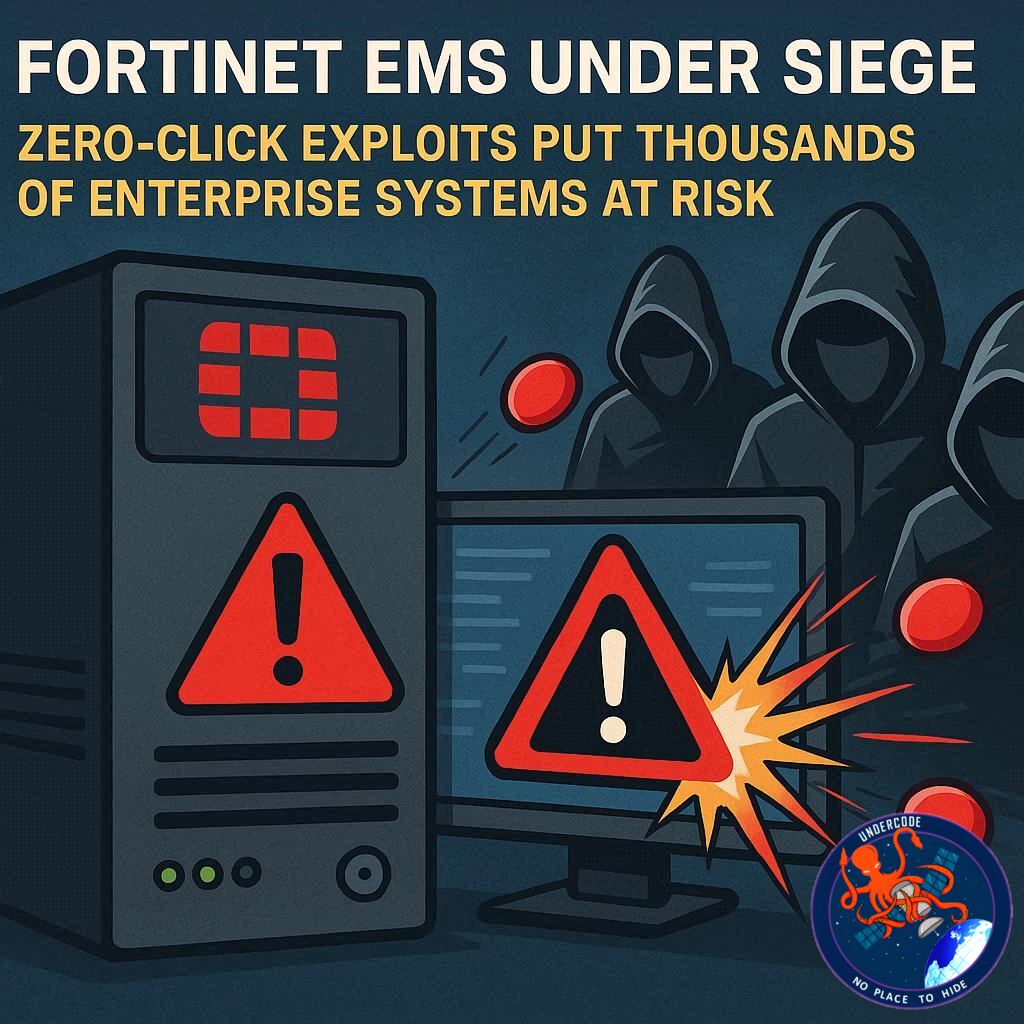
A Silent Threat Targeting the Core of Enterprise Security
Organizations worldwide are facing a rapidly escalating cybersecurity emergency as researchers uncover active exploitation of critical vulnerabilities in Fortinet’s FortiClient Enterprise Management Server (EMS). What makes this situation particularly alarming is not just the severity of the flaws, but how effortlessly attackers can weaponize them. With over 2,000 exposed EMS instances currently reachable via the public internet, the attack surface is both massive and dangerously accessible.
FortiClient EMS is not just another security tool. It is the centralized control hub that governs endpoint protection, security policies, and remote access configurations across enterprise environments. A compromise here does not stay contained. It cascades across the entire organization.
Two Critical Vulnerabilities Driving the Crisis
At the center of this unfolding threat are two high-impact vulnerabilities identified as CVE-2026-35616 and CVE-2026-21643. Both are classified as Remote Code Execution flaws, and both require no authentication to exploit.
This lack of authentication is what elevates the threat from serious to catastrophic. Attackers do not need stolen credentials, insider access, or sophisticated phishing campaigns. A single crafted HTTP request sent to an exposed EMS server is enough to gain full control over the system.
The implications are immediate and severe. Once exploited, attackers can execute arbitrary commands, effectively taking ownership of the server and everything it controls.
Active Exploitation Confirmed in the Wild
Security researchers, including the Shadowserver Foundation, have confirmed that these vulnerabilities are not theoretical. They are already being exploited in real-world attacks.
This shifts the situation from a potential risk to an active incident. Organizations that have not yet patched their systems are not just vulnerable. They are likely being scanned, probed, or already compromised.
Internet-wide scanning data shows that approximately 2,000 EMS servers are exposed online, with a notable concentration in the United States and Germany. However, the risk is global, and no region is immune.
A Dangerous Misconfiguration Amplifies the Threat
Exposing a centralized management server like EMS to the public internet is already a risky configuration. Doing so during active exploitation turns it into a critical failure point.
Management servers are designed to operate within trusted internal environments. When they are accessible externally, they become high-value targets for attackers looking to bypass traditional defenses.
This is not just a vulnerability issue. It is also a visibility and architecture problem. Organizations that have left EMS interfaces exposed are effectively advertising their most critical control systems to the internet.
Why FortiClient EMS Is a Prime Target
FortiClient EMS functions as the command center for endpoint security. It manages antivirus policies, web filtering rules, and secure remote access for all connected devices.
This central authority makes it incredibly attractive to attackers. Compromising EMS means inheriting its trust across the network.
From this position, threat actors can operate with minimal resistance. Their actions appear legitimate because they originate from a trusted system.
What Attackers Can Do After Compromise
Once inside the EMS server, attackers gain a powerful foothold that allows them to control the broader enterprise environment.
They can silently deploy malware across thousands of endpoints without triggering suspicion. Security software can be disabled remotely, clearing the path for deeper attacks.
Ransomware can be distributed at scale using trusted communication channels, increasing the success rate and reducing detection.
Persistence becomes easier to maintain because malicious activity blends in with legitimate administrative operations. Traditional endpoint detection tools often fail in such scenarios because they trust commands issued by EMS.
The Challenge of Detection After Breach
One of the most dangerous aspects of this attack vector is how difficult it becomes to detect after compromise.
Endpoints inherently trust the EMS server. This trust relationship means malicious commands do not raise immediate alarms.
Security teams may only notice anomalies after significant damage has already occurred. By that point, attackers may have already established persistence, exfiltrated data, or deployed ransomware.
This delay in detection significantly increases the potential impact of each successful attack.
Immediate Actions Organizations Must Take
This situation demands urgent action. Organizations using FortiClient EMS must treat this as a top-priority incident.
Applying the latest security patches is the first and most critical step. Both vulnerabilities must be addressed immediately to close the primary attack vectors.
Network configurations must be reviewed to ensure that EMS interfaces are not exposed to the public internet. Any such exposure should be eliminated without delay.
Access to EMS should be restricted to internal networks or secured through properly configured VPNs. Administrative access should never be publicly accessible.
Logs should be analyzed for unusual activity, including unexpected outbound connections or unauthorized policy changes. These may indicate prior compromise.
Infrastructure segmentation should also be implemented to limit the spread of attacks in the future. Separating management systems from production environments reduces the risk of lateral movement.
What Undercode Say:
The Real Risk Lies in Trust Abuse
The most critical insight from this incident is not just the vulnerability itself, but the abuse of trust relationships within enterprise environments. EMS is trusted by design, and attackers are exploiting that trust rather than bypassing it.
Zero-Click Exploitation Changes the Game
The fact that no authentication is required fundamentally changes the threat model. This is not a phishing problem or a credential theft issue. It is a direct access vulnerability that removes traditional barriers to entry.
Exposure Is the Root Cause Multiplier
While the vulnerabilities are severe, their impact is magnified by poor network exposure practices. Organizations that kept EMS internal are significantly safer than those that exposed it to the internet.
Centralized Systems Are Double-Edged Swords
Centralized security platforms improve efficiency but also concentrate risk. A single point of failure becomes a single point of total compromise.
Detection Tools Are Not Enough
This scenario highlights the limitations of endpoint detection tools. When malicious activity originates from a trusted source, traditional detection mechanisms struggle to respond effectively.
Attackers Are Prioritizing Management Infrastructure
This trend reflects a broader shift in attacker strategy. Instead of targeting individual endpoints, adversaries are going after management systems that control entire fleets of devices.
Speed of Response Determines Impact
In incidents like this, the time between vulnerability disclosure and patch deployment is critical. Organizations that delay response significantly increase their risk exposure.
Visibility Gaps Are a Major Weakness
Many organizations are unaware that their EMS servers are publicly exposed. This lack of visibility creates blind spots that attackers can easily exploit.
Segmentation Is No Longer Optional
Network segmentation is often treated as a best practice. Incidents like this show that it is a necessity for limiting damage during a breach.
Security Architecture Must Evolve
Traditional perimeter-based security models are no longer sufficient. Organizations must adopt zero-trust principles where no system is inherently trusted.
Fact Checker Results
✅ The vulnerabilities CVE-2026-35616 and CVE-2026-21643 are correctly identified as unauthenticated RCE flaws.
✅ Active exploitation in the wild has been confirmed by security researchers.
✅ Approximately 2,000 exposed EMS instances aligns with observed internet scanning data.
Prediction
🔮 Exploitation campaigns will rapidly increase as automated scanning tools integrate these vulnerabilities.
🔮 Ransomware groups will prioritize EMS-based attacks due to their high impact and scalability.
🔮 Organizations will accelerate adoption of zero-trust architectures to mitigate similar risks in the future.
🕵️📝✔️Let’s dive deep and fact‑check.
References:
Reported By: cyberpress.org
Extra Source Hub (Possible Sources for article):
https://www.reddit.com
Wikipedia
OpenAi & Undercode AI
Image Source:
Unsplash
Undercode AI DI v2
Bing
🔐JOIN OUR CYBER WORLD [ CVE News • HackMonitor • UndercodeNews ]
📢 Follow UndercodeNews & Stay Tuned:
𝕏 formerly Twitter 🐦 | @ Threads | 🔗 Linkedin | 🦋BlueSky | 🐘Mastodon


