Listen to this Post
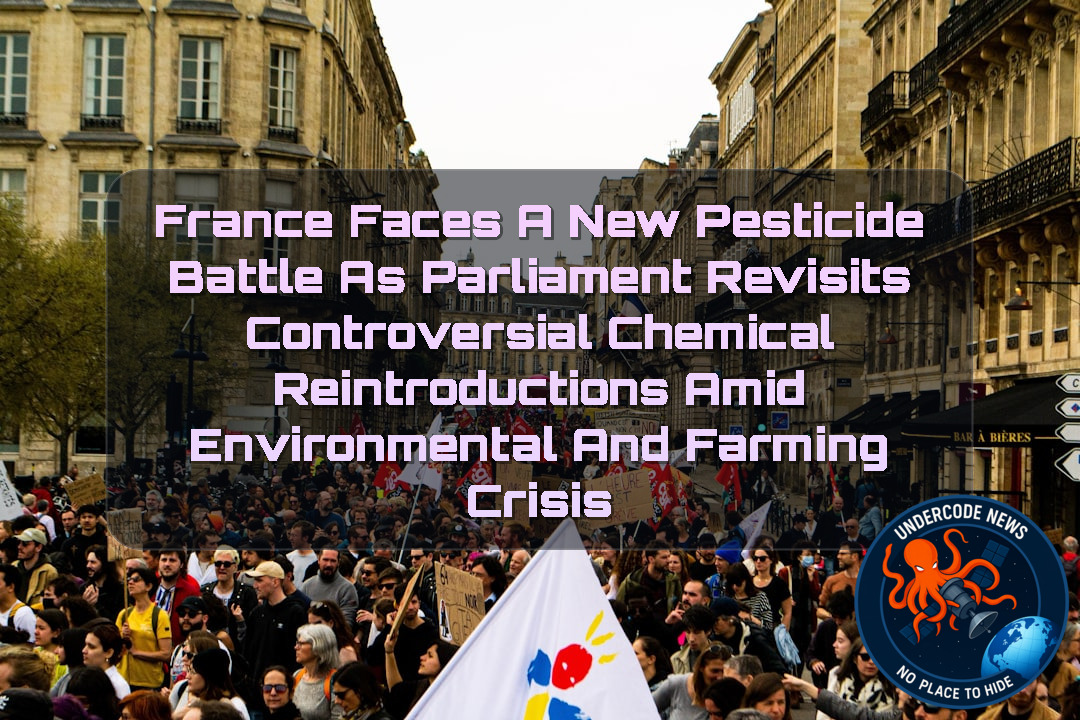 Introduction: A Nation Divided Between Agricultural Survival and Environmental Protection
France is once again confronting a major political and social conflict over the future of its agriculture. Nearly one year after widespread protests against the controversial Duplomb law, French lawmakers are preparing to vote on a new emergency agriculture bill that has revived the same explosive debate: whether certain banned pesticides should be temporarily allowed again to support struggling agricultural sectors.
At the center of the controversy are acetamiprid and flupyradifurone, two insecticides prohibited in France but still authorized under European Union regulations. Supporters argue that restoring limited access to these chemicals is necessary to protect farmers facing economic pressure, climate challenges, and international competition. Opponents warn that bringing back banned pesticides represents a dangerous step backward for public health, biodiversity, and France’s environmental commitments.
The debate has become more than a discussion about agricultural policy. It has turned into a symbol of a wider national struggle between economic survival and ecological responsibility, dividing political parties, government officials, farmers, and environmental organizations.
Emergency Agriculture Bill Reopens France’s Long-Running Pesticide Conflict
The French National Assembly is preparing to vote on the emergency agriculture bill after a joint committee (CMP) approved the final version of the legislation. The bill contains 78 separate measures designed to support farmers and strengthen agricultural competitiveness, but one provision has overshadowed the entire debate.
The controversial article would allow limited exemptions for the use of acetamiprid and flupyradifurone, pesticides that are banned in France but remain legal in other European countries.
Supporters describe the measure as a practical solution for farmers in sectors facing severe difficulties. Critics argue that the return of these chemicals would weaken France’s environmental standards and ignore previous public opposition.
The vote has become one of the most politically sensitive agricultural decisions in France in recent years.
The Shadow of the Duplomb Law Still Influences the Debate
The current controversy is closely linked to the Duplomb law, introduced by Senator Laurent Duplomb, which also proposed allowing acetamiprid to return to French agriculture.
That legislation triggered significant public backlash. Environmental groups, scientists, and citizens launched a major petition opposing the pesticide measure, reflecting growing concerns about chemical exposure and ecological damage.
The Constitutional Council eventually removed the pesticide provision from the law, preventing its implementation.
However, the issue has returned through the new emergency agriculture bill, creating frustration among environmental activists who believe lawmakers are attempting to revive a measure that was already rejected.
Government Coalition Faces Internal Divisions Over Pesticide Policy
The pesticide issue has created serious divisions inside France’s governing coalition.
Prime Minister Sébastien Lecornu attempted to unify political supporters before the vote by meeting representatives from Renaissance, MoDem, Horizons, Les Républicains (LR), and the centrist Liot group.
However, the disagreement remains unresolved.
Environmental Transition Minister Monique Barbut described the pesticide exemption as the main obstacle threatening the legislation. Meanwhile, Agriculture Minister Annie Genevard defended the measure, arguing that rejecting the bill would harm farmers who urgently need support.
The conflict reveals a broader political challenge: maintaining agricultural support while responding to increasing public demand for environmental protection.
Renaissance Party Divided as Lawmakers Demand Removal of Acetamiprid
Within Renaissance, President Emmanuel Macron’s political movement, several lawmakers have expressed opposition to including acetamiprid in the bill.
MP Prisca Thevenot argued that although the emergency agriculture law contains important measures, the pesticide provision could put the entire legislation at risk.
She stated that acetamiprid should not remain in the bill and suggested that the government could introduce an amendment removing the controversial article.
Gabriel Attal, secretary-general of Renaissance, also reportedly encouraged the government to eliminate the pesticide exemption before the final vote.
Despite these calls, officials close to Prime Minister Lecornu indicated that the government would not remove the provision immediately, preferring to allow Parliament to make the final decision.
Right-Wing Support Contrasts With Environmental Opposition
The current version of the bill has gained support from the National Rally (RN) as well as many conservative and centrist lawmakers.
These supporters argue that French farmers face unfair competition from countries where certain agricultural chemicals remain available. They believe targeted pesticide exemptions could protect domestic production and prevent increased dependence on imported food.
However, environmental organizations strongly oppose the measure.
The association Générations Futures described the possible pesticide return as a major reversal of environmental progress, warning that France would weaken its commitment to reducing harmful chemical exposure.
The disagreement reflects a deeper political divide between agricultural competitiveness and ecological protection.
Farmers Argue Chemical Access Is Necessary for Survival
Agricultural groups supporting the bill emphasize the economic difficulties facing farmers.
Franck Sander, president of the General Confederation of Sugar Beet Growers (CGB), argued that controlled and targeted authorization of flupyradifurone is necessary to maintain competitiveness.
Farmers have repeatedly warned that restrictions on certain pesticides can create production challenges, especially when competitors in other European countries continue using similar products.
For agricultural organizations, the debate is not about unlimited chemical use but about giving farmers emergency tools during difficult periods.
They argue that without additional solutions, France could become increasingly dependent on imported agricultural products.
Environmental Groups Warn of Long-Term Risks
Opponents of the pesticide exemptions argue that short-term agricultural benefits could create long-term environmental consequences.
Scientists and environmental organizations have raised concerns about pesticide impacts on ecosystems, pollinators, water quality, and human health.
They believe France should accelerate investment in alternative farming methods rather than returning to chemicals that were previously restricted.
The controversy comes at a time when climate change is intensifying concerns about agricultural sustainability.
Extreme weather events, rising temperatures, and changing rainfall patterns are increasing pressure on farmers while also highlighting the need for environmentally responsible policies.
Water Management Reform Creates Another Agricultural Conflict
The pesticide debate is not the only controversial element of the emergency agriculture bill.
The legislation also includes reforms concerning water storage for agricultural irrigation.
Supporters describe these measures as necessary adaptation strategies in a changing climate, arguing that farmers need reliable water access during drought periods.
Opponents fear that expanded water storage could damage ecosystems and prioritize industrial agriculture over environmental protection.
Several demonstrations have been planned, showing that agricultural policy remains one of France’s most politically sensitive issues.
Climate Concerns Push Environmental Protection Back Into Public Debate
Recent heatwaves have increased public attention toward environmental issues in France.
According to polling cited in the debate, approximately 32% of respondents now consider environmental protection a priority, representing a significant increase compared with previous surveys.
The growing concern reflects a changing public mood.
French citizens are increasingly questioning how governments balance economic needs with climate responsibility, especially as extreme weather events become more frequent.
The pesticide vote therefore represents not only an agricultural decision but also a test of France’s broader environmental direction.
What Undercode Say: Deep Analysis
Agricultural Pressure Is Colliding With Environmental Expectations
The pesticide controversy represents a much larger global challenge: how governments manage the conflict between food production and ecological protection.
Farmers are operating under increasing pressure from climate instability, rising costs, international competition, and changing consumer expectations.
At the same time, societies are demanding stronger environmental safeguards.
France’s debate demonstrates that agricultural policy is no longer only about production. It has become a question about the future relationship between humans, technology, and nature.
The Return of Banned Chemicals Creates Political Risk
Allowing acetamiprid and flupyradifurone back into French agriculture may provide immediate relief for certain industries, but it creates significant political risks.
Environmental groups are likely to view the decision as evidence that economic interests are outweighing ecological commitments.
For politicians, the challenge is maintaining credibility among both farmers and environmentally conscious voters.
Europe’s Different Rules Create National Frustration
One important factor behind the controversy is the difference between French restrictions and European Union authorization.
French farmers often argue that they face unfair competition because they cannot access tools available to producers elsewhere in Europe.
However, environmental advocates argue that France should maintain stronger standards rather than lowering protections.
This disagreement reflects a recurring European debate about whether environmental leadership should come from individual countries or from unified EU regulation.
Agriculture Needs Innovation Beyond Chemical Solutions
The long-term solution is unlikely to come only from allowing or banning pesticides.
France will need greater investment in biological alternatives, precision agriculture, resistant crop varieties, improved irrigation systems, and farming technologies that reduce chemical dependence.
A modern agricultural strategy requires both economic support and environmental innovation.
Public Trust Is Becoming the Central Issue
The strongest political consequence of this debate may be public trust.
After previous protests against the Duplomb law, many citizens may interpret another pesticide exemption as ignoring public concerns.
Government decisions involving agriculture, health, and climate require transparency and scientific communication to maintain confidence.
✅ The debate over acetamiprid and flupyradifurone is based on a real political dispute in France. The pesticides have become a major point of disagreement inside Parliament and among environmental groups and farmers.
✅ The Duplomb law controversy previously generated strong opposition. Public protests and petitions played a major role in challenging the pesticide-related measures included in the earlier legislation.
❌ The return of these pesticides does not mean unlimited authorization. The proposed measures involve specific exemptions and targeted use rather than a complete removal of restrictions.
Prediction
(+1) Positive Prediction: Agricultural Support Could Reduce Pressure on Farmers
If Parliament approves carefully controlled exemptions alongside stronger environmental monitoring, the measure could provide temporary relief for struggling agricultural sectors.
A balanced approach combining limited pesticide access with investment in sustainable alternatives could reduce political tensions.
(-1) Negative Prediction: The Decision Could Trigger New Environmental Protests
If lawmakers approve pesticide reintroduction without convincing environmental safeguards, France could experience renewed public opposition similar to the protests surrounding the Duplomb law.
The issue may become a symbol of conflict between agricultural interests and climate commitments, creating further political divisions in the future.
▶️ Related Video (74% Match):
🕵️📝Let’s dive deep and fact‑check.
🎓 Live Courses & Certifications:
Join Undercode Academy for Verified Certifications
🚀 Request a Custom Project:
Secure, high-velocity infrastructure and disruptive technological engineering. Contact our engineering team for high-tier development and proprietary systems:
[email protected]
💎 Smart Architecture | 🛡️ Secure by Design | ⭐ Trusted by Thousands
References:
Reported By: www.euronews.com
Extra Source Hub (Possible Sources for article):
https://www.twitter.com
Wikipedia
OpenAi & Undercode AI
Image Source:
Unsplash
Undercode AI DI v2
🔐JOIN OUR CYBER WORLD [ CVE News • HackMonitor • UndercodeNews ]
📢 Follow UndercodeNews & Stay Tuned:
𝕏 formerly Twitter 🐦 | @ Threads | 🔗 Linkedin | 🦋BlueSky | 🐘Mastodon | 📺Youtube