
Listen to this Post
Introduction
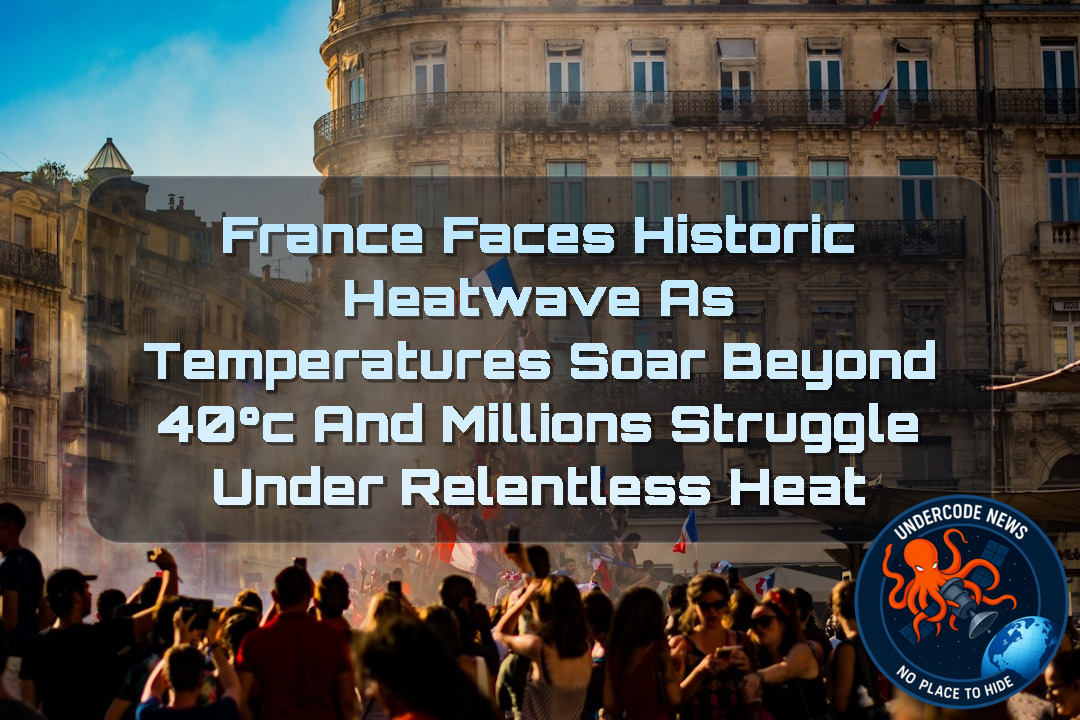
France is experiencing one of the most severe June heatwaves in modern history as extreme temperatures continue to grip the country. What began as a powerful surge of hot air has evolved into a nationwide weather emergency affecting tens of millions of people. Cities, towns, transportation networks, schools, and emergency services are all feeling the impact of a climate event that is rewriting temperature records across the nation.
With temperatures climbing above 40°C in numerous regions and nights offering little relief, authorities have issued widespread alerts while warning residents about significant health risks. The ongoing heatwave is not only creating discomfort but is also contributing to tragic fatalities, transportation disruptions, school closures, and an elevated threat of wildfires across large parts of the country.
Record-Breaking Temperatures Continue Across France
Following an exceptionally hot day that saw temperatures exceed 40°C in several cities, France entered another critical day of extreme heat on June 23. Meteorological authorities reported that the country remains under the influence of a powerful heat dome, creating conditions rarely seen this early in the summer season.
Throughout the affected regions, daytime temperatures are forecast to reach between 40°C and 42°C, while some local areas could experience even higher peaks. The heat is particularly intense across western and central France, where residents are enduring conditions more commonly associated with southern Mediterranean climates.
Dangerous Nights Bring Little Relief
One of the most concerning aspects of this heatwave is the unusually warm nighttime temperatures. Instead of providing recovery from the day’s heat, overnight lows are expected to remain between 18°C and 24°C across much of the country.
These elevated nighttime temperatures significantly increase health risks because the human body has less opportunity to cool down. Elderly individuals, children, and those with existing health conditions face the greatest danger during prolonged periods of warm nights.
Medical experts often warn that consecutive tropical nights can be just as dangerous as record daytime highs because they contribute to cumulative heat stress.
More Than 90% of the Population Impacted
French authorities have placed 54 départements under the highest level of heatwave alert, covering a vast area stretching across much of the western half of the country and extending toward Burgundy.
An additional 35 départements remain under orange alert status. Combined, these warnings mean that over 90% of France’s population is currently exposed to unusually high and potentially dangerous temperatures.
The scale of the event has transformed what might normally be considered a regional weather phenomenon into a national emergency affecting nearly every aspect of daily life.
Transportation Networks Under Pressure
Extreme heat is placing considerable strain on
Heat can cause rail tracks to expand, electrical systems to become stressed, and operational safety procedures to slow services. As a result, passengers have faced delays, cancellations, and travel uncertainty across multiple regions.
Transport officials continue to monitor conditions closely as temperatures remain at dangerous levels.
School Closures Reflect Growing Safety Concerns
The heatwave has forced educational authorities to take extraordinary measures. More than 1,300 schools closed their doors as temperatures inside classrooms reached uncomfortable and potentially unsafe levels.
Many older school buildings lack modern cooling systems, making prolonged occupation difficult during extreme weather events. Authorities prioritized student safety by suspending classes in affected areas.
The closures highlight the growing challenge governments face in adapting public infrastructure to increasingly frequent periods of extreme heat.
Human Cost of the Heatwave Emerges
As temperatures continue to rise, the human consequences are becoming increasingly apparent. Officials have reported approximately twenty fatal drownings since the beginning of the weekend.
Many people seek relief from intense temperatures by visiting beaches, rivers, and lakes. However, overcrowding, fatigue, dehydration, and dangerous swimming conditions can increase the likelihood of accidents.
Authorities continue to urge residents to remain cautious when engaging in water-related activities.
Tragic Deaths Highlight the Severity of Conditions
Among the most heartbreaking incidents linked to the heatwave was the discovery of two young children, aged two and four, who were found dead inside a parked vehicle in Carpentras.
Initial investigations suggest the children may have become trapped inside the vehicle during the extreme temperatures. Such incidents demonstrate how rapidly temperatures inside cars can reach lethal levels, even over relatively short periods.
In another tragic development, three elderly residents in the Gironde region reportedly died at home amid the intense heat.
These events underscore the deadly nature of prolonged heat exposure and the importance of community vigilance during extreme weather conditions.
Wildfire Risks Escalate Across the Country
Beyond direct health threats, authorities are increasingly concerned about wildfire activity. High temperatures combined with extremely low humidity levels create ideal conditions for fires to ignite and spread rapidly.
Twenty-eight départements have been classified as facing a high wildfire risk, with forecasts indicating that the number could rise significantly in the coming days.
Dry vegetation, strong sunlight, and ongoing heat accumulation are contributing to conditions that firefighters describe as highly concerning.
Historic Records Fall in Multiple Cities
The current heatwave is already making meteorological history.
Angers recorded 40.9°C, while Châteaumeillant reached an astonishing 43.3°C. Paris also established a new June temperature record after reaching 38.4°C.
Meteorologists warn that these records may not stand for long. Forecasts indicate that temperatures could climb even higher, with Bordeaux potentially reaching 44°C and Rennes approaching 43°C during peak afternoon hours.
Such values are extraordinary for June and demonstrate the exceptional intensity of this weather event.
Climate Change Intensifies Extreme Heat Events
Although individual weather events cannot be attributed solely to climate change, scientists consistently observe that global warming is increasing both the frequency and intensity of heatwaves across Europe.
Warmer baseline temperatures allow heat events to become more extreme, longer-lasting, and geographically widespread. France, like many European nations, has witnessed a growing trend of severe summer heat episodes over the past two decades.
Climate researchers increasingly view these events not as rare anomalies but as indicators of a changing environmental reality.
Emergency Services Remain on High Alert
Hospitals, firefighters, emergency responders, and local authorities remain mobilized as the heatwave continues.
Medical facilities are preparing for increases in heat-related illnesses including dehydration, heat exhaustion, heatstroke, and respiratory complications. Emergency response teams are also monitoring vulnerable populations, particularly elderly residents living alone.
Authorities continue to encourage hydration, avoidance of outdoor activities during peak heat hours, and regular welfare checks on family members and neighbors.
Outlook for the Coming Days
According to forecasts, the extreme temperatures are expected to persist at least through Thursday before a gradual moderation begins.
Even after conditions improve, temperatures are likely to remain above seasonal averages. This suggests that many regions may continue experiencing significant heat stress despite the expected easing.
Meteorologists caution that while the most extreme phase may eventually weaken, the broader pattern of unusually warm weather is likely to continue throughout the remainder of the month.
Deep Analysis: Linux Commands and Weather Data Monitoring
Extreme weather events increasingly rely on technology for monitoring, forecasting, and emergency response. Meteorological agencies and research institutions often utilize Linux-based systems due to their stability and scalability.
Useful command-line examples for weather and climate analysis include:
date
uptime
top
htop
df -h
free -m
curl wttr.in
wget weather-data-source
grep temperature weather.log
awk '{print $2}' temperatures.txt
sort -n temperatures.txt
tail -f weather.log
journalctl -xe
netstat -tulpn
ss -tulpn
cron
systemctl status
vmstat
iostat
sar
watch sensors
cat /proc/cpuinfo
cat /proc/meminfo
hostnamectl
timedatectl
dmesg
find /var/log
rsync climate-data/
tar -czvf archive.tar.gz
scp forecast.csv server:/backup
python3 climate_analysis.py
sqlite3 weather.db
git log
docker ps
kubectl get pods
nmap network
tcpdump -i eth0
These tools assist meteorologists, infrastructure operators, and emergency management teams in handling large-scale environmental data during extreme weather situations.
What Undercode Say:
The French heatwave is more than a short-term weather anomaly.
What stands out is the unprecedented geographical coverage affecting almost the entire population.
When over 90% of a
Transportation failures demonstrate how vulnerable modern infrastructure remains to climate extremes.
Rail systems were largely designed around historical temperature norms.
As those norms shift upward, maintenance strategies and engineering standards must evolve.
The closure of more than 1,300 schools reflects a broader issue.
Many public buildings across Europe were never designed for repeated exposure to temperatures above 40°C.
The human health impact is particularly concerning.
Warm nights prevent physiological recovery.
This creates cumulative stress on the cardiovascular system.
Elderly populations become especially vulnerable after multiple consecutive nights of elevated temperatures.
The drowning fatalities reveal another indirect consequence.
People naturally seek cooling environments.
As temperatures become more severe, recreational water use increases dramatically.
This creates secondary safety challenges that authorities must address.
The wildfire threat deserves equal attention.
Heat alone is dangerous.
Heat combined with drought and low humidity creates a multiplier effect.
Every additional degree increases vegetation dryness.
This accelerates ignition potential.
Record-breaking temperatures in Paris, Bordeaux, Angers, and Rennes are notable because they are occurring in June rather than peak summer.
Historically, the most intense heat often arrives later.
The timing suggests an unusually aggressive atmospheric pattern.
Climate scientists have warned for years that extreme events would become more frequent.
Current conditions increasingly resemble those projections.
Urban heat island effects are also contributing.
Large cities retain heat overnight due to concrete, asphalt, and dense construction.
This makes nighttime recovery even harder.
Emergency services face growing pressure.
Hospitals must manage rising admissions while maintaining routine operations.
Governments may need to accelerate adaptation programs.
Future building regulations could require improved cooling resilience.
Transportation networks may require redesigns for higher temperature tolerances.
Water resource management will likely become more critical.
Forest management strategies may also evolve.
This event may ultimately be remembered not only for its temperature records but for highlighting vulnerabilities across multiple sectors simultaneously.
The combination of infrastructure stress, public health concerns, wildfire risk, and societal disruption illustrates the broad consequences of extreme climate events.
France is currently experiencing a preview of challenges many countries may face more frequently in the coming decades.
✅ Météo France has issued widespread heatwave alerts affecting a majority of French regions, indicating an exceptionally severe weather event.
✅ Multiple cities including Paris, Angers, and Châteaumeillant have reported record or near-record June temperatures, confirming the historic nature of the heatwave.
✅ Transportation disruptions, school closures, increased wildfire risk, and reported fatalities demonstrate that the impacts extend far beyond simple weather discomfort and represent a significant public safety challenge.
Prediction
(+1) French authorities will expand investment in heat-resilient infrastructure, including schools, transportation systems, and emergency response capabilities.
(+1) Climate monitoring technologies and early-warning systems will become increasingly sophisticated as governments seek to reduce heat-related casualties.
(-1) Wildfire risks across France and southern Europe may continue to increase during future summers if prolonged heat and drought conditions become more frequent.
(-1) Urban areas could experience greater strain on healthcare systems and energy networks during future extreme heat episodes.
(+1) Public awareness regarding heat safety, hydration, and protection of vulnerable populations is likely to improve following this nationwide event.
▶️ Related Video (78% Match):
🕵️📝Let’s dive deep and fact‑check.
🎓 Live Courses & Certifications:
Join Undercode Academy for Verified Certifications
🚀 Request a Custom Project:
Secure, high-velocity infrastructure and disruptive technological engineering. Contact our engineering team for high-tier development and proprietary systems:
[email protected]
💎 Smart Architecture | 🛡️ Secure by Design | ⭐ Trusted by Thousands
References:
Reported By: www.euronews.com
Extra Source Hub (Possible Sources for article):
https://www.facebook.com
Wikipedia
OpenAi & Undercode AI
Image Source:
Unsplash
Undercode AI DI v2
🔐JOIN OUR CYBER WORLD [ CVE News • HackMonitor • UndercodeNews ]
📢 Follow UndercodeNews & Stay Tuned:
𝕏 formerly Twitter 🐦 | @ Threads | 🔗 Linkedin | 🦋BlueSky | 🐘Mastodon | 📺Youtube


