
Listen to this Post
Introduction: A Turning Point for Youth Digital Safety in France
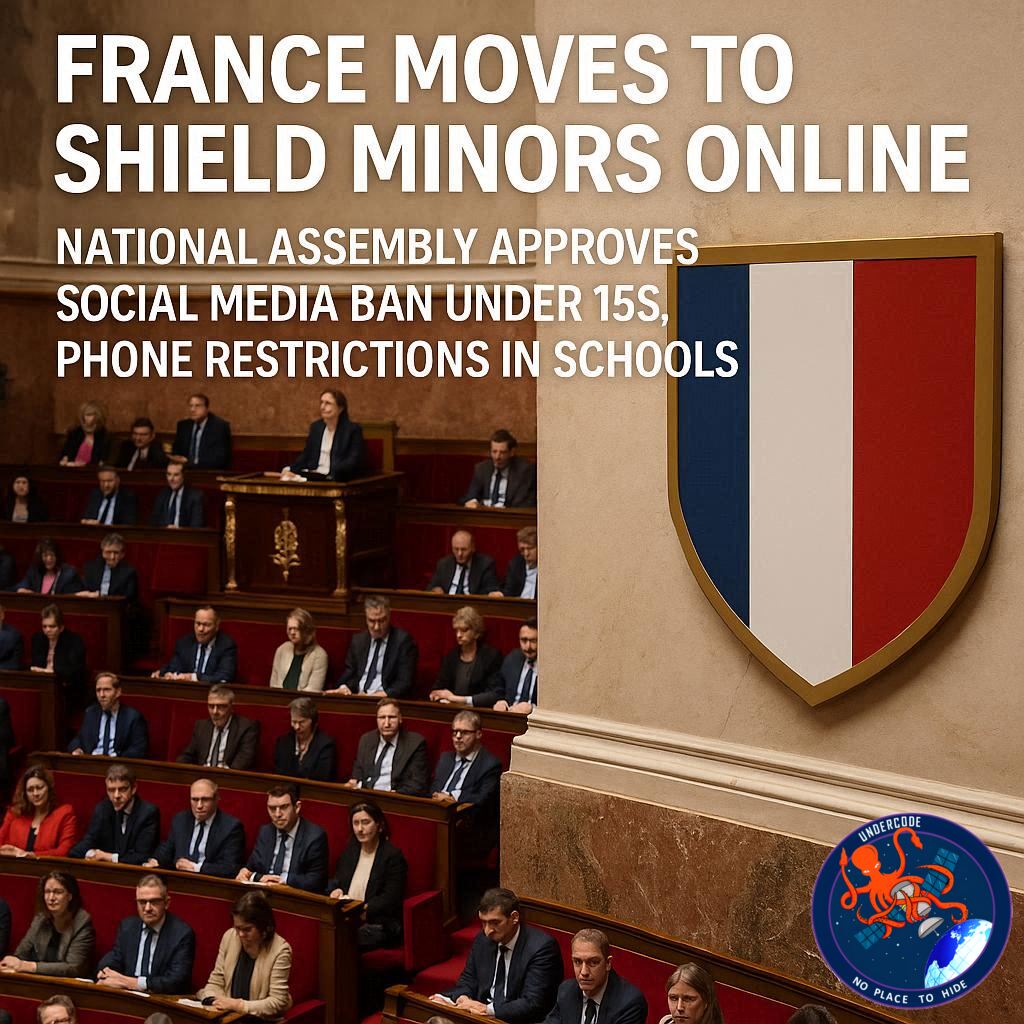
France has taken a decisive step in reshaping how children interact with digital platforms. In a move that is already sparking debate across Europe, the French National Assembly has approved new legislation banning social media access for children under the age of 15 and imposing stricter mobile phone restrictions in high schools. The policy is designed to protect minors from harmful online content, excessive screen time, and digital addiction, with implementation expected to begin in the next school year. This decision places France at the center of a growing global conversation about the responsibility of governments, schools, and tech companies in safeguarding young users.
the Original
The original report highlights a recent announcement shared by the cybersecurity-focused account Cybersecurity News Everyday, noting that France’s National Assembly has officially approved a social media ban for children under 15. Alongside this, lawmakers have also introduced tighter rules limiting mobile phone usage in high schools. The primary objective of these measures is to protect minors from exposure to harmful online content, including cyberbullying, extremist material, misinformation, and addictive platform design.
The article emphasizes that the law is expected to be implemented starting next school year, giving schools, parents, and platform providers time to adapt. While detailed enforcement mechanisms are not fully outlined in the brief report, the intent is clear: reduce the negative psychological and social effects associated with early and excessive social media use.
The tweet frames the decision as part of a broader youth safety initiative, reflecting growing concern among policymakers about the mental health of children and teenagers in an always-connected digital environment. It also situates the move within a wider international trend, as several countries explore age verification systems, school phone bans, and tighter regulations on social platforms.
Although concise, the original article signals a major policy shift with potentially wide-reaching implications for education systems, families, and the tech industry. The focus remains firmly on prevention—limiting exposure before harm occurs—rather than reacting after damage has already been done.
What Undercode Say:
France’s decision is not just a cultural statement; it is a regulatory experiment that could redefine how democratic societies manage youth access to digital ecosystems. For years, social media platforms have operated on self-regulation promises, age limits that are easy to bypass, and algorithms optimized for engagement rather than well-being. This law directly challenges that status quo.
From a cybersecurity and digital safety perspective, minors represent one of the most vulnerable user groups. They are more susceptible to social engineering, online grooming, disinformation campaigns, and psychological manipulation. Limiting access before the age of 15 significantly reduces the attack surface for malicious actors who frequently exploit young users through fake profiles, phishing-style interactions, or viral harmful challenges.
The school phone restrictions are equally important. Educational environments increasingly struggle with distraction, covert recording, and peer harassment facilitated by smartphones. By restricting phone use in high schools, France is attempting to restore attention, privacy, and social interaction in physical spaces where learning should be the priority.
However, enforcement will be the real test. Age verification without compromising privacy remains a technical and ethical challenge. If implemented poorly, such systems could lead to excessive data collection, identity risks, or discriminatory access. The success of this policy depends heavily on transparent frameworks, minimal data retention, and strict oversight of verification providers.
There is also a geopolitical dimension. If France proves that such regulations are workable, other EU states may follow, potentially leading to a bloc-wide standard. That would place immense pressure on global platforms to redesign onboarding, content delivery, and moderation systems for younger audiences—or risk losing access to entire markets.
Critics argue that bans alone do not teach digital literacy. That concern is valid. Restriction must be paired with education: teaching children how online manipulation works, how algorithms influence behavior, and how to recognize threats. Otherwise, the moment restrictions lift, the same risks return.
Still, this law signals a shift in power. Governments are no longer content with asking tech companies to “do better.” They are beginning to legislate boundaries, especially where children are concerned. In that sense, France is positioning itself as a policy laboratory for the future of youth digital protection.
Fact Checker Results
The approval of the law by France’s National Assembly is accurately reported and aligns with official legislative developments.
The stated goal of protecting minors from harmful content is consistent with public statements from French policymakers.
Implementation timelines remain provisional, with details expected to be finalized before the next school year.
Prediction
France’s under-15 social media ban will accelerate similar legislative efforts across Europe, pushing the EU toward unified youth digital safety standards. Tech companies will likely respond with stronger age-gating and redesigned youth experiences, while legal challenges and debates over privacy and enforcement intensify in the short term.
🕵️📝✔️Let’s dive deep and fact‑check.
References:
Reported By: x.com
Extra Source Hub (Possible Sources for article):
https://www.medium.com
Wikipedia
OpenAi & Undercode AI
Image Source:
Unsplash
Undercode AI DI v2
Bing
🔐JOIN OUR CYBER WORLD [ CVE News • HackMonitor • UndercodeNews ]
📢 Follow UndercodeNews & Stay Tuned:
𝕏 formerly Twitter 🐦 | @ Threads | 🔗 Linkedin | 🦋BlueSky | 🐘Mastodon


