
Listen to this Post
Introduction: A Quiet Revolution in Europe’s Digital Power Structure
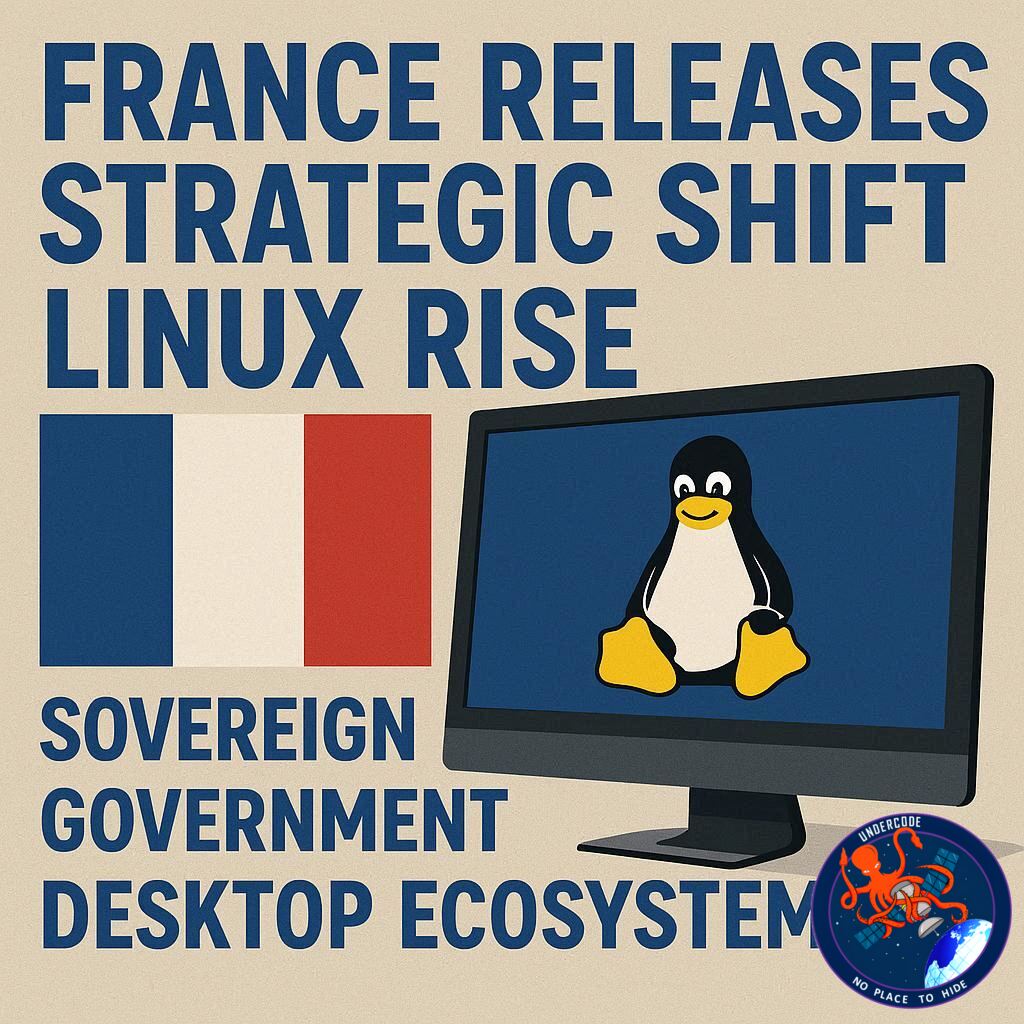
France is no longer content with relying on foreign technology to run its government. In a move that signals both political intent and technological confidence, the country has begun transitioning away from Microsoft Windows toward a fully controlled Linux-based desktop environment. This is not a symbolic gesture or a distant roadmap, but a calculated and structured transformation rooted in years of preparation. At the heart of this transition lies a broader ambition: digital sovereignty, the ability to control infrastructure, data, and software without external dependence. What makes this moment significant is not just the choice of Linux, but the ecosystem France is building around it, one designed to replace not only operating systems but also the entire productivity and communication stack used by its public sector.
France’s Linux Transition: A Measured Yet Strategic Shift
France has officially initiated the process of replacing Windows with Linux across government workstations, beginning with internal systems managed by the Interministerial Directorate for Digital Affairs. Contrary to earlier assumptions, this is not an immediate nationwide overhaul but a phased rollout starting with approximately 350 internal machines. Each ministry has been instructed to design its own migration strategy by late 2026, ensuring flexibility while maintaining a unified direction.
Digital Sovereignty as a National Priority
The driving force behind this transition is a growing concern over reliance on foreign, particularly American, software providers. French officials have emphasized that digital independence is no longer optional but essential. By reducing dependency on external vendors, France aims to regain control over its data, infrastructure, and long-term technological direction.
GendBuntu: The Proven Foundation of France’s Linux Strategy
France is not starting from scratch. Its national police force has been successfully operating a custom Linux distribution known as GendBuntu since 2008. Currently deployed on over 100,000 machines, this system has demonstrated long-term stability, scalability, and cost efficiency. It now serves as the blueprint for a broader government rollout.
Financial Efficiency and Long-Term Savings
One of the most compelling arguments for the transition is cost reduction. GendBuntu alone has reportedly saved millions annually compared to maintaining Windows-based systems. If expanded across ministries, total savings could reach tens of millions of dollars, making the move not just strategic but economically compelling.
Building FranceOS: A Unified Linux Desktop Vision
The upcoming government-wide Linux environment, informally referred to as “FranceOS,” is expected to be based on Ubuntu’s Long Term Support releases. With the anticipated arrival of Ubuntu 26.04, the system will likely integrate the Linux 7.0 kernel, offering modern performance and hardware compatibility.
Transition to Modern Graphics and Desktop Environments
FranceOS will adopt Wayland as its default display server, replacing the older X11 system. Alongside this, GNOME 50 will serve as the desktop environment, offering improved graphical performance and a cleaner user interface. These choices reflect a commitment to modern, future-proof technologies.
Open-Source Productivity Tools at the Core
Instead of proprietary software, FranceOS will rely on open-source applications such as LibreOffice for productivity, Firefox ESR for browsing, Thunderbird for email, and GIMP for graphics editing. These tools ensure independence while maintaining functionality comparable to commercial alternatives.
La Suite Numérique: A Fully Integrated Digital Ecosystem
Beyond the desktop, France is deploying a comprehensive suite of cloud-based tools known as La Suite Numérique. Already used by hundreds of thousands of civil servants, this platform integrates communication, collaboration, and data management into a single cohesive environment.
Tchap and Secure Government Communication
Tchap replaces mainstream messaging platforms with a secure, encrypted system based on the Matrix protocol. It ensures that all internal communications remain within controlled infrastructure, eliminating reliance on external messaging services.
Visio and the End of Foreign Video Conferencing Tools
Visio serves as France’s sovereign alternative to platforms like Zoom and Teams. With support for large-scale meetings and advanced collaboration features, it is designed to handle all government conferencing needs.
Docs and Grist: Reinventing Office Collaboration
France’s Docs platform enables real-time collaborative document editing, while Grist introduces a hybrid spreadsheet-database system. Together, they replace traditional office tools with more flexible and integrated solutions.
Secure Storage and Data Control with Fichiers
Fichiers, built on Nextcloud, provides secure file storage with strict control over data residency. All documents remain within European jurisdiction, addressing privacy and regulatory concerns.
Sovereign Email and File Transfer Systems
Messagerie replaces conventional email services with a fully controlled communication system, while France Transfert allows secure sharing of large files without relying on external platforms.
Toward a Unified and Interoperable Experience
All components of the ecosystem are connected through a single sign-on system and a unified interface. This ensures seamless navigation between tools while maintaining strict security and compliance standards.
A Broader European Collaboration
France’s initiative is not isolated. It aligns with similar efforts in other European countries to develop interoperable, sovereign digital infrastructures. Collaborative projects with nations like Germany and the Netherlands suggest the emergence of a unified European tech ecosystem.
What Undercode Say:
France’s transition to Linux is not merely about software replacement, it represents a structural shift in how governments perceive control over technology. For decades, public institutions relied on convenience over sovereignty, choosing widely adopted proprietary systems without fully considering long-term implications. What France is doing now is correcting that imbalance.
The most important aspect of this move is not Linux itself, but the ecosystem strategy behind it. Many organizations have attempted to adopt Linux in isolation and failed because they overlooked the surrounding infrastructure. France is addressing that mistake by simultaneously replacing communication tools, cloud storage, and collaboration platforms. This creates a closed loop where dependency on external vendors is minimized at every level.
Another critical factor is timing. The global political and technological climate has changed dramatically. Data sovereignty, cybersecurity threats, and geopolitical tensions have made governments rethink their reliance on foreign technology providers. France is simply one of the first major nations to act decisively on this realization.
The use of GendBuntu as a foundation is also a strategic advantage. Unlike theoretical deployments, this system has already proven its reliability in a demanding environment like law enforcement. That kind of real-world validation significantly reduces the risks associated with scaling the solution across multiple ministries.
However, challenges remain. Transitioning from Windows to Linux on a large scale involves training, compatibility adjustments, and cultural resistance. Many government employees are deeply accustomed to Microsoft’s ecosystem, and shifting workflows can create temporary inefficiencies. France’s phased approach suggests an awareness of these risks, allowing gradual adaptation rather than abrupt disruption.
There is also the question of global impact. If France succeeds, it could trigger a domino effect across Europe and beyond. Governments that have hesitated may find a working model they can replicate. This could gradually weaken the dominance of proprietary software in the public sector.
From a technological perspective, the choice of open-source tools ensures flexibility and transparency. Unlike proprietary systems, open-source software can be audited, modified, and optimized according to national requirements. This aligns perfectly with the concept of sovereignty, where control and adaptability are essential.
At the same time, France is not isolating itself completely. By maintaining interoperability with platforms like Microsoft 365 and Google Workspace, it ensures that external collaboration remains possible. This balanced approach prevents the ecosystem from becoming restrictive while still prioritizing independence.
Ultimately, this move is less about abandoning Windows and more about redefining control. France is building a system where technology serves national interests rather than external dependencies. If executed successfully, it could reshape how governments worldwide approach digital infrastructure.
🔍 Fact Checker Results
✅ France is initially migrating a limited number of internal systems, not millions of devices.
✅ GendBuntu has been successfully used by French police for over a decade on large-scale deployments.
❌ The transition is not yet a full nationwide replacement of Windows across all ministries.
📊 Prediction
🔮 European governments will accelerate similar Linux-based transitions by 2027.
📉 Dependence on US-based enterprise software in public sectors will gradually decline.
🚀 Open-source ecosystems will gain dominance in government infrastructure worldwide.
▶️ Related Video (78% Match):
🕵️📝✔️Let’s dive deep and fact‑check.
References:
Reported By: www.zdnet.com
Extra Source Hub (Possible Sources for article):
https://www.facebook.com
Wikipedia
OpenAi & Undercode AI
Image Source:
Unsplash
Undercode AI DI v2
Bing
🔐JOIN OUR CYBER WORLD [ CVE News • HackMonitor • UndercodeNews ]
📢 Follow UndercodeNews & Stay Tuned:
𝕏 formerly Twitter 🐦 | @ Threads | 🔗 Linkedin | 🦋BlueSky | 🐘Mastodon


