
Listen to this Post
A Hidden Digital Threat Emerges from Everyday Technology
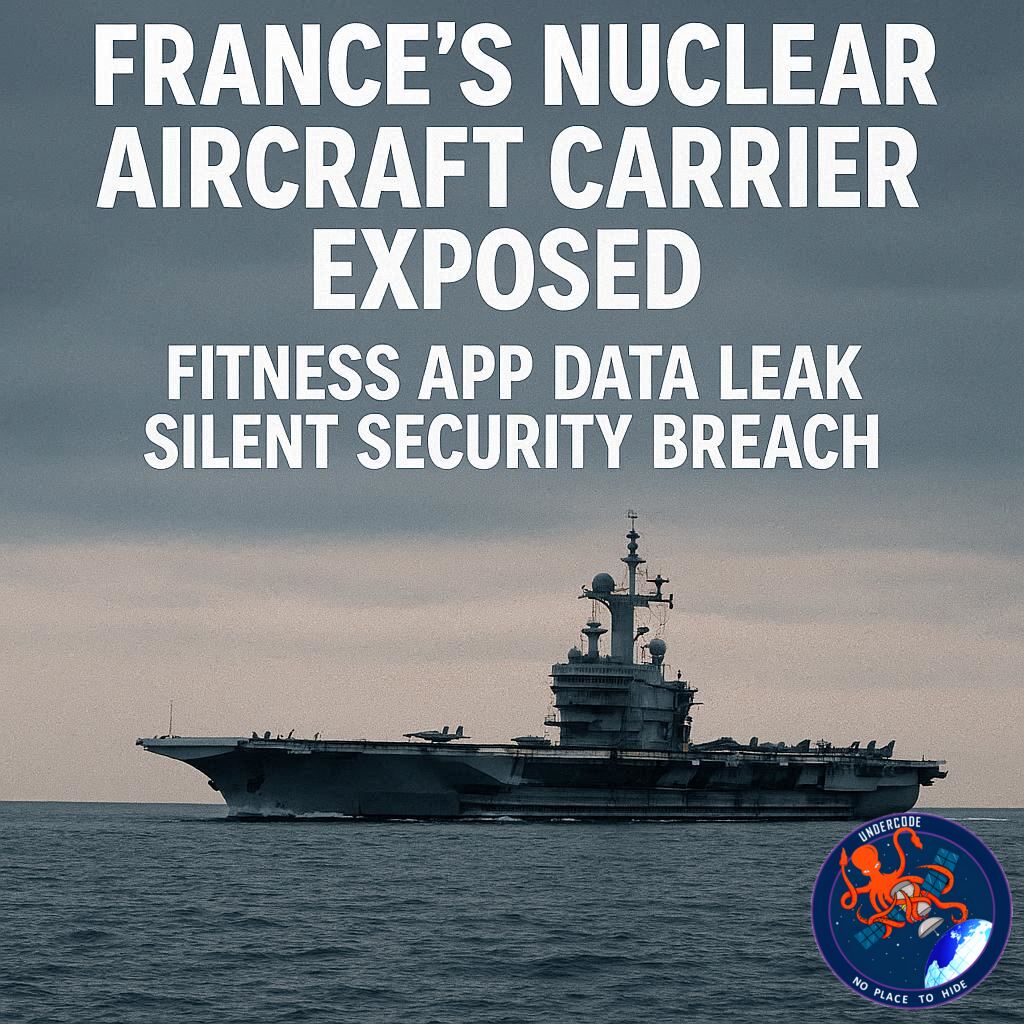
Modern warfare is no longer confined to missiles, submarines, or intelligence satellites. It increasingly unfolds through everyday digital tools, often in ways that appear harmless at first glance. A recent revelation has exposed a surprising vulnerability within one of Europe’s most powerful naval assets. France’s flagship aircraft carrier, the Charles de Gaulle, was unintentionally tracked in near real time due to a sailor’s use of a popular fitness app. What seemed like a routine workout turned into a serious operational security breach, highlighting how personal technology can undermine even the most sophisticated military systems.
A Routine Jog That Revealed Strategic Coordinates
According to investigative reporting, a young French naval officer unknowingly exposed the location of the aircraft carrier while jogging on its deck. Using a smartwatch connected to a fitness tracking application, the officer recorded his run, covering more than seven kilometers in just over half an hour. Once completed, the data was automatically uploaded online. The issue was not the activity itself, but the visibility settings of the profile. Because the account was set to public, anyone could access and analyze the information, including the ship’s approximate location in the Mediterranean Sea near Cyprus and Turkey.
Public Data, Private Consequences
The problem did not arise from hacking or espionage, but from open access. The officer’s public profile allowed external observers to pinpoint the aircraft carrier’s movements. In a region already marked by geopolitical tension, such exposure carries serious implications. The data effectively transformed a personal fitness record into a real-time intelligence feed, available to anyone with internet access. This incident demonstrates how easily sensitive information can leak through platforms never designed for military use.
Strategic Deployment Amplifies the Risk
The timing of this exposure made the situation even more critical. The French naval task force, led by the Charles de Gaulle, had recently been deployed following escalating tensions involving Israel, the United States, and Iran. The aircraft carrier, accompanied by multiple frigates and a supply vessel, was initially engaged in NATO exercises in the Baltic Sea before transitioning toward the Mediterranean. Its movements were strategically significant, making any form of location disclosure highly sensitive.
A Pattern of Digital Oversight in Military Operations
This is not the first time fitness tracking technology has compromised military security. Similar incidents have occurred in the past involving American and allied forces. Publicly shared exercise routes have revealed the layouts of military bases in conflict zones such as Afghanistan, Iraq, and Syria. Heat maps generated by fitness apps have unintentionally exposed hidden facilities and troop movement patterns, providing adversaries with valuable intelligence without the need for sophisticated surveillance tools.
The Growing Intersection of Civilian Tech and Military Risk
The widespread adoption of wearable technology has created a new category of risk that traditional military protocols have struggled to address. Devices designed for health and convenience are now capable of collecting precise geolocation data, which, when shared publicly, can compromise operational secrecy. The challenge lies in balancing personal freedom with institutional security, especially in environments where discipline and confidentiality are critical.
What Undercode Say:
The Illusion of Harmless Data in a Hyperconnected World
The incident involving the French aircraft carrier is not just a mistake, it is a reflection of a deeper systemic issue. In a hyperconnected world, data is rarely neutral. Even something as trivial as a jogging route can become a strategic vulnerability when placed in the wrong context. The core problem lies in the perception that personal data remains personal. In reality, once uploaded to a public platform, it becomes part of a global information ecosystem that can be mined, analyzed, and exploited.
Human Behavior as the Weakest Security Link
Military systems are designed with multiple layers of protection, from encryption protocols to physical defense mechanisms. Yet, the human factor continues to be the weakest link. The officer did not act maliciously or negligently in the traditional sense. He simply used a tool as intended. This highlights a critical gap in training and awareness. Security protocols often focus on external threats, while underestimating the risks posed by routine behavior in a digital environment.
The Weaponization of Open-Source Intelligence
What makes this case particularly concerning is the role of open-source intelligence. Adversaries no longer need to rely solely on classified espionage methods. Publicly available data, when aggregated and analyzed, can provide insights that rival traditional intelligence operations. Fitness apps, social media platforms, and even photo-sharing services can collectively reveal patterns that expose sensitive operations. This democratization of intelligence gathering has fundamentally changed the landscape of modern warfare.
The Speed of Data Versus the Speed of Response
Another critical issue is the speed at which data spreads compared to the speed of institutional response. Once the jogging data was uploaded, it became instantly accessible. Even if the profile were later set to private, the information could have already been captured, shared, or analyzed. Military organizations often operate within structured chains of command, which can delay response times. In contrast, digital data moves at the speed of light, creating a mismatch that adversaries can exploit.
Policy Gaps in the Age of Wearable Technology
While many armed forces have issued guidelines regarding the use of personal devices, enforcement remains inconsistent. The rapid evolution of technology often outpaces regulatory frameworks. Fitness apps are just one example. Emerging technologies such as augmented reality devices, biometric trackers, and AI-powered assistants introduce new layers of complexity. Without comprehensive policies and continuous updates, similar incidents are likely to recur.
Psychological Comfort Versus Operational Discipline
There is also a psychological dimension to consider. Long deployments at sea can be mentally and physically demanding. Fitness routines and digital tracking tools provide a sense of normalcy and personal achievement. However, this comfort can inadvertently lead to complacency. When individuals prioritize personal convenience over strict adherence to security protocols, even unintentionally, the consequences can be severe.
The Need for a Cultural Shift in Digital Awareness
Ultimately, solving this issue requires more than technical fixes. It demands a cultural shift within military organizations. Digital awareness must become as fundamental as physical training. Personnel need to understand not just how to use technology, but how that technology can be used against them. This involves continuous education, realistic simulations, and a clear emphasis on the real-world consequences of seemingly minor actions.
Fact Checker Results
✅ Fitness apps like Strava have previously exposed military locations through public data sharing.
✅ The aircraft carrier’s location was indirectly revealed through a publicly accessible activity log.
❌ There is no evidence of direct hacking or cyber intrusion in this specific incident.
Prediction
🔮 Increased restrictions on wearable technology use within military zones are highly likely.
🔮 Defense organizations will invest more in digital awareness training for personnel.
🔮 Fitness app companies may introduce stricter privacy defaults to prevent future incidents.
▶️ Related Video (76% Match):
🕵️📝✔️Let’s dive deep and fact‑check.
References:
Reported By: securityaffairs.com
Extra Source Hub (Possible Sources for article):
https://www.medium.com
Wikipedia
OpenAi & Undercode AI
Image Source:
Unsplash
Undercode AI DI v2
Bing
🔐JOIN OUR CYBER WORLD [ CVE News • HackMonitor • UndercodeNews ]
📢 Follow UndercodeNews & Stay Tuned:
𝕏 formerly Twitter 🐦 | @ Threads | 🔗 Linkedin | 🦋BlueSky | 🐘Mastodon


