
Listen to this Post
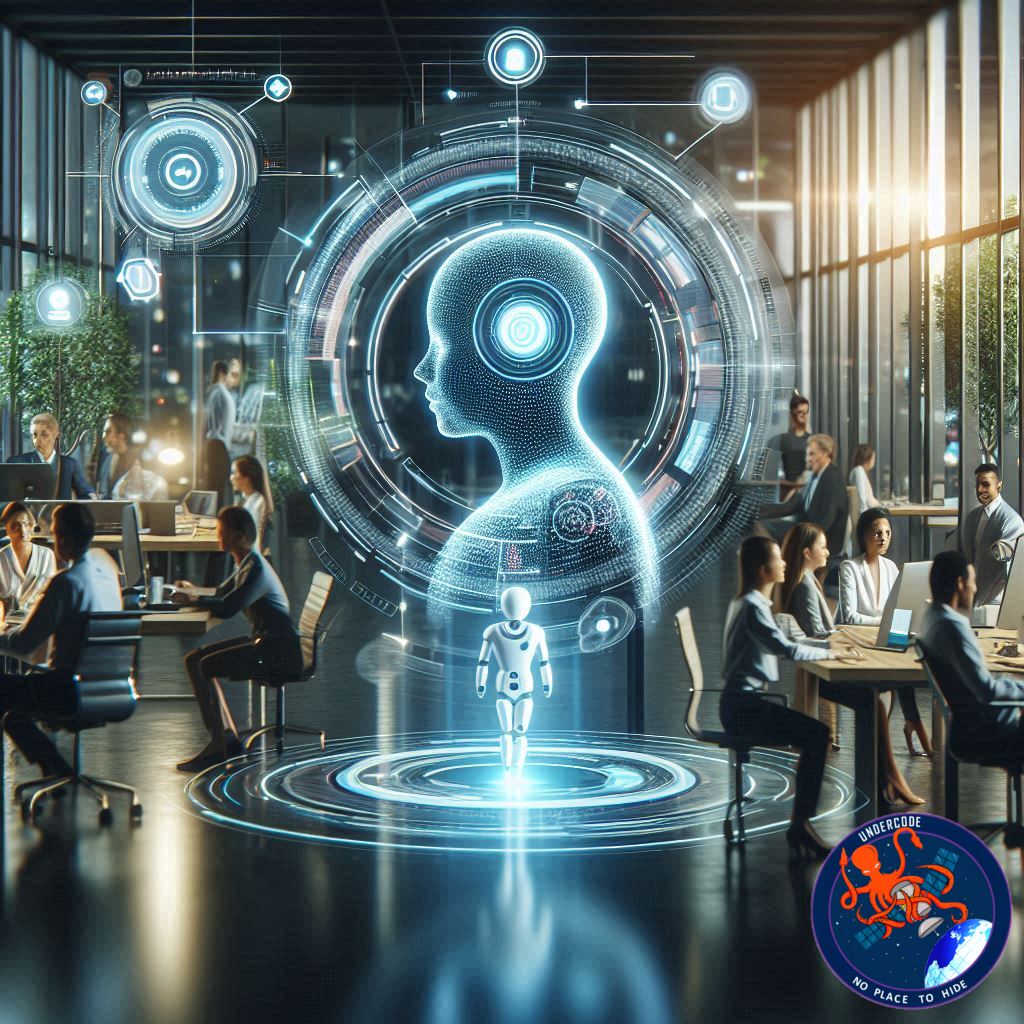
Introduction: The Quiet Revolution Beneath the Noise
As the world edges closer to 2026, the technology industry is no longer chasing spectacle. The past year marked a decisive turning point, one where artificial intelligence stopped being a curiosity and began reshaping the structural foundations of businesses, governments, and daily work. What started as text-based assistants evolved into systems capable of acting, deciding, and operating independently across workflows. AI is no longer just visible on screens; it is dissolving into the background, quietly orchestrating outcomes. The coming year promises something deeper, a shift from tools we use to partners we work alongside, redefining productivity, infrastructure, and trust at a global scale.
The Global Shift from AI That Talks to AI That Acts
The defining transformation of 2025 was accessibility. AI became faster, cheaper, and embedded across phones, PCs, and enterprise systems. But accessibility was only the beginning. By late 2025, AI began transitioning from passive assistance to active execution, managing tasks, coordinating workflows, and operating autonomously through AI agents. As 2026 approaches, industry leaders agree that the age of assistive AI is ending. What replaces it is Agentic AI, systems that do not merely respond but anticipate, decide, and act within clearly defined boundaries.
This evolution signals the end of AI as a novelty. No longer measured by impressive demos or conversational fluency, AI in 2026 will be judged by reliability, scale, and measurable outcomes. The most valuable systems will be invisible, operating silently to ensure businesses run smoothly, networks stay resilient, and decisions happen faster than humanly possible.
India’s Role in Building AI Public Infrastructure
India stands at the center of this transformation. According to Microsoft leadership, the country is not merely adopting AI but shaping how it becomes foundational infrastructure. Massive investments in cloud and AI capacity are positioning India as a global proving ground for scalable, responsible intelligence. Microsoft’s multi-billion-dollar commitment to expand infrastructure and skill development reflects a broader vision, one where AI is embedded into public platforms, governance systems, and workforce enablement.
The shift from digital public infrastructure to AI public infrastructure is already visible. Platforms that connect workers to opportunities and AI-driven systems that enhance cybercrime response illustrate how intelligence is becoming a core civic capability. By 2026, AI agents are expected to work alongside people across government and enterprise, handling routine processes while humans focus on strategic and creative work. India’s talent depth and ambition make it uniquely positioned to define inclusive, large-scale AI impact.
Connected Intelligence and the Hybrid Workforce
For global enterprises, 2026 will be defined by Connected Intelligence. The future workplace will not be built on more apps or dashboards but on seamless collaboration between people, data, and digital workers. AI agents will operate quietly in the background, anticipating needs, coordinating tasks, and resolving issues before they disrupt workflows. Geography and time zones will lose relevance as expertise flows instantly to where it is needed.
Cisco leaders emphasize that complexity will be broken down into domain-specific intelligence. Instead of monolithic AI systems, organizations will deploy tailored solutions for healthcare, finance, manufacturing, and beyond. Collaboration will become frictionless, and digital workers will enhance human creativity rather than interrupt it. The companies that succeed will be those that build open, interoperable ecosystems rooted in trust.
The Autonomous Enterprise Network
One of the most radical changes arriving by 2026 is the transformation of enterprise networks. Networks will stop being systems that humans operate and become systems that operate themselves. AI agents will replace traditional AIOps, evolving into full lifecycle operators capable of detecting anomalies, enforcing intent, remediating issues, and optimizing performance continuously.
This shift is not optional, especially in industrial and mission-critical environments where scale, safety, and uptime demand autonomous execution. As networks span IT, OT, cloud, edge, and private 5G, closed systems will become liabilities. Openness will be essential, allowing AI agents to reason and act across vendors and domains. The value will move away from individual devices toward unified platforms that orchestrate outcomes like resilience, security, and efficiency.
Human and AI as True Co-Workers
The workplace of 2026 will feel fundamentally different. AI agents will not resemble science fiction robots but practical collaborators embedded into everyday routines. From summarizing meetings to translating languages and offering expert recommendations, AI coworkers will become commonplace. More importantly, AI systems will collaborate with each other behind the scenes, monitoring performance, cross-checking decisions, and accelerating problem-solving.
As intelligence becomes interconnected, security challenges will intensify. The traditional perimeter-based security model will no longer suffice. Enterprises will adopt fused security approaches, embedding protection across every layer of infrastructure. Network management and security will converge, driven by adaptive, AI-powered defenses capable of responding to evolving threats in real time.
From AI Stew to Purpose-Built Intelligence
A recurring theme across industry leaders is the rejection of one-size-fits-all AI. Many organizations still treat AI as a single, tangled system that is difficult to manage and monetize. By 2026, the leaders will disaggregate AI into focused components tailored to specific functions like collaboration, security, or customer experience. Smaller, domain-specific models trained on proprietary data will outperform larger generic ones on accuracy, cost, and compliance.
Findability of data will emerge as a strategic asset. Enterprises that unify structured data, documents, and domain expertise into governed knowledge layers will unlock true agentic systems. Multimodal AI will turn images, audio, and video into searchable intelligence, while real-time analytics drive next-best actions across operations. In India, this shift will be especially impactful in vernacular and sector-specific contexts where ROI depends on precision and governance rather than novelty.
Trust, Sovereignty, and Resilience as Core Pillars
As AI becomes the operating layer of the enterprise, trust becomes the currency of adoption. Security leaders highlight the collapse of static, checklist-based compliance models. In their place, continuous trust architectures are emerging, validating users, devices, and context in real time. Data sovereignty and infrastructure independence are no longer optional, particularly for regulated industries navigating geopolitical and cyber risks.
The move toward platform-agnostic, crypto-agile architectures reflects a broader realization. Enterprises need flexibility without sacrificing control. From quantum-resilient encryption to forensic integrity, the focus is shifting toward future-proof security that can adapt as threats evolve.
What Undercode Say:
The narrative around 2026 is not about AI becoming smarter; it is about AI becoming structural. What stands out across this landscape is the convergence of three forces: autonomy, integration, and trust. Agentic AI is not simply an upgrade to automation. It represents a redistribution of responsibility between humans and machines. Humans define intent, ethics, and boundaries. AI executes relentlessly within those constraints.
India’s emergence as an AI infrastructure hub is particularly significant. Unlike markets driven purely by private enterprise, India’s focus on public platforms creates a blueprint for inclusive AI deployment. This could become the global reference model for how intelligence scales without deepening inequality.
The enterprise shift toward open ecosystems and platform-centric value also signals a quiet power shift. Vendors will no longer win on hardware or isolated features. They will win by orchestrating outcomes across complex environments. At the same time, trust will separate success from failure. Organizations that treat governance, explainability, and data control as first-class investments will move faster, not slower, because confidence reduces friction.
Perhaps the most underestimated change is cultural. When AI fades into the background and simply works, human attention is freed. Creativity, judgment, and strategy regain importance. The real disruption of 2026 is not technological; it is organizational. Companies that redesign roles, workflows, and accountability around human plus AI teams will outpace those that merely layer intelligence onto old structures.
Fact Checker Results
✅ The shift from assistive AI to agentic systems is consistently supported by industry leaders and enterprise roadmaps.
✅ Investments in AI infrastructure and skills, particularly in India, are publicly confirmed and ongoing.
❌ Claims of fully autonomous, self-governing enterprises by 2026 remain aspirational rather than universal.
Prediction
📊 By late 2026, agentic AI will become a baseline expectation in large enterprises rather than a competitive differentiator.
📊 Trust-centric AI governance will emerge as a board-level priority, influencing vendor selection and architecture decisions.
📊 The most successful AI systems will be those users barely notice, yet rely on every day.
🕵️📝✔️Let’s dive deep and fact‑check.
References:
Reported By: timesofindia.indiatimes.com
Extra Source Hub (Possible Sources for article):
https://www.discord.com
Wikipedia
OpenAi & Undercode AI
Image Source:
Unsplash
Undercode AI DI v2
Bing
🔐JOIN OUR CYBER WORLD [ CVE News • HackMonitor • UndercodeNews ]
📢 Follow UndercodeNews & Stay Tuned:
𝕏 formerly Twitter 🐦 | @ Threads | 🔗 Linkedin | 🦋BlueSky | 🐘Mastodon


