
Listen to this Post
A Recognition That Goes Beyond a Car
Some stories are about business. Others are about people. Felicity Eseke’s story is firmly in the second category.
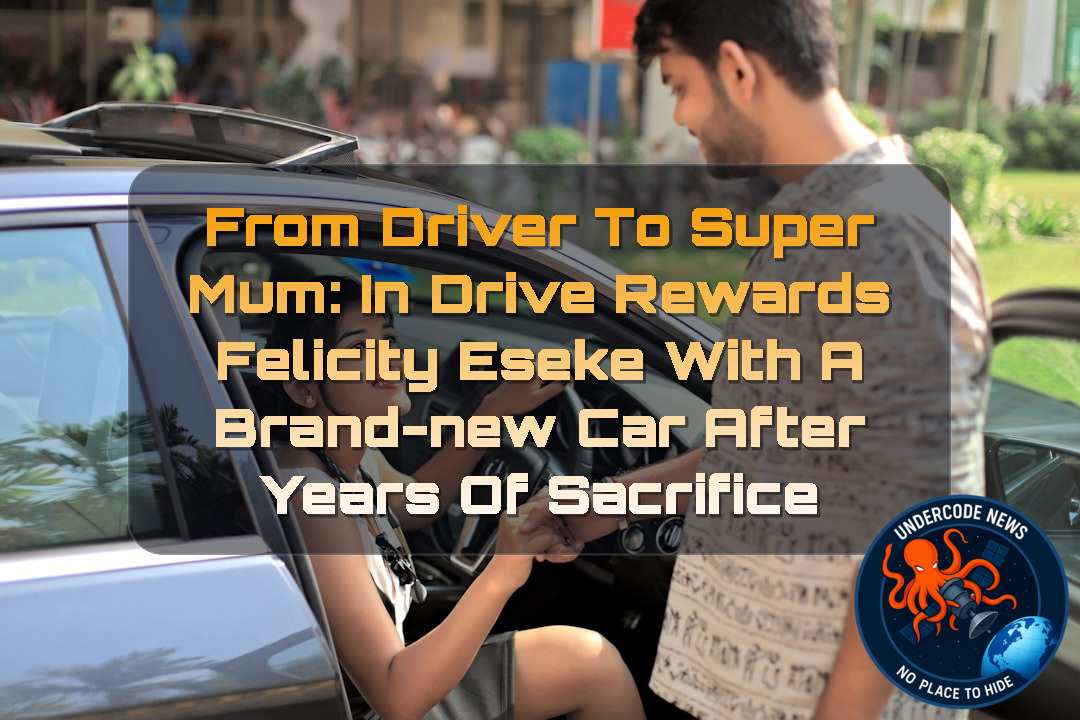
In a moment that has captured attention in Lagos, inDrive rewarded Eseke, affectionately known as the “Super Mum” driver, with a brand-new Wuling XC250 2025 after years of working behind the wheel to provide for her family.
The car was presented to her at Ikeja City Mall, Lagos, on Tuesday, August 25, 2026, during a ceremony attended by inDrive representatives, fellow drivers, well-wishers and popular Nigerian content creator Akinyemi Oluwaseun Omotayo, better known as Asherkine.
But the real story is not the vehicle.
It is the journey that came before it.
Five Years, Thousands of Rides and One Determined Mother
Eseke joined inDrive as a driver approximately five years ago. During that time, she completed more than 2,766 rides, turning countless journeys across Lagos into something much bigger than a source of income.
For her, driving became a way to build a future for her children.
Eseke used her earnings to support her family and put all five of her children through school, transforming what could have been an ordinary gig-economy job into a deeply personal mission.
Every passenger she picked up represented another opportunity to pay a school bill, provide food, keep her household running or move her family one step closer to a better future.
The Daughter Who Started the Story
The recognition reportedly began with an emotional message from Eseke’s daughter, Louisa Eseke.
Louisa reached out to inDrive because she wanted the company to understand what her mother had been doing for her family.
Rather than simply describing her mother as a hardworking driver, Louisa highlighted the years of dedication, sacrifice and resilience that had made Felicity a source of inspiration to her children.
That personal message ultimately brought attention to a story that might otherwise have remained invisible.
The Human Story Behind Every Ride
The modern ride-hailing industry is often discussed through numbers.
Millions of trips.
Thousands of drivers.
Faster pickups.
Lower prices.
More efficient technology.
But behind every completed ride is a person.
That was the central idea behind
According to Timothy Oladimeji, Country Manager of inDrive Nigeria, her story represents the resilience of drivers who work tirelessly to provide for their families while pursuing a better future.
His message was particularly significant because it shifted the focus away from the platform itself and toward the people whose labour keeps mobility services functioning every day.
“Behind Every Trip Is a Person”
Oladimeji explained that Eseke was selected because her story reflects the human experiences behind the thousands of people who use the platform to earn a living.
His message was simple but powerful: drivers are not merely accounts inside an application.
They are parents, children, providers and people carrying personal ambitions into every working day.
In
A Brand-New Wuling XC250 Becomes a Symbol
The Wuling XC250 2025 is obviously the most visible part of the reward.
Yet the significance of the vehicle goes beyond its price or specifications.
For a professional driver, a car is not simply transportation. It is also a workplace.
It can determine how many hours someone can work, how reliably they can complete trips and how much income they can potentially generate.
That makes this particular reward especially meaningful.
Instead of giving Eseke a temporary cash bonus, inDrive gave her an asset that could potentially support her livelihood for years.
A Different Kind of Corporate Recognition
Companies frequently celebrate employees and customers through conventional awards.
Ride-hailing platforms, however, operate differently because a significant portion of their workforce consists of independent drivers rather than traditional office employees.
That creates an interesting question: How should companies recognise the people whose work directly powers their platforms?
inDrive’s decision offers one possible answer.
Instead of celebrating only performance metrics, the company highlighted a personal story.
The Power of a
There is another important element to this story.
It was not a corporate algorithm that identified Eseke.
It was her daughter.
Louisa effectively became the person who told the world that her mother’s everyday work deserved recognition.
That detail makes the story particularly human because many hardworking parents never receive public acknowledgement for the sacrifices they make.
Sometimes, the people closest to us are the only ones who truly understand the scale of that effort.
Driving as a Path to Education
For Eseke, the purpose of driving was never simply to complete more trips.
The earnings were ultimately connected to education.
Putting five children through school requires consistency, patience and financial discipline, particularly when income depends on daily work.
A missed working day can have consequences when there is no traditional fixed salary waiting at the end of the month.
That makes her achievement particularly notable.
2,766 Rides Tell Only Part of the Story
The number 2,766 sounds impressive on its own.
But numbers cannot explain what happened between those rides.
They do not show early mornings.
They do not show difficult passengers.
They do not show traffic jams.
They do not show fuel costs, vehicle maintenance or the pressure of balancing professional responsibilities with family life.
And they certainly do not show the school fees those earnings helped cover.
The number is therefore better understood as a marker of consistency rather than merely productivity.
Lagos and the Reality of Gig-Economy Work
Lagos is one of
Traffic congestion, fuel expenses, vehicle maintenance and long working hours can make driving professionally physically and financially challenging.
For drivers, technology can create opportunities, but technology does not eliminate the realities of the road.
Eseke’s experience illustrates this contradiction perfectly.
The app may provide access to customers, but the driver still has to sit behind the wheel and do the work.
Why Stories Like This Matter
The gig economy is often discussed in terms of flexibility.
Drivers can choose when to work.
Customers can request rides through smartphones.
Payments can be processed digitally.
But flexibility does not necessarily mean ease.
For many drivers, platform work is a serious economic lifeline.
Eseke’s story demonstrates how income from this type of work can become part of a much larger family strategy.
Recognition Can Strengthen Driver Loyalty
There is also a business lesson hidden inside this emotional story.
Drivers have choices.
They can often work across multiple platforms depending on local market conditions, incentives and customer demand.
That means platforms must compete not only for passengers but also for driver loyalty.
Publicly recognising a driver can therefore have an impact beyond the individual recipient.
Other drivers see that the company is paying attention to the people operating on its platform.
The Emotional Side of Platform Economics
Technology companies often describe their services using technical language.
Platforms.
Algorithms.
Networks.
Transactions.
Matching systems.
But human beings experience these services very differently.
A driver may see the platform as the tool that pays the rent.
A parent may see it as the mechanism that pays school fees.
A passenger may see it as the quickest way home.
The same technology can therefore represent completely different things to different people.
inDrive’s Message to Its Drivers
By choosing to publicly celebrate Eseke, inDrive effectively communicated a message to its wider driver community: your work has a human story attached to it, and that story can matter.
That is valuable in an industry where drivers can sometimes feel reduced to ratings, trip counts and performance statistics.
Recognition restores the human element.
A Gift That Could Create Another Chapter
The new Wuling vehicle may ultimately become more than a reward.
It could become the beginning of another chapter in Eseke’s journey.
A newer vehicle can potentially improve reliability, comfort and operating efficiency compared with an older vehicle, although the actual financial impact will depend on maintenance, fuel consumption, insurance and other costs.
Most importantly, it gives Eseke something tangible to take back to her work.
The reward does not end the story.
It potentially changes what comes next.
Deep Analysis
Understanding the Economics Behind the Story
At first glance, this is a feel-good corporate story.
Look closer, however, and it reveals several important trends surrounding the future of urban mobility.
Ride-hailing platforms increasingly function as economic infrastructure in major cities.
They connect customers with drivers, but they also create a digital marketplace for people seeking flexible income.
For drivers like Eseke, platform accessibility can make a meaningful difference to household finances.
What the Platform Actually Provides
A ride-hailing application does not manufacture income from nothing.
Instead, it provides infrastructure for discovering customers, arranging trips, processing transactions and managing driver-passenger interactions.
The driver still carries many operational responsibilities.
Those can include:
Vehicle ownership or financing
Fuel
Maintenance
Insurance
Depreciation
Mobile data
Time spent waiting for passengers
Traffic-related costs
Personal safety
Opportunity cost
Therefore, gross ride earnings should never automatically be interpreted as take-home income.
A Simple Driver-Economics Model
The basic economics can be represented conceptually with a simple formula:
Net Driver Income =
Gross Trip Revenue
– Platform Fees
– Fuel Costs
– Maintenance
– Insurance
– Vehicle Depreciation
– Other Operating Expenses
This matters because thousands of completed trips do not necessarily translate into thousands of equally profitable trips.
A driver may complete many rides while facing substantial expenses.
Estimating Operational Performance
A driver or fleet manager could track basic performance using simple calculations:
Example: calculate average revenue per ride
gross_revenue=1000000
rides=2766
awk "BEGIN {print gross_revenue / rides}"
The result would provide an average gross revenue per ride, but it would not represent profit.
A more useful operational measurement would calculate revenue after expenses:
Net Revenue Per Ride =
(Gross Revenue – Total Operating Costs) / Completed Rides
That distinction is essential when analysing the economics of professional driving.
Tracking Fuel Efficiency
Fuel is one of the most important operating expenses for many drivers.
A basic log could look like this:
Date Distance Fuel Used
2026-08-25 180 km 15 L
2026-08-26 205 km 17 L
2026-08-27 190 km 16 L
Fuel efficiency can then be calculated with:
Fuel Efficiency = Distance / Fuel Used
For a professional driver, even small improvements in fuel efficiency can accumulate over hundreds or thousands of kilometres.
Why Vehicle Reliability Matters
A vehicle that spends too much time in a workshop can directly reduce a driver’s earning capacity.
That creates an important connection between the reward and Eseke’s livelihood.
The value of a new vehicle is not limited to the physical object.
It can also involve reduced downtime, improved reliability and potentially lower unexpected repair costs.
The actual benefits, of course, depend on the vehicle’s maintenance requirements and operating conditions.
The Hidden Cost of Downtime
Consider a simplified scenario.
If a driver normally generates a certain amount of gross revenue per working day, every unexpected day off the road represents potentially lost income.
The calculation can be expressed as:
Lost Gross Income =
Average Daily Gross Revenue × Downtime Days
This is why vehicle reliability can be economically significant for drivers whose income depends directly on completed trips.
Driver Recognition as a Business Strategy
There is another layer to analyse.
Recognition programs can potentially influence driver behaviour and platform perception.
A driver who sees another driver being celebrated may feel more connected to the platform.
That can strengthen emotional loyalty even when drivers remain independent workers.
In a competitive mobility market, emotional loyalty can become a surprisingly valuable asset.
The Psychology of Recognition
Recognition does something money alone cannot always accomplish.
It tells a person that their effort has been seen.
For Eseke, the reward came after years of work.
That timing matters.
She was not simply given a promotional prize for winning a short-term competition.
Her story was presented as an example of perseverance.
That distinction can make the recognition more emotionally powerful.
The Daughter as a Storytelling Catalyst
Louisa’s involvement also demonstrates the power of user-generated storytelling.
Companies can spend significant amounts of money trying to create emotional campaigns.
Here, the emotional narrative emerged naturally from a family member.
That makes the story feel more authentic.
The lesson for brands is straightforward:
Authentic Human Story
↓
Community Attention
↓
Emotional Connection
↓
Brand Association
The strongest corporate stories are often discovered rather than manufactured.
The Role of Content Creators
The presence of Asherkine at the ceremony adds another modern layer.
Traditional corporate events primarily relied on journalists and official media.
Today, content creators can amplify personal stories to audiences through social platforms.
That changes how brands communicate recognition.
A local event can quickly become a wider digital story.
From Corporate Event to Community Narrative
The ceremony was therefore not merely a presentation.
It brought together:
A driver
Her daughter
A mobility company
Fellow drivers
A content creator
Members of the public
Each participant represents a different part of the ecosystem.
Together, they turn a private family achievement into a public community narrative.
The Bigger African Mobility Story
Africa’s growing urban populations are creating enormous demand for transportation solutions.
Ride-hailing platforms have become part of this transformation.
But the success of mobility technology ultimately depends on people.
Apps can match riders and drivers.
Maps can calculate routes.
Digital payments can move money.
Yet someone still has to drive through the city.
Eseke’s story brings that human reality back into focus.
Technology Is the Infrastructure, People Are the Engine
It is easy to describe ride-hailing as a technology business.
Technically, that is true.
But operationally, it is also a people business.
Without drivers, the platform cannot fulfil its central promise.
That makes driver welfare, safety, economics and retention strategically important.
What the Wuling Reward Could Mean Long Term
If maintained properly, the new vehicle could help Eseke continue generating income while potentially reducing some of the financial uncertainty associated with an aging vehicle.
It could also represent something symbolic for her children.
They have seen their
That creates a powerful connection between sacrifice and achievement.
A Lesson About Invisible Labour
Many forms of work become visible only when someone receives an award.
Before this recognition, most people who encountered Eseke on the platform probably knew little about her personal story.
They saw a driver.
They did not necessarily see the mother supporting five children through school.
That distinction exists across almost every economy.
People frequently encounter the output of
The Importance of Sustainable Earnings
Recognition is valuable, but it should not distract from the bigger question surrounding gig work:
Can drivers build sustainable livelihoods from platform-based work?
A one-time reward can change
Sustainable income can change an entire
That means platforms have an opportunity to think beyond promotional campaigns and examine driver economics, safety, financial tools and long-term support.
From Reward to Responsibility
There is an important difference between celebrating drivers and supporting them.
Celebration creates visibility.
Support creates resilience.
The strongest mobility platforms will likely need both.
Recognition programs can build community, while better economic tools and driver-focused services can address the structural challenges that drivers face every day.
What Other Platforms Can Learn
Competitors can take several lessons from the story.
First, drivers are people before they are metrics.
Second, authentic recognition can generate strong emotional engagement.
Third, family stories can communicate the economic importance of platform work more effectively than corporate statistics.
And finally, the most meaningful rewards are those that can potentially improve the recipient’s future rather than simply celebrating their past.
What Undercode Say:
1. The Car Is Only the Beginning
The most obvious headline is the new car.
The more important headline is the opportunity it represents.
2.
Her experience shows how platform work can become deeply connected to family survival and upward mobility.
3. 2,766 Rides Represent Consistency
The number is impressive, but the persistence behind it is even more important.
- Five Children Change the Meaning of Every Ride
Her earnings were not simply supporting one individual.
They were helping sustain an entire household.
5. Education Is the Most Powerful Detail
Putting five children through school transforms the story from employment into generational investment.
6.
The story became public because someone inside the family decided that the sacrifice deserved recognition.
7. Authentic Stories Are Powerful Branding
inDrive did not need to invent an emotional narrative.
The family already had one.
8. Recognition Can Build Trust
Drivers who see their peers receiving meaningful recognition may feel more connected to a platform.
9. The Reward Has Practical Value
A vehicle can potentially improve a
10. Mobility Platforms Depend on Drivers
No matter how advanced the software becomes, the physical service still depends on people.
11. Technology Cannot Remove Economic Reality
Fuel, maintenance, insurance and depreciation remain real costs.
12. Gross Revenue Is Not Profit
Trip counts and earnings figures should always be interpreted alongside operating expenses.
13. Reliability Has Economic Value
A reliable vehicle can potentially reduce downtime.
14. Downtime Is Lost Opportunity
For drivers, a vehicle that cannot operate can directly affect household income.
- The Driver Is Part of the Brand
Customers often associate their experience with the individual driver as much as with the application.
16. Human Recognition Matters
People want to know that their effort is noticed.
17. Corporate Recognition Can Have Cultural Impact
A public celebration can become an example for an entire driver community.
18. The Story Is Bigger Than inDrive
The underlying theme is perseverance.
That message can resonate regardless of the platform.
19. Lagos Provides Important Context
The realities of working in a major African megacity make the achievement more significant.
20. Five Years Is a Long Commitment
Maintaining consistent work over years requires discipline.
21. Family Motivation Is Powerful
Economic decisions are often driven by responsibilities that never appear in corporate dashboards.
22. Drivers Need More Than Incentives
Long-term sustainability requires economics that work beyond occasional bonuses.
- Recognition Should Be Part of a Larger Strategy
Celebrating exceptional drivers is valuable, but everyday driver support is even more important.
24. Platforms Should Measure Human Outcomes
Trip counts tell one story.
Family outcomes can tell another.
25. The Best Corporate Stories Are Specific
Felicity is not an abstract “driver.”
She is a mother with a defined journey.
26. Her Daughter Added Emotional Depth
Louisa’s involvement made the story feel personal rather than promotional.
27. Content Creators Expand Reach
Asherkine’s presence demonstrates how modern recognition campaigns can move beyond traditional media.
28. The Ceremony Creates Community
Drivers, family members and company representatives were brought together around one person’s achievement.
29. The New Vehicle Could Improve Productivity
Assuming reasonable operating costs, a newer vehicle could potentially support more reliable work.
30. But Maintenance Still Matters
No vehicle is automatically inexpensive to operate.
Long-term value depends on responsible maintenance.
31. Driver Economics Deserve More Attention
The public often sees the fare but not the expenses behind it.
32. Platform Transparency Can Help
Clear information about fees, earnings and incentives can help drivers make better decisions.
33. Recognition Can Become Competitive Advantage
A platform known for respecting its drivers may have an advantage in recruitment and retention.
34. Emotional Loyalty Is Real
Not every driver decision is based purely on mathematics.
People remember how organisations treat them.
35.
Her work helped create opportunities for her children.
That makes the impact potentially last beyond her own career.
36. Education Multiplies the Reward
Schooling can create opportunities that extend far beyond the original income used to pay for it.
37. The Story Challenges Stereotypes
Professional driving is sometimes dismissed as temporary or low-status work.
Eseke’s journey demonstrates how seriously some drivers approach it.
38. Every Platform Has Hidden Human Stories
There are likely thousands of similar stories that remain unknown.
39. Companies Should Look for Them
Finding and supporting these stories can strengthen communities around digital platforms.
40. The Real Reward Is Hope
Ultimately, the most powerful part of this story is not the Wuling badge or the new vehicle.
It is the message that years of difficult work can still lead to recognition, opportunity and a better future.
✅ Felicity Eseke Was Recognised by inDrive
The article states that inDrive honoured Felicity Eseke as a “Super Mum” driver.
The recognition reportedly included the presentation of a brand-new Wuling XC250 2025.
The ceremony took place at Ikeja City Mall in Lagos on August 25, 2026.
✅ She Has Completed More Than 2,766 Rides
The supplied article states that Eseke has completed over 2,766 rides since joining the platform approximately five years ago.
This figure is presented as part of the explanation for her recognition.
It should be understood as the figure reported by the source rather than independently audited trip data.
✅ She Supported Five Children Through School
The article states that Eseke used her earnings as an inDrive driver to support her family and put all five of her children through school.
This is the central human-interest claim behind the award.
The story was reportedly brought to
⚠️ The Financial Impact of the New Car Cannot Be Guaranteed
A new vehicle can potentially reduce repair-related downtime and provide a more reliable working asset.
However, the actual financial benefit depends on fuel consumption, maintenance, insurance, depreciation and other operating expenses.
Therefore, it would be inaccurate to claim that the car automatically guarantees higher profits.
Prediction
(+1) Eseke’s Story Could Become a Model for Driver Recognition
The most likely positive development is that stories like Felicity Eseke’s encourage ride-hailing companies to invest more heavily in driver recognition.
As competition between mobility platforms intensifies, companies may increasingly realise that driver loyalty cannot be built entirely through fares and bonuses.
Programs that recognise exceptional personal journeys could become a stronger part of platform culture.
(+1) The Vehicle Could Strengthen Her Earning Potential
If the Wuling XC250 proves reliable and its operating costs remain manageable, the vehicle could give Eseke a stronger foundation for continuing her driving career.
The greatest value of the award may therefore appear months or years after the ceremony.
(+1) Her Story Could Inspire Other Families
The emotional power of the story extends beyond the mobility sector.
It demonstrates how persistent work can be connected to a larger family objective, particularly education.
For her children, the new car may become a lasting symbol of what their mother’s determination achieved.
Final Perspective: More Than a Ride
Felicity Eseke’s story begins with a steering wheel but ends somewhere much bigger.
For five years, she drove.
She completed thousands of rides.
She worked to support her household.
She helped put five children through school.
And eventually, the story of that effort travelled from her family to one of Africa’s major mobility platforms.
The brand-new Wuling XC250 is certainly an impressive reward.
But the most valuable thing in this story cannot be parked outside a house or displayed at a ceremony.
It is the example Eseke has created for her children.
Her journey shows that behind the statistics of the gig economy are real people making difficult choices, carrying enormous responsibilities and working toward futures that may take years to build.
Every ride had a destination.
For Felicity Eseke, however, the destination was never simply the next passenger’s drop-off point.
It was a better future for her family.
🕵️📝Let’s dive deep and fact‑check.
🎓 Live Courses & Certifications:
Join Undercode Academy for Verified Certifications
🚀 Request a Custom Project:
Secure, high-velocity infrastructure and disruptive technological engineering. Contact our engineering team for high-tier development and proprietary systems:
[email protected]
💎 Smart Architecture | 🛡️ Secure by Design | ⭐ Trusted by Thousands
References:
Reported By: www.legit.ng
Extra Source Hub (Possible Sources for article):
https://www.quora.com/topic/Technology
Wikipedia
OpenAi & Undercode AI
Image Source:
Unsplash
Undercode AI DI v2
🔐JOIN OUR CYBER WORLD [ CVE News • HackMonitor • UndercodeNews ]
📢 Follow UndercodeNews & Stay Tuned:
𝕏 formerly Twitter 🐦 | @ Threads | 🔗 Linkedin | 🦋BlueSky | 🐘Mastodon | 📺Youtube


