
Listen to this Post
Introduction: A Rising Threat Hidden in Plain Sight
The modern job search has become a digital battlefield. Endless applications, automated rejections, and silent inboxes create frustration that scammers are increasingly exploiting. What once felt like a hopeful opportunity, a recruiter reaching out with a high-paying, flexible job, is now often a carefully crafted trap. According to the Federal Trade Commission, job scams are rapidly escalating, turning desperation into profit for cybercriminals and leaving job seekers financially and emotionally drained.
Summary: Inside the $220 Million Job Scam Explosion
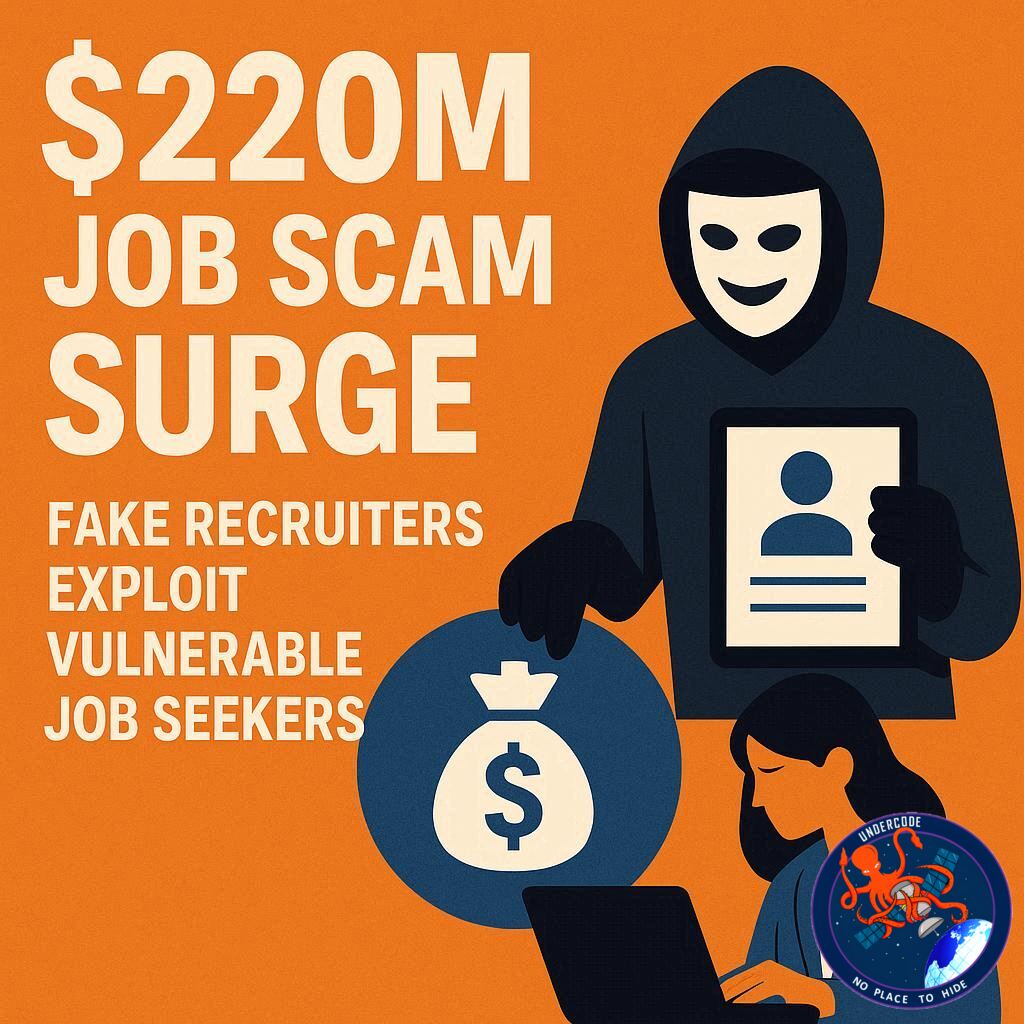
The job market has always had its challenges, but the scale of fraud today is unprecedented. Data from the Federal Trade Commission reveals that scammers stole approximately $220 million in just the first half of 2024. This figure alone is alarming, but it likely represents only a fraction of the true impact, as many victims never report these crimes due to embarrassment or lack of awareness.
A major driver behind this surge is the soft labor market, where job seekers face longer unemployment periods and increased competition. Experts like Priya Rathod from Indeed suggest that scammers are capitalizing on this vulnerability, targeting individuals who are eager, and sometimes desperate, for opportunities. The rise of remote work has also played a significant role. Without the expectation of face-to-face interviews, candidates are less likely to question suspicious hiring processes.
Scammers often design job listings that appear almost perfect. These roles promise high salaries, minimal effort, and flexible hours, an irresistible combination for many. However, these listings frequently lack detailed job descriptions, required qualifications, or clear responsibilities. In some cases, candidates are even offered positions without undergoing any formal interview process, a glaring red flag that is often overlooked in moments of excitement.
Another common tactic involves requesting sensitive information or upfront payments. Legitimate employers never ask for money during the hiring process, yet scammers exploit urgency and emotional pressure to convince candidates otherwise. Victims may be asked to provide Social Security numbers, banking details, or even pay for “training” or “equipment,” none of which lead to real employment.
Communication style is another giveaway. Fraudulent recruiters often use personal email addresses instead of corporate domains, and their messages may contain grammatical errors or inconsistent branding. They may also push candidates to act quickly, creating a false sense of urgency that discourages critical thinking.
To protect themselves, job seekers are advised to thoroughly research companies before applying or responding to offers. Verifying job listings directly on official company websites, contacting HR departments, and questioning suspicious requests can significantly reduce risk. Experts emphasize that candidates should feel empowered to push back against questionable practices, as legitimate recruiters will respect due diligence.
For those who suspect they have already encountered a scam, immediate action is crucial. Ceasing communication, contacting financial institutions, and securing personal accounts can help limit damage. Reporting the incident and notifying the impersonated company can also prevent others from falling victim.
What Undercode Say:
The Psychology of Job Scams in a Digitally Exhausted Workforce
The explosion of job scams is not just a cybersecurity issue, it is a behavioral crisis fueled by economic pressure and digital fatigue. When individuals spend weeks or months applying for jobs without meaningful responses, their decision-making thresholds begin to shift. Offers that would normally trigger skepticism start to feel like rare opportunities. This psychological vulnerability is exactly what scammers are engineering for.
Remote work has unintentionally removed one of the strongest trust filters: physical interaction. In traditional hiring, in-person interviews, office visits, and direct human contact acted as natural verification layers. Today, a well-written email and a convincing LinkedIn profile can simulate legitimacy with minimal effort. This shift has lowered the barrier for fraud at a global scale.
Another overlooked factor is the automation of recruitment itself. Many companies now rely on AI-driven systems for screening and communication. This has normalized delayed responses, generic emails, and minimal human interaction. Ironically, this environment makes scam communications blend in more easily, because candidates already expect impersonal processes.
There is also a growing asymmetry of information. Scammers often research candidates extensively, using publicly available data to personalize their approach. Meanwhile, job seekers have limited tools to verify recruiter identities in real time. This imbalance creates a dangerous dynamic where trust is easily manufactured but difficult to validate.
Financial desperation amplifies the problem. Individuals facing prolonged unemployment may rationalize red flags as necessary risks. Requests for small payments or personal details can feel like minor hurdles compared to the promise of stable income. This is where scams transition from suspicious to believable.
From a systemic perspective, platforms hosting job listings must also share responsibility. While companies like Indeed invest heavily in fraud detection, the sheer volume of listings makes complete oversight nearly impossible. This creates an environment where even vigilant users can be exposed to sophisticated scams.
Education remains the most scalable defense. Job seekers need to be trained not just to identify obvious scams, but to understand the subtle tactics used to manipulate urgency and trust. Awareness campaigns should evolve alongside scam strategies, focusing on behavioral cues rather than just technical signs.
Ultimately, the rise in job fraud reflects a broader trend: digital trust is eroding. As more life activities move online, the line between legitimate and fraudulent interactions continues to blur. Without stronger verification systems and more informed users, job scams are likely to become even more convincing and harder to detect.
Fact Checker Results
✅ The Federal Trade Commission reported approximately $220 million lost to job scams in early 2024
✅ Remote work expansion has increased exposure to recruitment-related fraud
❌ Not all high-paying remote jobs are scams, but unrealistic offers are a major warning sign
Prediction
📊 Job scams will increasingly use AI-generated recruiter identities and deepfake interviews to appear legitimate
📊 Verification tools integrated into job platforms will become a standard requirement for trust
📊 Cybersecurity awareness will become a core skill for job seekers, similar to resume writing or interview preparation
🕵️📝✔️Let’s dive deep and fact‑check.
References:
Reported By: www.zdnet.com
Extra Source Hub (Possible Sources for article):
https://www.medium.com
Wikipedia
OpenAi & Undercode AI
Image Source:
Unsplash
Undercode AI DI v2
Bing
🔐JOIN OUR CYBER WORLD [ CVE News • HackMonitor • UndercodeNews ]
📢 Follow UndercodeNews & Stay Tuned:
𝕏 formerly Twitter 🐦 | @ Threads | 🔗 Linkedin | 🦋BlueSky | 🐘Mastodon


