
Listen to this Post
Introduction
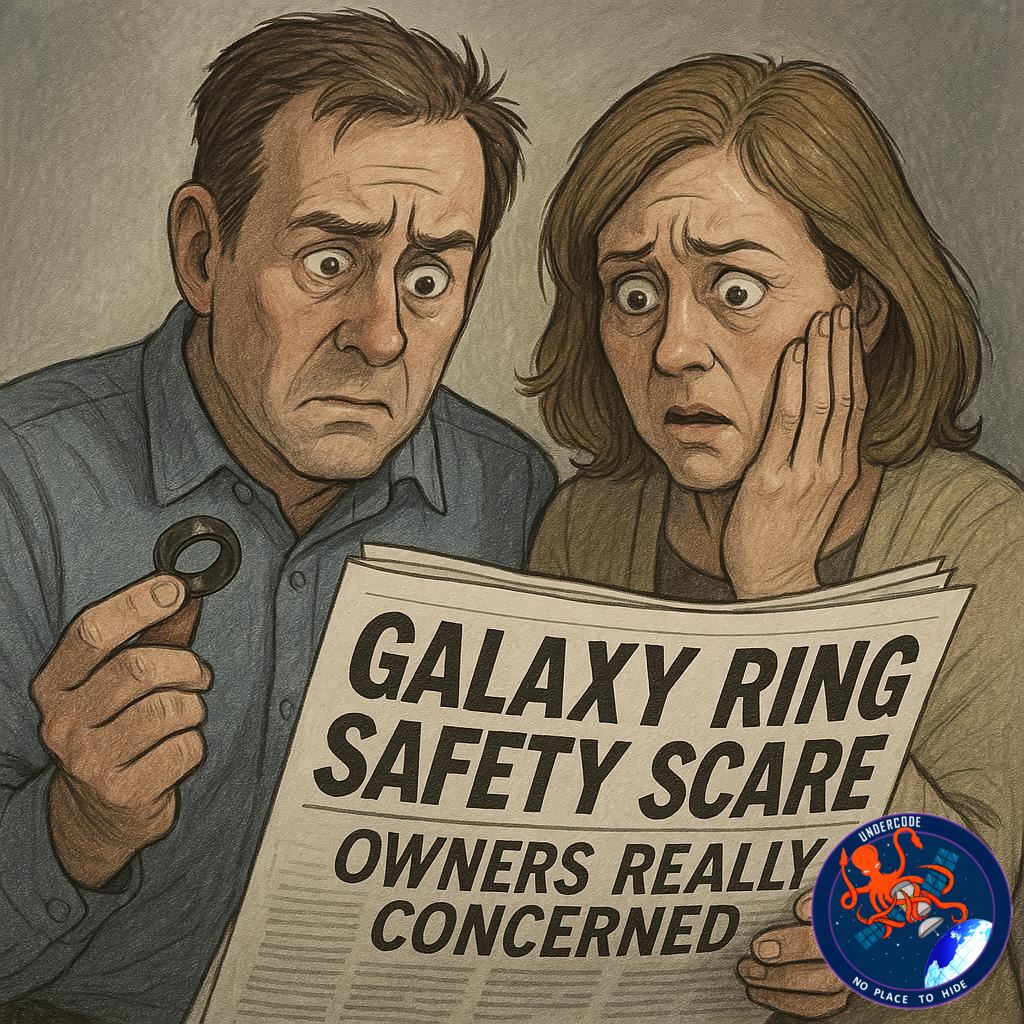
Samsung’s Galaxy Ring has been one of the most talked-about wearable launches of the year, promising futuristic health tracking in a stylish, minimal form. But a recent report of a battery swelling incident that left the device stuck on a user’s finger has sent waves of concern across the tech community. With users sharing mixed experiences online, many are asking the same question: Is the Galaxy Ring truly safe to wear every day, or should we be cautious? Let’s dive into the facts, expert opinions, and the reality behind the headlines.
the Issue
News broke after a Galaxy Ring user reported severe swelling of the device’s battery, which not only caused poor performance but also made it impossible to remove from their finger. According to the user, the issue began with declining battery life, a problem echoed by several others on Reddit, and worsened after the device was exposed to salt water.
While the case sounds alarming, experts emphasize that it appears to be an isolated incident rather than a widespread fault. For the majority of Galaxy Ring owners, the device is safe when used responsibly. Still, being a first-generation product, it lacks the years of refinement that Samsung’s smartwatches have enjoyed.
Unlike a watch, which can be quickly removed at the first sign of discomfort, a ring poses a different risk—its snug fit can make it hard to take off if swelling occurs. That’s why extra caution is advised.
Samsung has been clear since launch that users must rinse the Galaxy Ring with fresh water after exposure to salt water or chlorinated pools. Harsh elements like salt and chlorine can gradually weaken the seals that protect against dust and water damage. Resistance isn’t permanent, and neglecting care can accelerate wear.
Ultimately, the consensus is that the Galaxy Ring is safe but fragile. Owners should treat it with care: avoid extended saltwater exposure, rinse it regularly, and pay attention to early signs of battery or fit issues.
The article also notes the author’s background—Abhijeet, a veteran tech journalist and SamMobile’s Editor-in-Chief—underscoring the credibility of the warning.
What Undercode Say:
The Galaxy Ring represents a bold step into the next wave of wearables, blending the convenience of jewelry with the power of health-tracking technology. But bold innovation always comes with teething issues.
From a technical perspective, battery swelling in lithium-ion cells isn’t new. It can occur due to overheating, poor charging habits, or exposure to damaging environments like salt water. While smartphones and watches are better protected due to larger form factors, a slim ring has less room for insulation and safeguards. This makes proper care more critical.
Another key angle is user expectation vs. reality. Many early adopters assume the Galaxy Ring will be as durable as a smartwatch, yet its form factor demands gentler treatment. Rings are harder to remove, and unlike watches, they face direct, constant skin contact with little airflow, raising the chances of heat and moisture build-up.
Looking at Samsung’s history, their first-generation products often undergo rapid refinement after launch. The original Galaxy Fold, for instance, had durability concerns, but subsequent models drastically improved. This pattern suggests that while the Galaxy Ring Gen 1 may face hiccups, future versions will likely be sturdier.
From a consumer perspective, this means:
Handle the Galaxy Ring with the same caution you’d give fine jewelry.
Regularly check battery performance and ring fit.
Avoid risky environments like saltwater, chlorinated pools, or extreme temperatures.
This incident also highlights the growing pains of miniaturized wearables. As tech companies race to shrink components, the risks of overheating and seal degradation rise. The Galaxy Ring isn’t alone—other smart rings have reported similar issues, though far less publicized.
On the positive side, the fact that only one major incident has surfaced despite thousands of units sold is reassuring. It suggests that the Galaxy Ring is largely reliable, provided owners respect its care guidelines.
In essence, the Galaxy Ring is safe, but it isn’t indestructible. Owners who treat it with care are unlikely to face problems, while those who neglect maintenance may run into trouble.
Fact Checker Results ✅❌
✅ The swelling incident is real, confirmed by a user report.
✅ Samsung advises rinsing the Ring after salt or pool exposure.
❌ Claims that the Galaxy Ring is unsafe for all users are exaggerated; most owners will not face this issue.
Prediction 🔮
Samsung will almost certainly address these concerns in future updates and hardware revisions. The Galaxy Ring 2 will likely feature stronger seals, improved battery safety, and possibly even an easier removal mechanism. For now, cautious users should treat the current version as a premium, delicate gadget—not an indestructible fitness band.
🕵️📝✔️Let’s dive deep and fact‑check.
References:
Reported By: www.sammobile.com
Extra Source Hub:
https://stackoverflow.com
Wikipedia
OpenAi & Undercode AI
Image Source:
Unsplash
Undercode AI DI v2
🔐JOIN OUR CYBER WORLD [ CVE News • HackMonitor • UndercodeNews ]
📢 Follow UndercodeNews & Stay Tuned:
𝕏 formerly Twitter 🐦 | @ Threads | 🔗 Linkedin | 🦋BlueSky | 🐘Mastodon


