
Listen to this Post
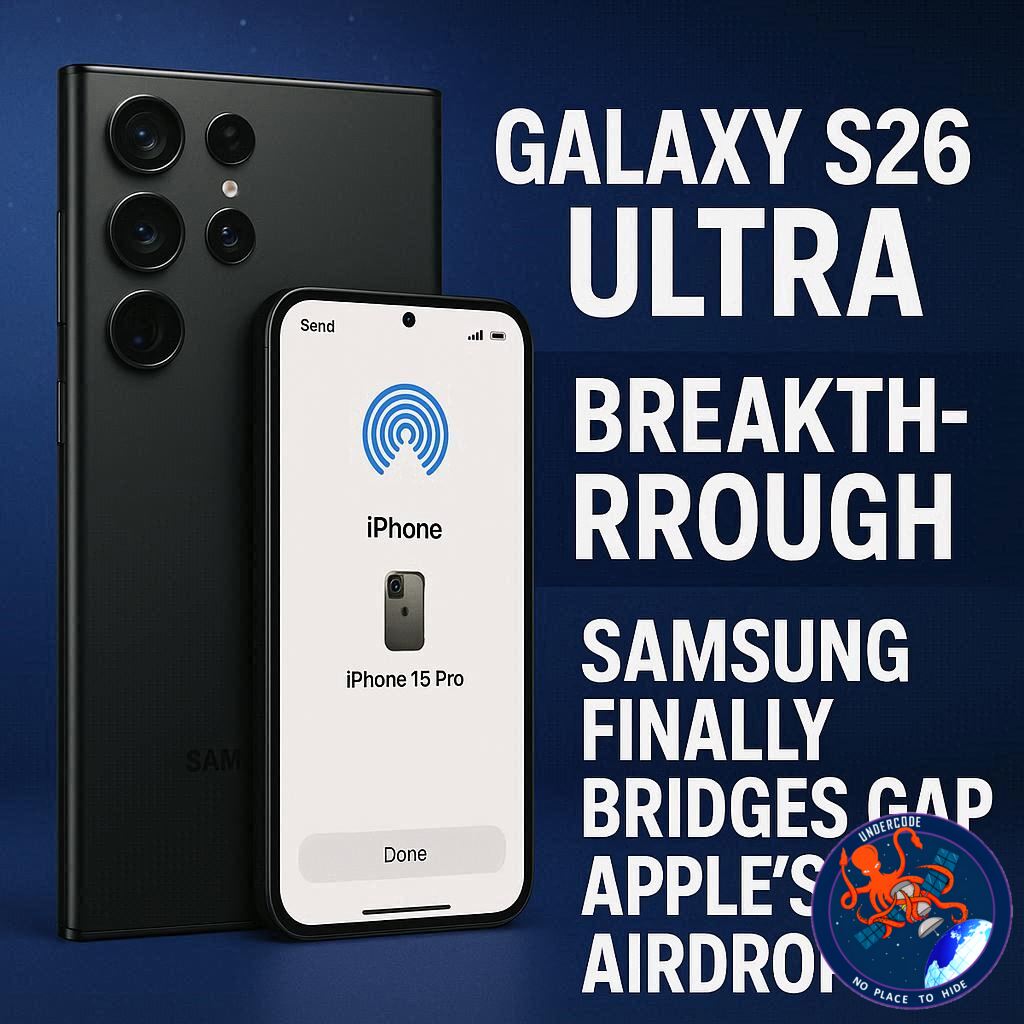
Introduction: A Long-Awaited Ecosystem Shift
For years, seamless file sharing has been one of the biggest advantages of Apple’s tightly integrated ecosystem. Users of iPhones, iPads, and Macs have enjoyed the convenience of AirDrop, while Android users relied on alternatives that rarely matched its simplicity or reliability. That gap is now starting to close. With the launch of the Galaxy S26 series, Samsung has introduced a major upgrade to its Quick Share feature—one that allows direct compatibility with Apple’s AirDrop. This unexpected move signals a shift in how tech giants approach cross-platform usability, potentially reshaping how users interact across ecosystems.
the Original Announcement
Samsung has rolled out a significant update to its Galaxy S26 lineup, introducing enhanced Quick Share functionality that now works with Apple’s AirDrop system. This means users can wirelessly transfer files between Galaxy devices and Apple products such as iPhones, iPads, and Macs with far greater ease than before. The feature simplifies cross-platform sharing, eliminating the need for third-party apps or workarounds that users previously depended on.
To use this functionality, Galaxy device owners must ensure their phones support the updated Quick Share system with AirDrop compatibility. The process of sending files from a Galaxy device to an Apple device is straightforward and mirrors the simplicity users expect from native sharing tools. Similarly, Apple users can send files back to Galaxy devices using a compatible process, making the interaction more symmetrical than ever before.
However, the feature is currently limited in availability. It only works on Galaxy S26, Galaxy S26+, and Galaxy S26 Ultra devices that have received the second March 2026 software update, which includes the February 2026 security patch. Users must also ensure that Quick Share is updated to the latest version via the Galaxy Store and that their devices have the latest Google Play system updates installed.
Samsung has confirmed that it plans to expand this capability to additional Galaxy devices in the future, though it has not provided a specific timeline. This suggests that the feature is still in an early rollout phase and may evolve further based on user feedback and technical refinements.
Overall, this development marks a notable step forward in cross-platform compatibility. It reduces friction between Android and Apple ecosystems, allowing users to share photos, videos, documents, and other files without worrying about device limitations. While still restricted to a handful of devices for now, the update hints at a broader vision where interoperability becomes a standard rather than an exception.
What Undercode Say:
A Strategic Move Toward Ecosystem Neutrality
Samsung’s decision to make Quick Share compatible with AirDrop is not just a feature upgrade—it’s a strategic statement. For years, tech ecosystems have thrived on exclusivity, locking users into specific platforms. By enabling cross-compatibility, Samsung is signaling a shift toward a more open digital environment, where convenience may outweigh brand loyalty.
Competitive Pressure and User Expectations
This move likely reflects growing pressure from users who operate across multiple devices and platforms. It’s increasingly common for someone to use a Windows laptop, an Android phone, and an iPad simultaneously. The demand for seamless interoperability has never been higher, and Samsung appears to be responding directly to that expectation.
Technical Implications Behind the Scenes
Achieving compatibility with AirDrop is no small feat. Apple’s ecosystem is known for its closed architecture, and integrating with it requires either cooperation, reverse engineering, or the use of shared wireless standards in a new way. This suggests that Samsung has either found a clever workaround or that industry standards are quietly aligning behind the scenes.
Limited Rollout Indicates Testing Phase
The fact that this feature is restricted to the Galaxy S26 lineup and requires a specific update indicates that Samsung is treating this as a controlled rollout. This approach allows the company to monitor performance, identify bugs, and refine the user experience before expanding it to older or mid-range devices.
Potential Impact on Apple’s Strategy
Apple has long used ecosystem lock-in as a competitive advantage. If cross-platform sharing becomes widespread, it could weaken one of Apple’s strongest selling points. While Apple is unlikely to abandon its ecosystem strategy, it may be forced to adapt if users begin to expect universal compatibility.
User Experience Gains Are Significant
From a practical standpoint, this update removes one of the most frustrating barriers in everyday tech use. Sending a file from an Android phone to a Mac previously required cloud storage, email, or third-party apps. Now, it can potentially be done in seconds with minimal effort, dramatically improving workflow efficiency.
The Role of Software Updates in Feature Evolution
This development highlights how modern smartphones evolve through software rather than hardware alone. A device purchased today can gain entirely new capabilities months later, reinforcing the importance of consistent updates and long-term support.
Future Expansion Could Be Game-Changing
If Samsung successfully brings this feature to more devices, including older Galaxy models and tablets, it could set a new industry standard. Other Android manufacturers may follow suit, leading to a broader ecosystem shift that benefits users across the board.
Risks and Limitations Still Exist
Despite its promise, the feature may face limitations in speed, reliability, or compatibility compared to native AirDrop transfers between Apple devices. Early adopters may encounter inconsistencies, especially as the system scales.
A Step Toward Universal Connectivity
Ultimately, this update represents a step toward a future where device boundaries matter less. Whether driven by competition, user demand, or technological progress, the direction is clear: seamless connectivity is becoming the new baseline expectation.
🔍 Fact Checker Results
Verified Compatibility Scope
✅ The feature is currently limited to Galaxy S26 series devices with a specific March 2026 update, confirming it is not yet widely available.
Cross-Platform Functionality Reality
✅ File sharing between Galaxy devices and Apple products is supported, but likely depends on updated software and may not match native AirDrop performance.
Future Expansion Uncertainty
❌ There is no confirmed timeline for expansion to other devices, making broader availability speculative at this stage.
📊 Prediction
Samsung’s move toward AirDrop compatibility is likely the beginning of a broader industry shift toward cross-platform integration. As user demand for seamless connectivity grows, other manufacturers may adopt similar approaches, eventually leading to a more unified ecosystem experience. In the near future, file sharing between different brands could become as effortless as it is within a single ecosystem today, reducing friction and reshaping how consumers choose their devices.
🕵️📝✔️Let’s dive deep and fact‑check.
References:
Reported By: www.sammobile.com
Extra Source Hub (Possible Sources for article):
https://www.discord.com
Wikipedia
OpenAi & Undercode AI
Image Source:
Unsplash
Undercode AI DI v2
Bing
🔐JOIN OUR CYBER WORLD [ CVE News • HackMonitor • UndercodeNews ]
📢 Follow UndercodeNews & Stay Tuned:
𝕏 formerly Twitter 🐦 | @ Threads | 🔗 Linkedin | 🦋BlueSky | 🐘Mastodon


