
Listen to this Post
Introduction: Escalating Cyber Threats Targeting Healthcare and Global Enterprises
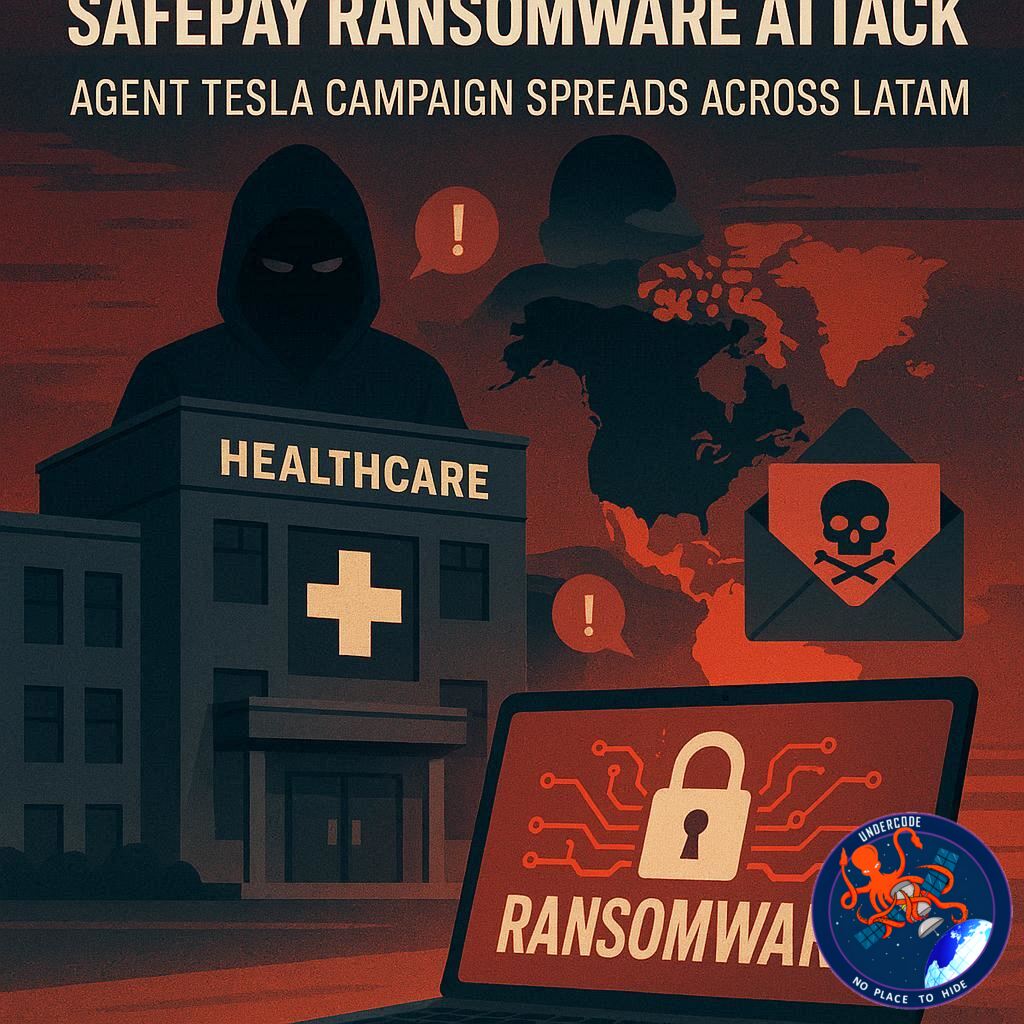
A new wave of cyber incidents is drawing attention across multiple regions, highlighting the growing vulnerability of healthcare institutions and enterprise networks. Reports suggest that a German dermatology and allergology clinic led by Dr. med. Debby Budihardja has been targeted in a ransomware claim allegedly linked to the Safepay group. At the same time, cybersecurity researchers are tracking a parallel surge in credential theft operations involving Agent Tesla malware, which has been actively targeting Chilean and broader Latin American organizations through advanced phishing techniques and stealthy data exfiltration methods. Together, these incidents illustrate how cybercrime groups are expanding both their geographic reach and technical sophistication, placing critical infrastructure and private-sector organizations under sustained pressure.
Cybersecurity Developments and Reported Intrusions
The latest cybersecurity reports indicate a ransomware claim targeting a German healthcare clinic allegedly associated with the Safepay group, raising concerns about patient data security and the resilience of medical institutions against cyber extortion attempts. The clinic, led by Dr. med. Debby Budihardja, is noted in the claim as part of the incident narrative, though full technical validation of the breach has not been independently confirmed. In parallel, cybersecurity analysts are documenting an extensive 18-month campaign involving Agent Tesla malware, which has been actively deployed against Chilean and wider Latin American enterprises. This campaign is characterized by procurement-themed phishing emails designed to deceive employees into opening malicious attachments or links, initiating infection chains that deploy credential-stealing payloads. Once inside systems, attackers reportedly use process hollowing techniques to disguise malicious activity within legitimate processes, making detection significantly more difficult for security tools. The stolen credentials are then exfiltrated using FTP channels, enabling attackers to harvest sensitive login information at scale. These operations demonstrate a dual threat landscape where ransomware actors and information-stealing malware groups operate simultaneously, targeting both data availability and data confidentiality. The healthcare sector, often reliant on continuous access to digital systems, becomes especially vulnerable to disruption and extortion pressure. Meanwhile, enterprise environments in emerging markets face persistent phishing-driven attacks that exploit human error as the primary entry point. The convergence of these threats signals a broader evolution in cybercrime strategies, where automation, stealth, and long-term persistence are prioritized over short-term disruption. Security experts emphasize that such campaigns often remain undetected for extended periods, allowing attackers to build substantial databases of stolen credentials. The scale and duration of these operations reflect a shift toward industrialized cybercrime models that mirror legitimate business processes in structure and efficiency.
What Undercode Say:
Structural Evolution of Cybercrime Operations
Modern cybercriminal ecosystems are no longer isolated groups but interconnected networks operating with near-corporate discipline. The simultaneous emergence of ransomware claims and credential theft campaigns shows a strategic diversification of attack methods. Instead of relying on a single breach mechanism, threat actors now layer phishing, malware deployment, and data exfiltration into multi-stage operations designed for maximum yield.
Healthcare as a High-Value Target Environment
Healthcare institutions remain prime targets due to their dependency on uptime and sensitive patient data storage. Even unverified ransomware claims create reputational pressure and operational stress. Attackers exploit this urgency, knowing that medical organizations are more likely to consider ransom payments to restore system functionality quickly and avoid service disruption.
Agent Tesla and the Industrialization of Credential Theft
The Agent Tesla campaign demonstrates how information-stealing malware has evolved into a long-term espionage tool. By leveraging procurement-themed phishing emails, attackers align malicious content with normal business workflows, increasing the likelihood of user interaction. The use of process hollowing further indicates a focus on stealth persistence rather than rapid execution.
LATAM Region as a Persistent Cyber Battlefield
Latin American enterprises, particularly in Chile, are increasingly exposed to sophisticated phishing campaigns. The region’s rapid digital transformation, combined with uneven cybersecurity maturity, creates an environment where attackers can operate for extended periods without detection. This imbalance is exploited by threat actors to build sustained credential pipelines.
Multi-Layered Exfiltration Techniques and Operational Security
FTP-based exfiltration channels highlight a preference for simple yet effective data extraction methods. Despite advancements in cybersecurity defenses, attackers often rely on low-profile protocols that blend into normal network traffic. This indicates that operational security for attackers has become as important as payload development itself.
Strategic Convergence of Ransomware and Infostealers
The coexistence of ransomware claims and credential theft campaigns suggests a broader ecosystem where stolen data feeds multiple monetization channels. Credentials obtained through Agent Tesla could later be leveraged for ransomware deployment, insider access, or resale on underground markets, reinforcing the cybercrime supply chain.
🔍 Fact Checker results
✅ The Safepay group has been previously associated with ransomware activity, though specific claims require independent verification.
⚠️ Reports of the German clinic incident are currently based on attribution claims and not fully confirmed forensic disclosures.
✅ Agent Tesla is a known credential-stealing malware family widely used in phishing-based cyberattacks globally.
📊 Prediction
Cybersecurity analysts are likely to observe continued expansion of hybrid cybercrime models combining ransomware intimidation with long-term credential harvesting. Healthcare institutions in Europe may face increased targeting due to high-pressure operational environments and sensitive data holdings. In LATAM regions, phishing-based malware campaigns are expected to intensify, with attackers refining localization tactics to improve infection rates. Over time, stolen credential databases from campaigns like Agent Tesla could become a major enabler for secondary ransomware attacks, creating a self-sustaining cybercrime ecosystem that grows in complexity and scale.
🕵️📝Let’s dive deep and fact‑check.
References:
Reported By: x.com
Extra Source Hub (Possible Sources for article):
https://www.quora.com/topic/Technology
Wikipedia
OpenAi & Undercode AI
Image Source:
Unsplash
Undercode AI DI v2
Bing
🔐JOIN OUR CYBER WORLD [ CVE News • HackMonitor • UndercodeNews ]
📢 Follow UndercodeNews & Stay Tuned:
𝕏 formerly Twitter 🐦 | @ Threads | 🔗 Linkedin | 🦋BlueSky | 🐘Mastodon


