
Listen to this Post
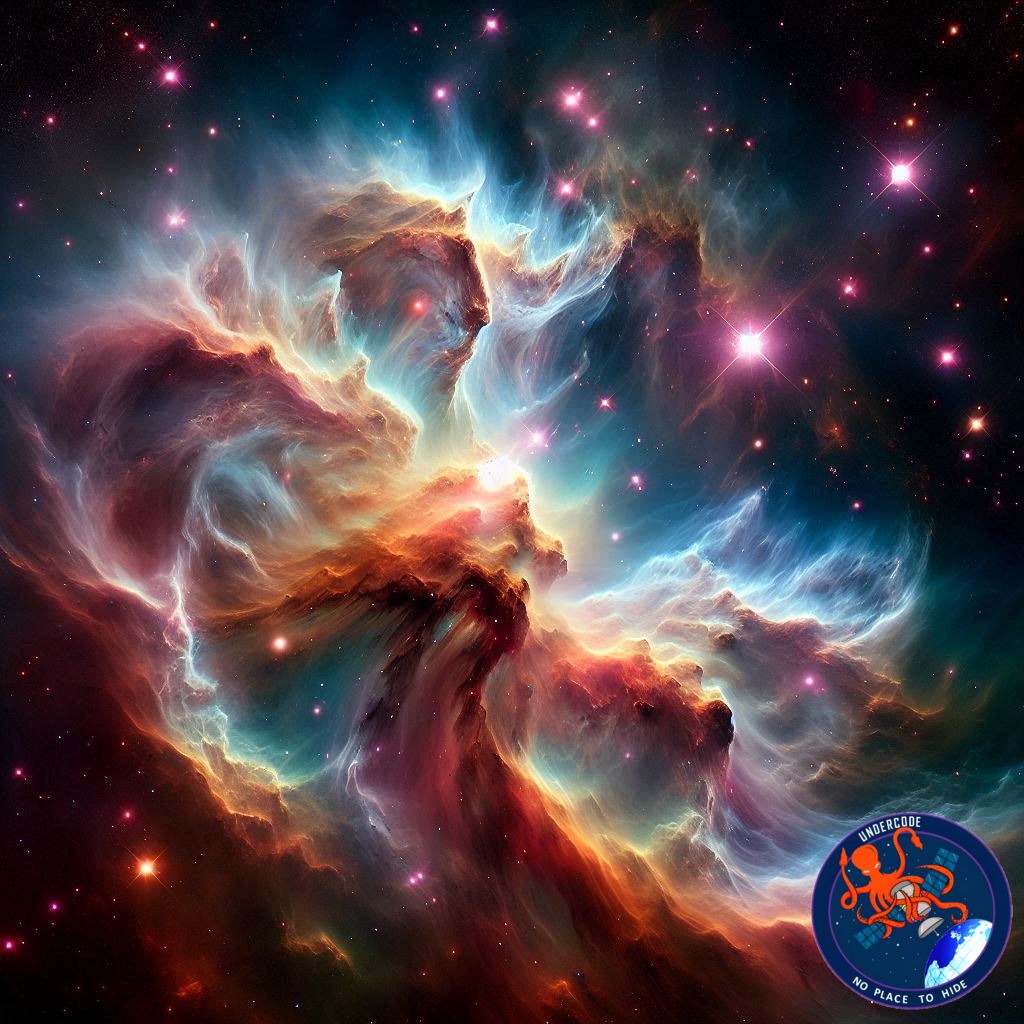
The universe has a way of turning the eerie into the extraordinary. A new image from NASA’s Hubble Space Telescope reveals Lupus 3, a star-forming cloud located about 500 light-years away in the constellation Scorpius. While the scene may appear ghostly at first glance, it is actually a vibrant nursery of new stars, giving astronomers a unique glimpse into the earliest stages of stellar life. This cosmic cloud showcases the delicate interplay of gas, dust, and emerging light that gives birth to stars.
Swirling white wisps of gas dominate the scene, contrasted by a dark dust cloud in the lower-left corner. Bright young stars known as T Tauri stars punctuate the image, shining in the left, bottom-right, and upper-center regions. These stars are in a critical phase of formation, less than 10 million years old, and are still shedding the gas and dust that surrounded them during their birth. Their luminosity fluctuates both randomly and periodically, driven by instabilities in surrounding disks, infalling material, and surface flares.
T Tauri stars are gradually contracting under gravity, moving toward the main sequence phase where they will sustain themselves through hydrogen fusion. By studying these stars, astronomers can unravel the complex processes behind star formation, helping to understand the origins of our own Sun and solar system. This image is just one of many new snapshots Hubble is sharing daily from January 12-17, 2026, offering a constant window into the dynamic “stellar construction zones” scattered across the cosmos.
The Hubble imagery not only captures the beauty of the universe but also offers vital scientific data. The interplay of bright young stars with swirling clouds of gas and dust reveals the forces that shape star formation and early stellar evolution. Dark clouds of dust hint at future sites of star birth, while the bright, variable T Tauri stars allow researchers to study how young stars interact with their surrounding environment. By observing these stars, astronomers can gain insight into the lifecycle of stars, the formation of planetary systems, and the mechanics of cosmic evolution itself.
NASA encourages the public to follow @NASAHubble on social media for daily updates and more images of these stellar nurseries. Each new image helps build a more complete picture of how stars form, evolve, and eventually influence their cosmic neighborhoods. Lupus 3 is a particularly rich site for this research, offering a natural laboratory to observe stars in various stages of early development.
What Undercode Say:
Lupus 3 exemplifies the complexity and beauty of stellar nurseries. The dark dust clouds seen in the Hubble image are not empty space; they are regions rich in the raw material for future stars. The bright T Tauri stars demonstrate the dynamic processes of star formation, where gravitational contraction and energetic outflows shape the surrounding environment. Their variability provides a direct measure of the turbulent processes occurring in protoplanetary disks, which are essential to understanding how planets might eventually form.
These images also highlight the importance of long-term observation. By continuously monitoring these young stars, astronomers can track their growth, understand the timing of accretion events, and study the impact of stellar winds on surrounding material. The combination of gas, dust, and forming stars in Lupus 3 serves as a microcosm of the broader mechanisms that govern star formation across the galaxy. Each new Hubble release brings fresh data that refines models of early stellar evolution, offering a window into processes that occur over millions of years but can be studied in snapshots captured in exquisite detail.
T Tauri stars’ variability also points to the diversity of stellar behavior in early life stages. Some show random brightness fluctuations due to sudden material accretion or flares, while others exhibit periodic changes from giant stellar spots rotating in and out of view. Understanding these patterns is key to predicting how stars settle into the main sequence phase and how their protoplanetary disks evolve into potential planetary systems.
Furthermore, the interplay between bright stars and surrounding dust clouds sheds light on the feedback mechanisms that govern star formation rates. Stellar winds and radiation can disperse gas, halting nearby star formation, or compress clouds to trigger new stars, illustrating the delicate balance in stellar nurseries. Lupus 3 serves as a laboratory for these processes, helping astronomers fine-tune simulations of galactic star formation.
The Hubble images also emphasize the broader cosmic perspective. Observing nearby star-forming regions allows researchers to draw parallels with distant galaxies where individual stars cannot be resolved. Studies of Lupus 3 provide benchmarks for interpreting light from unresolved star-forming regions billions of light-years away, linking local observations to universal processes.
Hubble’s ongoing releases between January 12-17, 2026, reinforce the importance of continuous exploration. Each image uncovers new young stellar objects, variability patterns, and dust cloud structures, ensuring that the field of star formation research remains dynamic and ever-expanding.
Fact Checker Results:
✅ Lupus 3 is approximately 500 light-years away in Scorpius.
✅ T Tauri stars are less than 10 million years old and in early formation stages.
✅ Hubble images provide ongoing insights into stellar evolution and star-forming regions.
Prediction:
🌟 Continued Hubble observations will likely uncover additional young stars in Lupus 3, revealing previously unseen stages of stellar development.
🌟 Researchers may identify more protoplanetary disks, helping predict the formation of new planetary systems.
🌟 The study of T Tauri variability will improve models of early stellar behavior, influencing both astrophysics theory and simulations.
🕵️📝✔️Let’s dive deep and fact‑check.
References:
Reported By: science.nasa.gov
Extra Source Hub (Possible Sources for article):
https://stackoverflow.com
Wikipedia
OpenAi & Undercode AI
Image Source:
Unsplash
Undercode AI DI v2
Bing
🔐JOIN OUR CYBER WORLD [ CVE News • HackMonitor • UndercodeNews ]
📢 Follow UndercodeNews & Stay Tuned:
𝕏 formerly Twitter 🐦 | @ Threads | 🔗 Linkedin | 🦋BlueSky | 🐘Mastodon


