
Listen to this Post
Introduction: A Major Win That Isn’t the End
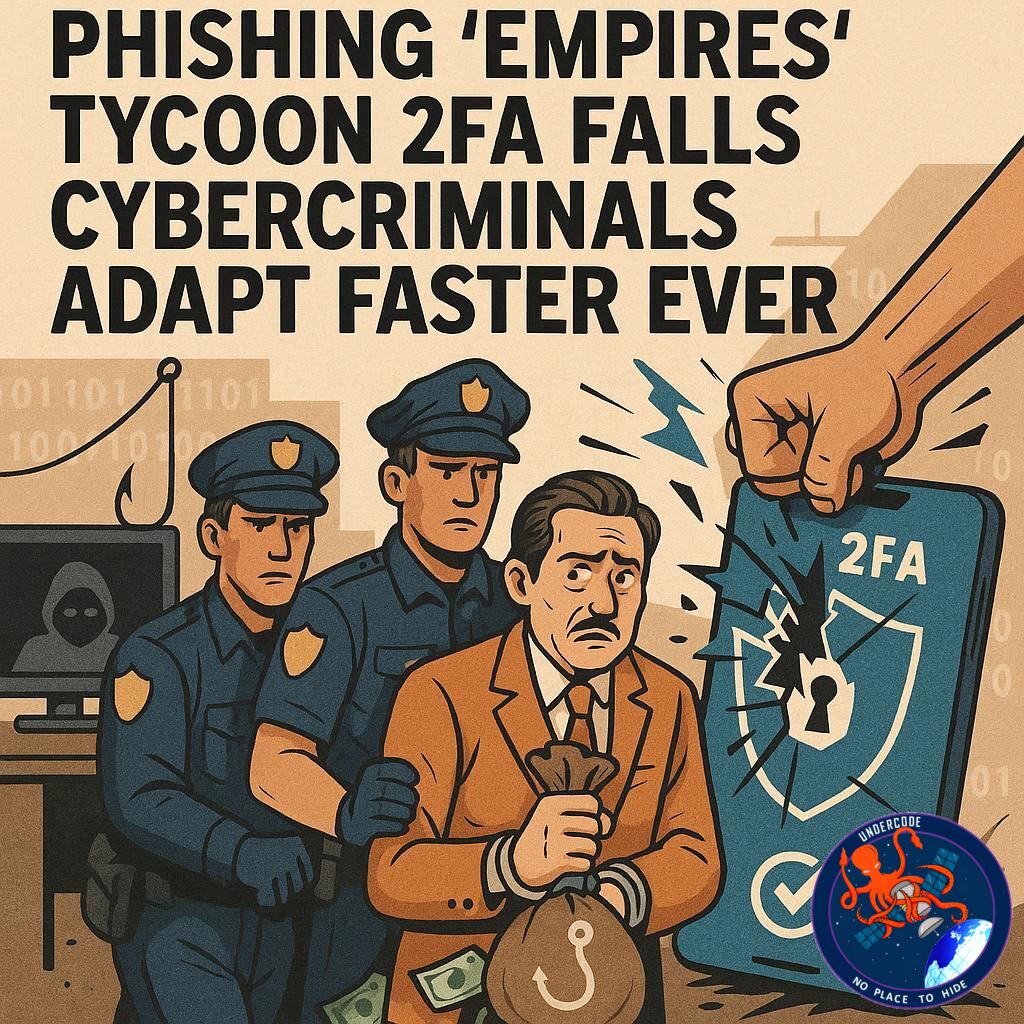
A coordinated international effort has struck a significant blow against large-scale phishing operations, specifically targeting the infrastructure behind Tycoon 2FA. Authorities managed to seize hundreds of domains, dramatically reducing the scale of attacks that once flooded the internet. Yet, while this operation marks a clear victory for cybersecurity enforcement, it also exposes a persistent truth about cybercrime: disruption rarely equals defeat. Attackers are already shifting tactics, evolving their tools, and rebuilding their networks in new forms.
The Crackdown on Tycoon 2FA Infrastructure
Law enforcement agencies successfully seized 330 domains associated with the Tycoon 2FA phishing platform. This platform had become a powerful tool for cybercriminals, enabling them to bypass two-factor authentication systems and compromise user accounts at scale. By taking down these domains, authorities disrupted a significant portion of phishing infrastructure that had been actively targeting individuals and organizations worldwide.
The impact of this seizure was immediate and measurable. Monthly phishing attacks linked to Tycoon 2FA dropped sharply, falling from approximately 9 million attempts to just 2 million. This dramatic reduction highlights how dependent large-scale cybercrime operations are on centralized infrastructure. When those systems are dismantled, even temporarily, the ripple effects are substantial.
The Rise of Alternative Phishing Platforms
Despite the success of the takedown, cybercriminals quickly adapted. Instead of abandoning their operations, they migrated to alternative phishing-as-a-service platforms such as Mamba 2FA, EvilProxy, and Sneaky 2FA. These platforms offer similar capabilities, allowing attackers to intercept authentication tokens and bypass security measures designed to protect user accounts.
This shift demonstrates the resilience and flexibility of cybercriminal ecosystems. Rather than relying on a single tool or service, attackers operate within a broader marketplace of malicious technologies. When one option is removed, others are readily available to fill the gap.
Device Code Phishing: The New Tactic Gaining Momentum
One of the most concerning developments following the Tycoon 2FA disruption is the increased adoption of device code phishing. This technique exploits legitimate authentication flows, tricking users into entering codes on trusted platforms while unknowingly granting attackers access to their accounts.
Device code phishing is particularly dangerous because it leverages user trust in familiar systems. Instead of stealing passwords directly, attackers manipulate authentication processes, making their actions harder to detect and prevent. This evolution reflects a broader trend in cybercrime: moving away from crude attacks toward more sophisticated, socially engineered methods.
Operation PowerOFF: A Parallel Strike Against DDoS Services
In a separate but equally significant operation, authorities from 21 countries collaborated to dismantle 53 DDoS-for-hire domains. Known as booters or IP stressors, these services allow users to launch distributed denial-of-service attacks against targets for a fee.
Operation PowerOFF resulted in the arrest of four suspects and the seizure of databases containing records from over 3 million users. This data could provide valuable intelligence for future investigations, potentially leading to additional arrests and further disruption of cybercriminal networks.
The scale of this operation underscores the importance of international cooperation in combating cybercrime. Since these activities often span multiple jurisdictions, coordinated efforts are essential to achieving meaningful results.
The Persistent Nature of Cybercrime Ecosystems
While both operations represent major achievements, they also highlight a recurring challenge in cybersecurity. Cybercriminal networks are not easily dismantled. They function more like decentralized ecosystems than traditional organizations, making them highly resilient to disruption.
When one service is taken down, others quickly emerge or expand to fill the void. This adaptability is fueled by demand, as individuals and groups continue to seek tools for phishing, DDoS attacks, and other malicious activities. As long as this demand exists, supply will follow.
What Undercode Say: The Illusion of Victory in Cyber Warfare
The takedown of Tycoon 2FA domains looks impressive on paper, but it should not be mistaken for a decisive victory. What we are witnessing is a temporary suppression of activity, not the elimination of the threat. Cybercrime behaves more like a living organism than a static enemy. Cut off one limb, and another grows in its place.
The rapid migration to platforms like Mamba 2FA and EvilProxy reveals how mature and competitive the underground cyber market has become. These are not amateur hackers scrambling for tools. This is an organized, service-driven economy where developers, affiliates, and operators work together in a structured environment. Taking down one provider simply shifts revenue and users to another.
Device code phishing represents an even deeper concern. It signals that attackers are no longer relying solely on technical exploits but are increasingly mastering psychological manipulation. By exploiting legitimate authentication flows, they bypass traditional security defenses without triggering alarms. This method is subtle, scalable, and difficult to counter with existing tools.
Another critical issue is the role of infrastructure. The dramatic drop from 9 million to 2 million attacks per month shows how dependent cybercriminals are on stable, scalable systems. However, it also reveals a weakness in current defense strategies. Authorities tend to focus on takedowns rather than long-term disruption of the ecosystem. Without addressing the root causes, including hosting services, payment systems, and user demand, these operations become repetitive cycles.
Operation PowerOFF provides a glimpse of what more effective disruption might look like. By seizing user databases and making arrests, law enforcement goes beyond infrastructure and targets the human element of cybercrime. This approach has a longer-lasting impact because it introduces risk and consequences for those involved.
Still, even this strategy has limitations. With millions of users involved in DDoS-for-hire services, the scale of enforcement required is enormous. Many participants operate in regions with limited legal cooperation, further complicating efforts to hold them accountable.
The broader takeaway is that cybersecurity is no longer just a technical battle. It is an economic and psychological war. Attackers innovate because there is profit to be made. Defenders must therefore think beyond firewalls and patches, focusing instead on disrupting incentives, increasing costs, and reducing opportunities for exploitation.
Fact Checker Results
✅ Domain seizures did significantly reduce phishing volume in the short term
✅ Cybercriminals commonly migrate to alternative platforms after takedowns
❌ No evidence that such operations permanently eliminate phishing ecosystems
Prediction
The next wave of phishing attacks will likely rely heavily on AI-driven social engineering and automated interaction systems 🤖
Cybercriminal platforms will become more decentralized, making future takedowns less effective 🌐
Authentication systems will shift toward phishing-resistant methods, but adoption will lag behind attacker innovation ⚠️
🕵️📝✔️Let’s dive deep and fact‑check.
References:
Reported By: x.com
Extra Source Hub (Possible Sources for article):
https://www.digitaltrends.com
Wikipedia
OpenAi & Undercode AI
Image Source:
Unsplash
Undercode AI DI v2
Bing
🔐JOIN OUR CYBER WORLD [ CVE News • HackMonitor • UndercodeNews ]
📢 Follow UndercodeNews & Stay Tuned:
𝕏 formerly Twitter 🐦 | @ Threads | 🔗 Linkedin | 🦋BlueSky | 🐘Mastodon


