
Listen to this Post
A Rising Tide of Cybercrime Meets Coordinated Global Resistance
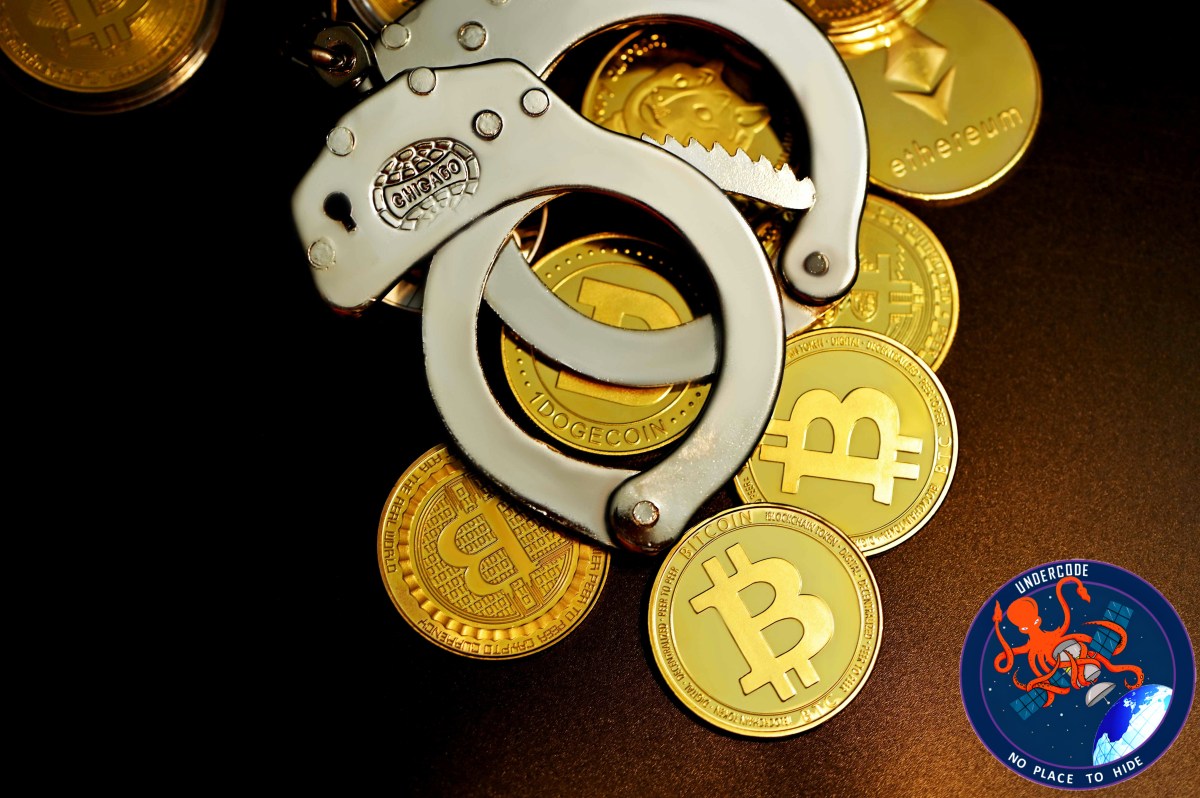
In a sweeping global crackdown, more than \$300 million in cryptocurrency tied to fraud, scams, and other cybercrimes has been frozen through two powerful enforcement initiatives combining the resources of law enforcement agencies and private blockchain companies. The operations signal a turning point in the fight against crypto-enabled crime, showing that coordinated intelligence sharing, blockchain analytics, and rapid intervention can significantly disrupt criminal activity at the digital asset level.
Coordinated Efforts Across Borders and Blockchains
The first major operation comes from the T3+ Global Collaborator Program, launched by the T3 Financial Crime Unit (T3 FCU) in September 2024. This initiative is a joint force between intelligence firm TRM Labs, blockchain giants TRON and Tether, with Binance joining as the first official partner. In less than a year, it has successfully frozen over \$250 million in criminal assets across the world. Among its most notable achievements is halting \$6 million in funds connected to “romance baiting” scams in partnership with Binance.
T3 FCU’s scope is vast — monitoring over \$3 billion in global transaction volume and assisting law enforcement agencies on cases involving money laundering, investment fraud, extortion, and even terrorism financing. The program’s power lies in its ability to rapidly identify suspicious patterns across millions of transactions and act before criminals can launder or liquidate stolen assets.
A North American Force Multiplier Against Crypto Fraud
The second wave of enforcement comes from a US-Canada partnership backed by Chainalysis, a blockchain data and analytics powerhouse. This collaboration fueled two major operations:
Project Atlas, led by the Ontario Provincial Police (OPP)
Operation Avalanche, headed by the British Columbia Securities Commission (BCSC)
Over the past six months, these investigations uncovered \$74.3 million in fraud-related crypto losses. Much of this amount has already been frozen, effectively cutting off scammers from their illicit gains.
Project Atlas alone traced over 2,000 wallet addresses linked to victims in 14 countries, including Canada, the US, Australia, Germany, and the UK. Working with Tether, the team blacklisted more than \$50 million USDT, ensuring it could not be moved or spent by criminals.
Disrupting Criminal Operations at the Blockchain Level
These initiatives showcase a new playbook for crypto crime prevention — pairing investigative sprints with continuous, structured international collaboration. By leveraging blockchain transparency, these teams are hitting criminals where it hurts most: their wallets. Each frozen transaction represents a scam stopped mid-flight, a victim’s stolen assets locked from further misuse, and an ecosystem slowly becoming harder for bad actors to exploit.
What Undercode Say:
Strategic Importance of Blockchain-Level Enforcement
The significance of these operations extends beyond the impressive dollar figures. Freezing \$300+ million in illicit crypto is a direct challenge to the perception that blockchain assets are untouchable once stolen. Criminals have long relied on the pseudonymous nature of cryptocurrencies, but the coordinated use of blockchain analytics and centralized issuer interventions is closing that gap.
By involving heavyweights like Tether and Binance, law enforcement gains not just investigative data but also real-time transaction control. The ability to blacklist specific wallet addresses at the protocol level means that stolen tokens, particularly those issued by centralized stablecoins, can be rendered useless to their thieves.
Shifting the Balance in the Crypto Crime Arms Race
Historically, crypto criminals have been one step ahead, moving funds quickly through mixers, decentralized exchanges, and privacy coins. These operations show that, with the right partnerships, authorities can match or even outpace this agility. The involvement of TRM Labs and Chainalysis ensures investigative depth, while platform-level cooperation ensures speed.
Global Collaboration as the New Norm
One of the most impactful aspects of these initiatives is the degree of cross-border cooperation. Project Atlas and Operation Avalanche demonstrate that cybercrime is truly borderless — and so must be its defense. Tracing stolen assets across 14 countries and multiple blockchain ecosystems requires both sophisticated analytics and diplomatic coordination.
Targeting Romance Scams and Beyond
The \$6 million frozen in romance scams is more than just a statistic. Romance fraud often devastates victims emotionally and financially, making these interventions a form of both justice and prevention. The same technology that stops these scams can be applied to ransomware payouts, darknet market transactions, and other high-impact crimes.
Challenges Ahead in Decentralized Environments
While centralized platforms like Tether and Binance can act swiftly, decentralized systems remain more resistant to intervention. Criminals are increasingly experimenting with DeFi protocols and privacy-focused networks where blacklist mechanisms are less effective. The success of these initiatives could push more illicit activity into these harder-to-monitor areas, requiring new tools and policy frameworks.
The Long-Term Ripple Effect
These freezes do more than remove funds from criminal hands — they send a chilling message to would-be offenders. If stolen funds can be tracked and frozen months after a crime, the appeal of such schemes diminishes. Moreover, the reputational impact of publicized seizures boosts investor confidence in crypto markets, countering narratives that they are inherently unsafe.
Economic and Market Implications
Large-scale freezes also affect liquidity and market perception. While \$300 million may be a small fraction of the total crypto market cap, such operations show regulators’ growing capability to intervene. This could drive more institutional adoption, as compliance and oversight mechanisms become more robust.
Technology as a Double-Edged Sword
Blockchain transparency enables these successes, but criminals also adapt quickly to new investigative methods. Future enforcement will require continuous innovation, predictive analytics, and possibly AI-driven transaction monitoring to stay ahead of evolving laundering techniques.
In short, these two operations prove that crypto crime is no longer a guaranteed payday for hackers and scammers. With global alliances, advanced analytics, and platform cooperation, the playing field is beginning to tilt in favor of justice.
🔍 Fact Checker Results:
✅ More than \$300 million in illicit crypto has been frozen through T3+ and US-Canada operations
✅ Tether and Binance directly participated in blacklisting and fund freezes
✅ Chainalysis analytics traced thousands of wallet addresses linked to fraud victims
📊 Prediction:
Given the success of these initiatives, expect to see more rapid, high-value crypto seizures in 2025, particularly targeting large-scale fraud networks and ransomware groups. Partnerships between blockchain firms and law enforcement will likely expand, with more countries joining structured global collaboration programs to dismantle cross-border financial crime.
🕵️📝✔️Let’s dive deep and fact‑check.
References:
Reported By: www.bleepingcomputer.com
Extra Source Hub:
https://www.quora.com/topic/Technology
Wikipedia
OpenAi & Undercode AI
Image Source:
Unsplash
Undercode AI DI v2
🔐JOIN OUR CYBER WORLD [ CVE News • HackMonitor • UndercodeNews ]
📢 Follow UndercodeNews & Stay Tuned:
𝕏 formerly Twitter 🐦 | @ Threads | 🔗 Linkedin | 🦋BlueSky | 🐘Mastodon


