
Listen to this Post
Introduction: The Fall of a Digital Black Market Giant
A major blow has been struck against the underground cybercrime economy as international law enforcement agencies intensify their fight against data trafficking networks. The arrest of a suspected administrator behind one of the largest cybercrime forums marks a turning point in the ongoing battle against digital exploitation. This operation not only exposes the scale of illicit data trading but also sends a strong signal to cybercriminals who believe anonymity shields them from justice.
the LeakBase Takedown and Arrest
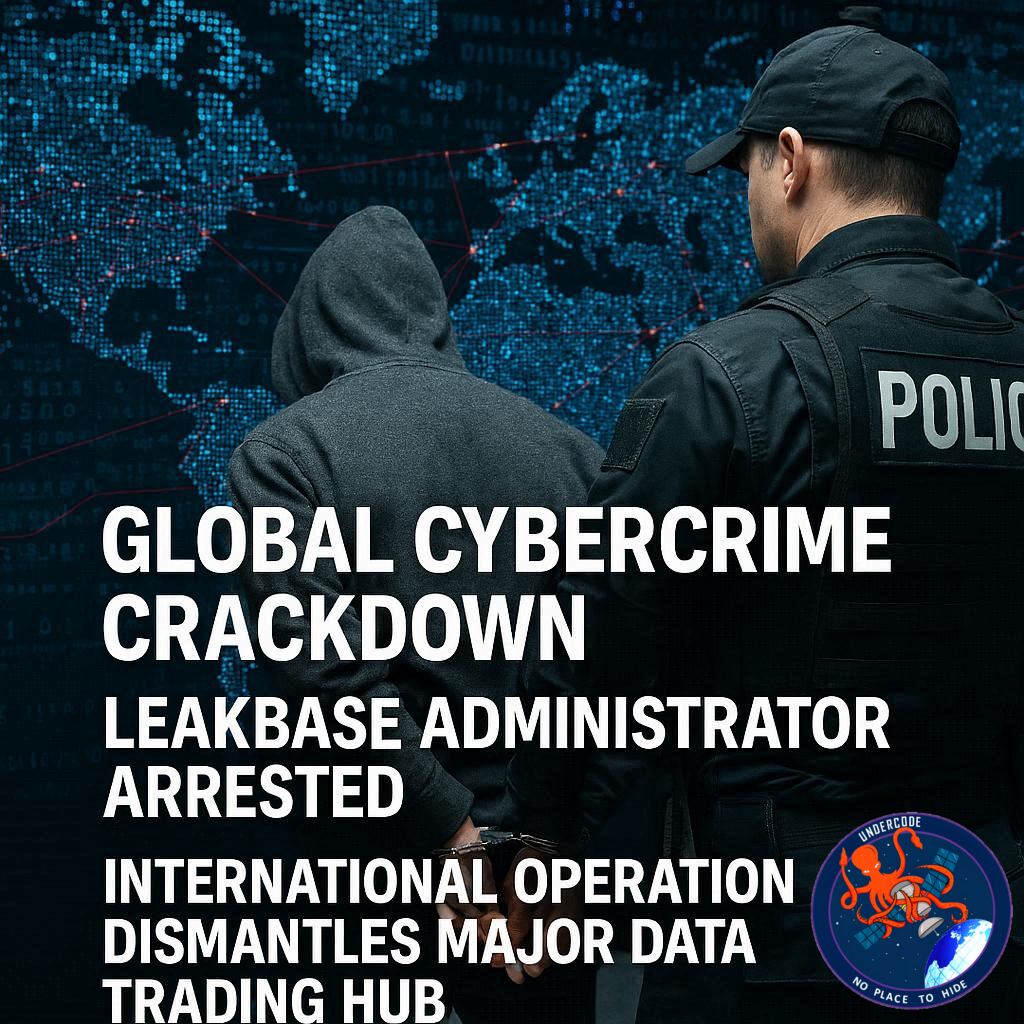
Russian authorities have detained a suspect believed to be the administrator of LeakBase, a notorious cybercrime forum that served as a marketplace for stolen personal data. The individual, reportedly from Taganrog, is accused of managing the platform since its emergence in 2021. During a search of his residence, law enforcement officials confiscated technical equipment and digital evidence tied to the operation, strengthening the case against him.
LeakBase operated for approximately four years and amassed a user base exceeding 147,000 individuals. The platform functioned as a central hub where cybercriminals could buy, sell, and exchange stolen data, including login credentials and sensitive personal information. This data was often used for fraudulent activities such as identity theft, phishing, and financial scams.
The arrest follows a broader international effort involving agencies such as the Federal Bureau of Investigation and Europol. Earlier in March, authorities seized the LeakBase domain as part of “Operation Leak,” a coordinated global initiative involving law enforcement from 14 countries. The platform’s domain was taken offline and replaced with official seizure notices, signaling the beginning of a large-scale disruption effort.
On March 3, coordinated raids were conducted worldwide, resulting in multiple arrests, house searches, and approximately 100 enforcement actions targeting 37 of the forum’s most active users. By the following day, authorities had successfully taken control of the platform’s infrastructure, effectively dismantling its operations.
LeakBase was particularly known for trading “stealer logs,” which are datasets containing usernames, passwords, and other sensitive information harvested by malware. The forum operated openly in English and combined marketplace features with discussion boards, allowing cybercriminals to collaborate and exchange techniques.
Investigators also gained access to the platform’s internal database, which proved crucial in identifying users who had relied on anonymity. Europol played a key role by analyzing user activity, mapping infrastructure, and connecting digital evidence across borders. Experts at its headquarters in The Hague worked to generate investigative leads and identify both suspects and victims.
In a strategic move, authorities used the same communication channels employed by criminals to contact suspects directly, warning them that their activities had been exposed. This approach emphasized a critical message: anonymity in cybercrime is far more fragile than many believe.
The operation has now transitioned into a prevention phase, focusing on raising awareness about cybercrime risks and encouraging stronger security practices among the public. Meanwhile, investigators continue to analyze seized data to identify additional offenders linked to the platform.
What Undercode Say: The Strategic Impact of LeakBase’s Collapse
The dismantling of LeakBase is not just another cybercrime bust, it represents a deeper shift in how global law enforcement approaches digital threats. For years, forums like LeakBase thrived on the illusion of invisibility, creating a marketplace where stolen data became a commodity as normalized as any legitimate product. That illusion is now cracking.
What makes this case particularly significant is the scale of coordination. Fourteen countries aligning their efforts signals a level of international unity that cybercriminal networks rarely anticipate. Cybercrime has always been borderless, but enforcement historically lagged behind due to jurisdictional limitations. This operation shows those barriers are shrinking fast.
Another critical aspect lies in the seizure of the forum’s database. This is where the real damage to cybercriminal ecosystems happens. Arresting a single administrator disrupts operations temporarily, but obtaining user data allows authorities to unravel entire networks. It turns a single case into hundreds of potential investigations.
LeakBase’s reliance on “stealer logs” also highlights an evolving cybercrime trend. Instead of targeting individuals directly, attackers increasingly rely on automated malware to harvest massive amounts of credentials. These logs are then resold in bulk, lowering the entry barrier for less skilled criminals. In essence, platforms like LeakBase industrialize cybercrime.
The psychological impact of this takedown should not be underestimated. When law enforcement begins messaging suspects directly through their own channels, it disrupts trust within the underground community. Forums depend heavily on perceived security and reputation. Once users start doubting anonymity, participation drops, and the ecosystem weakens.
However, history suggests that such takedowns rarely eliminate cybercrime entirely. Instead, they force it to evolve. New platforms emerge, often with stronger encryption, stricter vetting processes, and decentralized structures. The cycle continues, but each disruption raises the cost and complexity of operating these networks.
There is also a broader implication for everyday internet users. The fact that stolen data continues to circulate years after breaches demonstrates a persistent vulnerability in digital security habits. Weak passwords, lack of multi-factor authentication, and poor data hygiene continue to fuel this underground economy.
From a technical standpoint, the role of Europol in mapping infrastructure and linking cross-border evidence is a clear indicator of how data analytics and intelligence sharing are becoming central to modern policing. Cybercrime investigations are no longer just about catching individuals, they are about dismantling entire ecosystems through data correlation.
Ultimately, the LeakBase case reinforces a critical reality: cybercrime is no longer a niche threat. It is a structured, global industry. And dismantling it requires not just arrests, but continuous pressure, intelligence sharing, and public awareness.
Fact Checker Results
✅ LeakBase was a large cybercrime forum with over 147,000 users involved in data trading
✅ The operation involved international coordination including the FBI and Europol
❌ The takedown does not eliminate cybercrime, only disrupts one segment of the ecosystem
Prediction
📊 Cybercrime forums will shift toward more encrypted, invitation-only platforms 🔐
📊 Law enforcement will increasingly use data seizures to target entire networks instead of individuals 🌐
📊 Public awareness and adoption of multi-factor authentication will rise as breaches continue to surface 📉
🕵️📝✔️Let’s dive deep and fact‑check.
References:
Reported By: securityaffairs.com
Extra Source Hub (Possible Sources for article):
https://www.digitaltrends.com
Wikipedia
OpenAi & Undercode AI
Image Source:
Unsplash
Undercode AI DI v2
Bing
🔐JOIN OUR CYBER WORLD [ CVE News • HackMonitor • UndercodeNews ]
📢 Follow UndercodeNews & Stay Tuned:
𝕏 formerly Twitter 🐦 | @ Threads | 🔗 Linkedin | 🦋BlueSky | 🐘Mastodon


