
Listen to this Post
Introduction: A Relentless Week in Cybersecurity
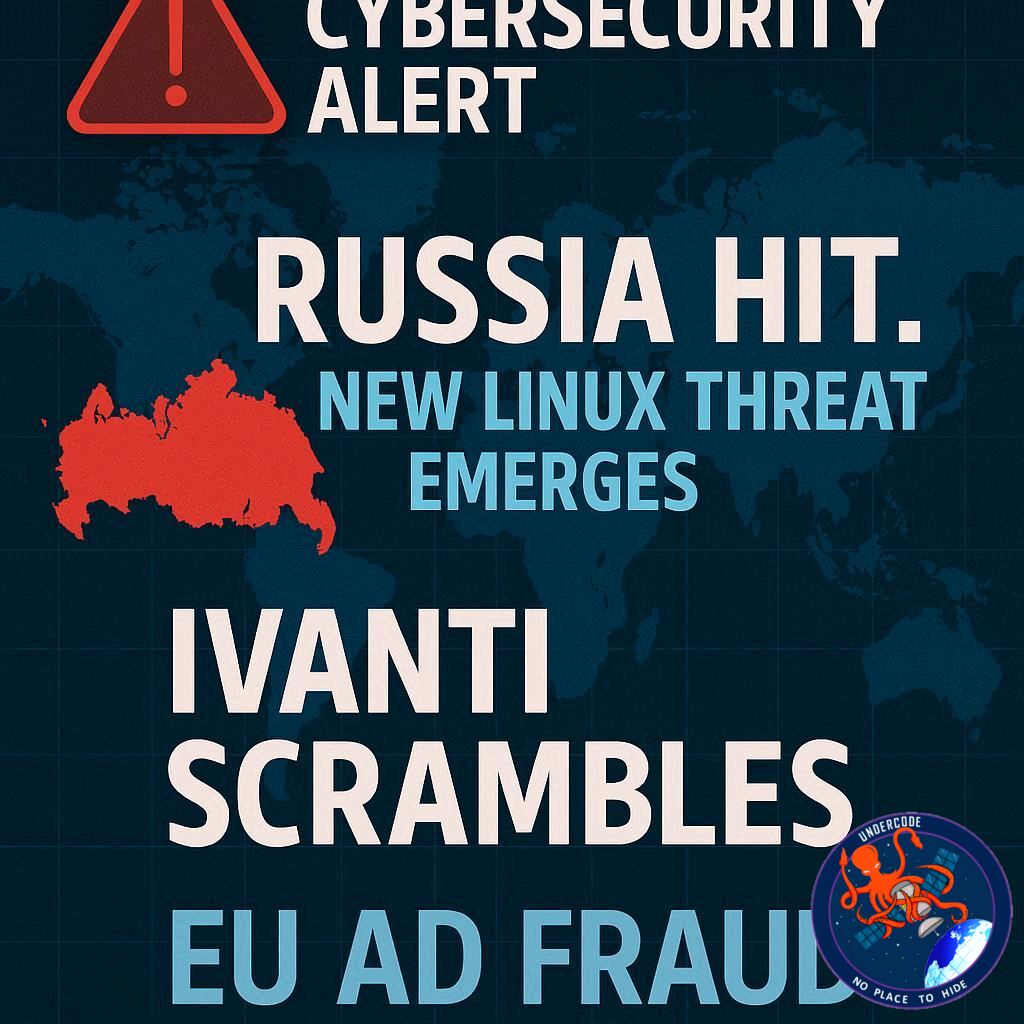
The global cybersecurity landscape saw a sharp escalation as multiple high-impact incidents unfolded across Russia and the European Union. From a disruptive cyberattack on a Russian firm to the discovery of a stealthy Linux post-exploitation framework, alongside emergency vulnerability patches and a surge in data breaches and ad fraud, the past 24 hours offered a stark reminder of how fast and interconnected modern cyber threats have become. What looks like a routine news roundup actually reveals deeper structural weaknesses in critical infrastructure, enterprise security, and digital advertising ecosystems.
the Original Report
A significant cyberattack struck Delta, a Russian company, causing widespread disruption to alarm systems and internal communications. The incident raised concerns about the resilience of operational technology and security monitoring in regions already under geopolitical pressure. At the same time, researchers uncovered ShadowHS, a new Linux-based post-exploitation framework designed to operate quietly after an attacker gains initial access. Its modular design and focus on persistence make it particularly dangerous for servers and cloud environments.
In parallel, Ivanti released emergency patches addressing newly disclosed CVEs actively exploited in the wild. These vulnerabilities, affecting widely used enterprise management products, once again placed unpatched systems in the crosshairs of attackers. Meanwhile, across the European Union, reports showed a noticeable increase in data breaches tied to advertising fraud schemes. Malicious actors leveraged compromised data, fake traffic, and manipulated ad networks to siphon revenue while exposing user information.
Together, these events illustrate a pattern: attackers are diversifying their tactics, targeting everything from industrial communications to enterprise software and digital advertising supply chains. The convergence of these threats in a single news cycle underscores the growing difficulty defenders face in prioritizing risks and responding quickly enough to prevent real-world impact.
What Undercode Say:
The Delta attack is particularly telling because it highlights how cyber operations are no longer limited to data theft or ransomware payouts. Disrupting alarms and communications suggests either a preparatory phase for further action or a demonstration of capability. In regions like Russia, where infrastructure and private firms often overlap with state interests, such incidents blur the line between cybercrime and cyber conflict.
ShadowHS deserves close attention. Linux environments have long been perceived as more resilient, especially in server and cloud contexts. The emergence of sophisticated post-exploitation frameworks tailored specifically for Linux signals a shift in attacker focus. As more enterprises migrate workloads to Linux-based systems, attackers are following the value. ShadowHS’s emphasis on stealth and modularity suggests it could be easily adapted for espionage, cryptomining, or long-term persistence.
Ivanti’s emergency patches fit a worrying trend. Enterprise management and endpoint tools are high-value targets because they often operate with elevated privileges. Each rushed patch cycle also reveals a deeper issue: many organizations still struggle with asset visibility and patch prioritization. When CVEs are actively exploited, delays of even a few days can translate into full network compromise.
The rise in EU ad fraud and related data breaches shows how cybercrime monetization continues to evolve. Advertising ecosystems are complex, opaque, and heavily automated, making them ideal for abuse. Once attackers breach a single node in the chain, they can manipulate traffic, harvest data, and launder profits at scale. This also damages trust between advertisers, platforms, and users, with long-term economic consequences.
Taken together, these stories point to a cybersecurity environment where threats are more strategic, more specialized, and more intertwined with everyday digital infrastructure. Defenders can no longer treat incidents in isolation. Alarm disruptions, Linux backdoors, unpatched CVEs, and ad fraud are symptoms of the same problem: attack surfaces are expanding faster than defensive maturity.
For organizations, the lesson is clear. Visibility across systems, faster patch cycles, and continuous threat intelligence are no longer optional. For governments and regulators, especially in the EU, tightening oversight of digital supply chains and advertising networks may become unavoidable. Cybersecurity is no longer just an IT issue; it is an operational, economic, and even geopolitical one.
Fact Checker Results
The reported attack on Delta aligns with patterns seen in recent infrastructure-focused cyber incidents.
ShadowHS has been independently referenced by threat researchers as a Linux post-exploitation framework.
Ivanti’s emergency CVE patches confirm ongoing exploitation in real-world environments.
Prediction
If current trends continue, Linux-focused malware frameworks and attacks on operational communications will increase throughout 2026. Enterprise vendors will face more zero-day disclosures, while ad fraud in the EU is likely to trigger stricter regulatory action and closer scrutiny of digital advertising platforms.
🕵️📝✔️Let’s dive deep and fact‑check.
References:
Reported By: x.com
Extra Source Hub (Possible Sources for article):
https://www.twitter.com
Wikipedia
OpenAi & Undercode AI
Image Source:
Unsplash
Undercode AI DI v2
Bing
🔐JOIN OUR CYBER WORLD [ CVE News • HackMonitor • UndercodeNews ]
📢 Follow UndercodeNews & Stay Tuned:
𝕏 formerly Twitter 🐦 | @ Threads | 🔗 Linkedin | 🦋BlueSky | 🐘Mastodon


