
Listen to this Post
Introduction
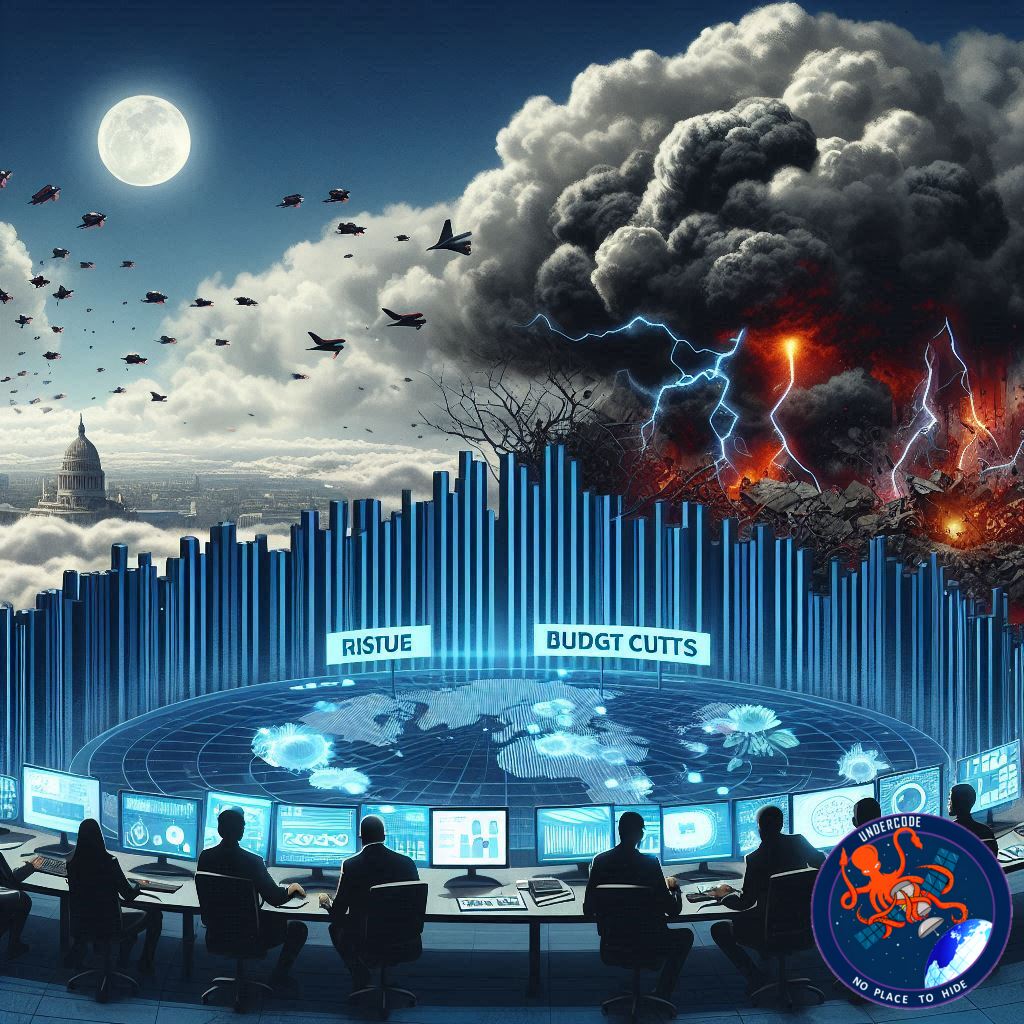
A quiet crisis is unfolding inside boardrooms, security operation centers and government agencies. Budgets are shrinking, threats are multiplying, and the global cybersecurity landscape is being pushed toward a tipping point that experts say could define the digital stability of the next decade. As organisations struggle to modernise ageing systems and defend increasingly complex infrastructures, a new wave of cyber aggression is emerging from both sophisticated adversaries and casual digital vandals. The warning signs are already here, and analysts say 2026 may become the year the cracks widen into a full-scale rupture.
Main Summary
The Economic Pressure Behind a Growing Cyber Crisis
Across public and private sectors, tightening economic conditions have triggered budget cuts that are now placing cybersecurity on unstable ground. Anthony Young, CEO of Bridewell, warns that years of reduced investment are converging with rapidly accelerating cyberthreats. The result is a dangerous imbalance where attackers grow stronger while defenders lose the tools and talent they need.
A Consequence of Long-Term Cost Cutting
Young explains that many organisations have postponed critical upgrades, paused recruitment and scaled back on infrastructure enhancements. These decisions, taken across years of economic uncertainty, have weakened the digital immune system of enterprises. Shorter response times, fewer analysts and outdated detection tools are exposing vulnerabilities that skilled adversaries are exploiting with increasing precision.
Breaches That Reveal Systemic Weakness
Recent incidents illustrate a troubling pattern. A sweeping supply chain attack targeting Oracle Cloud compromised more than 140,000 tenants. The Salesloft and Drift breach further highlighted how interconnected platforms can amplify cyber damage. Even major manufacturers have felt the impact. Jaguar Land Rover was forced to halt production after a cyberattack, disrupting operations for weeks and reminding the world how fragile global industrial networks can be.
Not Isolated Events, but Warnings
Young stresses that these high-profile failures represent structural weaknesses rather than isolated mishaps. According to Bridewell, 2025’s attacks are unlikely to be the peak. Instead, they signal the start of a new era where fewer attacks may occur overall, but each incident will carry far greater consequences. Shared systems, widely adopted platforms and third-party suppliers will likely become primary targets because any compromise can ripple across thousands of organisations at once.
The Rise of Casual Digital Aggression
Beyond elite threat groups and state-supported actors, a new demographic of attackers is emerging. Bridewell reports a sharp rise in informal cyber aggression carried out by loosely connected individuals or teenagers armed with open-source tools and AI-generated exploit kits. This shift represents an evolution in attacker psychology. Some individuals are motivated less by financial gain and more by social validation, reputation or reckless experimentation.
Why Deterrence Is Fading
Young notes that online subcultures often reward chaos rather than condemn it. In communities where notoriety is valued, the perceived risk of arrest or punishment is overshadowed by the thrill of visibility. This dynamic has created a cybercriminal landscape that is wider and more unpredictable than before.
A Convergence Point of Threat and Vulnerability
Bridewell argues that economic strain, eroded accountability and the increasing accessibility of hacking tools are merging into a single, potent threat. Defenders face targeted attacks from skilled groups on one side and sporadic, unpredictable disruptions on the other. The combination forms a dual-front challenge that many organisations are not equipped to handle.
Cybersecurity Mirroring Real-World Crime Patterns
Young points out that digital systems now reflect patterns familiar in physical crime. Economic pressure, limited oversight and weakened deterrence create an environment where malicious behaviour becomes more likely. If the current trajectory continues, cyber aggression may become socially normalised, treated as a form of protest or expression rather than a serious crime.
Predictions for 2026
Looking forward, Bridewell expects cyber incidents to decline in frequency but grow significantly in impact. Operational shutdowns, reputational crises and regulatory fallout will likely become more severe. To counter this, Young urges a renewed focus not just on technical defence but on restoring digital accountability and developing shared defence frameworks that span industries and borders.
What Undercode Say
The Structural Weakness Behind Today’s Cyber Incidents
The trends highlighted in Bridewell’s warning align with broader industry signals. Many security teams are already operating at or beyond capacity, relying on legacy systems or tools that no longer match the sophistication of modern attacks. Currency of detection data, automation coverage and rapid response capabilities have all declined due to budget constraints. This has created a widening security gap between high-end adversaries and under-resourced defenders.
Why Supply Chain Attacks Are Surging
Large-scale platform breaches like Oracle Cloud demonstrate how systemic risk has changed. Historically, attackers targeted individual companies. Now, they focus on digital choke points, single suppliers whose compromise unlocks an entire network of downstream victims. This shift maximises the impact of each breach, meaning that one successful attack can cascade across markets, regions and industries.
Rising Threat Accessibility and Its Implications
The growth of AI-assisted exploitation tools has lowered the barrier to entry for malicious behaviour. Tools once requiring deep technical expertise are now automated and prepackaged. This not only increases the number of attackers but also shortens the learning curve. When low-skilled actors can execute high-impact attacks, the risk model for organisations changes dramatically.
The Psychology of Modern Attackers
Digital environments have adopted social currency models where reputation is earned through disruption rather than contribution. For young attackers, cyber aggression can become a form of identity, challenge or entertainment. Without strong digital accountability systems or consistent prosecution, deterrence weakens and cyber mischief escalates into real-world damage.
Why 2026 May Become a Security Inflection Point
If current resource constraints persist, defensive capabilities will continue to degrade while attack sophistication grows. This imbalance is cyclical. Weakened defences lead to larger breaches, which then lead to higher remediation costs, further reducing available budgets. The industry is approaching a point where defensive failure may become unavoidable for many organisations.
The Necessity of Shared Defence Models
To break this cycle, cybersecurity can no longer be treated as a siloed responsibility. Shared intelligence networks, cross-industry response alliances and centralised resilience frameworks are becoming essential. When attackers coordinate more effectively than defenders, the security landscape becomes asymmetrical. Collaborative defence is the only viable counterbalance.
Accountability as a Digital Stabiliser
One of the biggest missing pieces is societal-level digital accountability. Without clear norms, penalties or legal frameworks that address casual cyber aggression, the next generation may grow up viewing online attacks as trivial. Strengthening cyber law enforcement, improving reporting transparency and modernising legal frameworks will play a crucial role in stabilising the environment.
Preparing for High-Impact, Low-Frequency Events
The predicted shift toward fewer but more destructive attacks mirrors patterns seen in other risk domains like terrorism or natural disasters. Organisations must prepare for scenarios where a single breach could cripple entire operations. This requires resilience planning, constant threat hunting, supply chain audits and investments in AI-driven detection systems.
🔍 Fact Checker Results
Bridewell did issue warnings regarding rising cyber threats amid shrinking budgets. ✅
Large-scale incidents like the Oracle Cloud breach and JLR shutdown occurred and reflect systemic vulnerabilities. ✅
Claims about rising casual cyber aggression are supported by industry threat intelligence reports. ✅
📊 Prediction
Cyber incidents in 2026 are likely to become more destructive, driven by high-scale supply chain vulnerabilities, advanced AI-assisted attacks and weakened security budgets. 🔥
Organisations that fail to modernise security operations may face operational blackouts, regulatory penalties or irreversible trust loss. ⚠️
Collaboration, automation and accountability reforms will shape which industries remain resilient and which fall behind. 🌐
🕵️📝✔️Let’s dive deep and fact‑check.
References:
Reported By: www.itsecurityguru.org
Extra Source Hub (Possible Sources for article):
https://www.pinterest.com
Wikipedia
OpenAi & Undercode AI
Image Source:
Unsplash
Undercode AI DI v2
Bing
🔐JOIN OUR CYBER WORLD [ CVE News • HackMonitor • UndercodeNews ]
📢 Follow UndercodeNews & Stay Tuned:
𝕏 formerly Twitter 🐦 | @ Threads | 🔗 Linkedin | 🦋BlueSky | 🐘Mastodon


