
Listen to this Post
Introduction
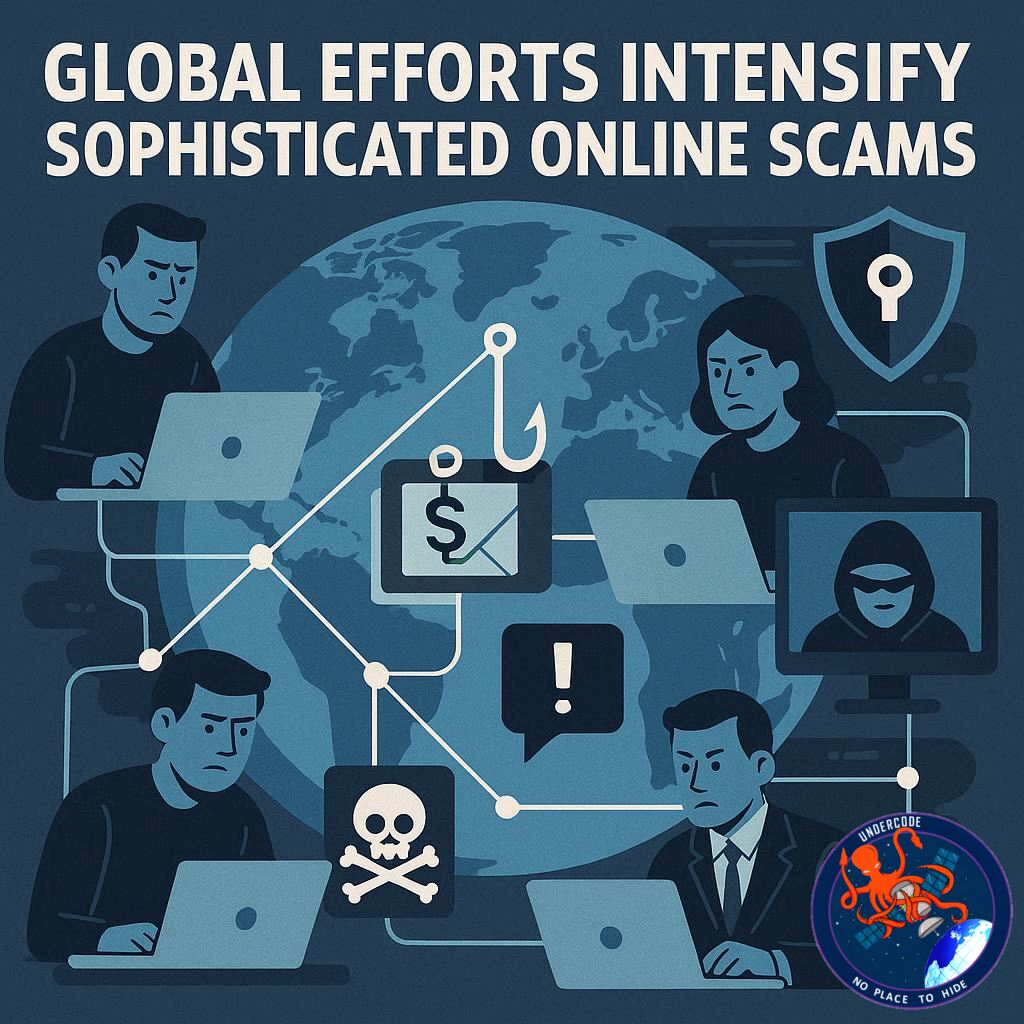
Online scams have evolved into highly organized operations, often orchestrated by criminal networks across Southeast Asia, particularly in Cambodia, Myanmar, and Laos. These operations have become industrial-scale businesses, deliberately designed to exploit victims, destroy trust, and evade detection. The fight against these scams requires constant vigilance, international collaboration, and technological innovation to safeguard users and communities worldwide.
Global Joint Disruption Week Targets Scam Networks
Recently, the second Joint Disruption Week took place in Bangkok, spearheaded by the Royal Thai Police Anti-Cyber Scam Center (ACSC), the FBI, the DOJ Scam Center Strike Force, and Meta, alongside international law enforcement agencies. During the operation, investigators disabled over 150,000 scam-related accounts, resulting in 21 arrests in Thailand alone. This initiative builds on a pilot program in December, which had already removed 59,000 accounts, pages, and groups while issuing six arrest warrants. The pilot demonstrated that coordinated action between tech companies and law enforcement can effectively disrupt organized online crime.
Expanding International Cooperation
The second Joint Disruption Week broadened participation to include agencies from the UK, Canada, Korea, Japan, Singapore, the Philippines, Australia, New Zealand, and Indonesia. Messaging platform LINE also joined discussions, highlighting the need for cross-platform cooperation. The week focused on live information sharing, connecting disparate intelligence, and strengthening collective systems to target scam syndicates at their source.
Statements from Global Authorities
Chris Sonderby, Vice President at Meta, emphasized that combating scams is an ongoing effort requiring technological investment and collaboration. Police Lieutenant General Jirabhop Bhuridej highlighted the personal and societal harm caused by these scams and the importance of public-private partnerships. Leaders from the UK’s National Crime Agency, Singapore Police Force, Australian Federal Police, and Indonesian National Police echoed the significance of international cooperation in tackling these transnational threats.
New Tools for User Protection
In addition to enforcement actions, Meta announced new tools to protect users:
Facebook Alerts for Suspicious Friend Requests: Notifications warn users when requests show signs of suspicious activity, helping prevent connections with potential scammers.
WhatsApp Device Linking Warning: Alerts notify users of potentially fraudulent device linking attempts, including QR code and code entry scams.
Advanced Scam Detection on Messenger: AI-powered detection identifies common scam patterns in chats and provides users with guidance on blocking or reporting suspicious accounts.
The Scale and Complexity of Online Scam Operations
These scam operations are no longer isolated incidents—they function like coordinated businesses with multiple layers of actors, including account managers, money mules, and social engineers. The criminals exploit social media platforms, messaging apps, and digital payment systems to conduct fraud at scale. The evolving tactics, from fake job offers to account hijacking schemes, highlight the need for proactive measures and real-time monitoring to safeguard the digital ecosystem.
What Undercode Say:
The rise of industrial-scale online scams reflects a disturbing trend in cybercrime: the professionalization of digital fraud. Unlike traditional fraud, these networks operate with structured hierarchies, territorial divisions, and technology-driven methods that mimic legitimate business practices. This sophistication explains why international coordination is no longer optional but essential.
Meta’s strategy illustrates the benefits of combining AI-driven detection with human intelligence from law enforcement. The removal of 150,000 accounts demonstrates a tactical success, but it also underscores the scale of the problem: for every account taken down, networks can rebuild or relocate, emphasizing that enforcement alone cannot eradicate scams. The proactive sharing of intelligence across jurisdictions allows authorities to map criminal activity, identify repeat offenders, and target the financial pipelines that sustain these syndicates.
Another crucial element is public awareness. Technological safeguards like Facebook alerts and WhatsApp device linking warnings serve a dual purpose: they protect individuals and create a hostile environment for scammers, reducing opportunities for success. This combination of enforcement, technology, and education represents the most effective approach to reducing the impact of scams.
The participation of agencies from multiple countries also highlights a shift in global policing strategy: cybercrime is borderless, so solutions must be collaborative. Southeast Asia has emerged as a hub for scam operations due to gaps in regional enforcement, but the increased international focus signals that these networks are under pressure and may face significant disruption in the coming years.
Moreover, platforms like Meta demonstrate that digital companies are becoming active partners in law enforcement, not merely passive facilitators. Their ability to leverage AI, machine learning, and real-time monitoring enhances operational efficiency and improves the precision of takedown operations. This symbiosis between private platforms and public institutions could serve as a blueprint for future global cybercrime interventions.
From an economic perspective, online scams have wide-reaching consequences. They erode trust in digital platforms, reduce consumer confidence, and can funnel millions of dollars out of legitimate economies. By targeting the infrastructure that enables scams—accounts, social engineering channels, and messaging tools—law enforcement and tech companies disrupt not just individual scams but the broader ecosystem that allows these networks to thrive.
In terms of societal impact, organized scams exploit vulnerable populations, including the elderly, students, and people unfamiliar with digital security. Combating these networks requires understanding both the technical and psychological tactics used by scammers, integrating AI tools to detect anomalies, and strengthening educational campaigns to empower users with knowledge.
Ultimately, the fight against scams is ongoing and dynamic. As criminals innovate, law enforcement and tech companies must iterate, adapt, and expand partnerships globally. The operational model demonstrated in Bangkok and December provides a replicable framework, but sustained success will depend on continuous intelligence sharing, technology deployment, and cross-border cooperation.
Fact Checker Results
✅ The second Joint Disruption Week in Bangkok resulted in over 150,000 accounts disabled and 21 arrests.
✅ The pilot program in December removed 59,000 accounts, pages, and groups, and issued six arrest warrants.
✅ Meta introduced new safety tools on Facebook, WhatsApp, and Messenger to help users avoid scams.
Prediction
📊 With continued international collaboration and AI-driven detection, online scam networks will face increasing pressure, potentially reducing the frequency of large-scale fraud. However, as scammers adapt to countermeasures, tech platforms will need to continuously innovate, introducing predictive algorithms and real-time alerts to stay ahead of evolving threats. Countries in Southeast Asia may also see stricter regulatory oversight to curb these criminal operations, creating a more secure digital ecosystem globally.
🕵️📝✔️Let’s dive deep and fact‑check.
References:
Reported By: about.fb.com
Extra Source Hub (Possible Sources for article):
https://www.facebook.com
Wikipedia
OpenAi & Undercode AI
Image Source:
Unsplash
Undercode AI DI v2
Bing
🔐JOIN OUR CYBER WORLD [ CVE News • HackMonitor • UndercodeNews ]
📢 Follow UndercodeNews & Stay Tuned:
𝕏 formerly Twitter 🐦 | @ Threads | 🔗 Linkedin | 🦋BlueSky | 🐘Mastodon


