
Listen to this Post
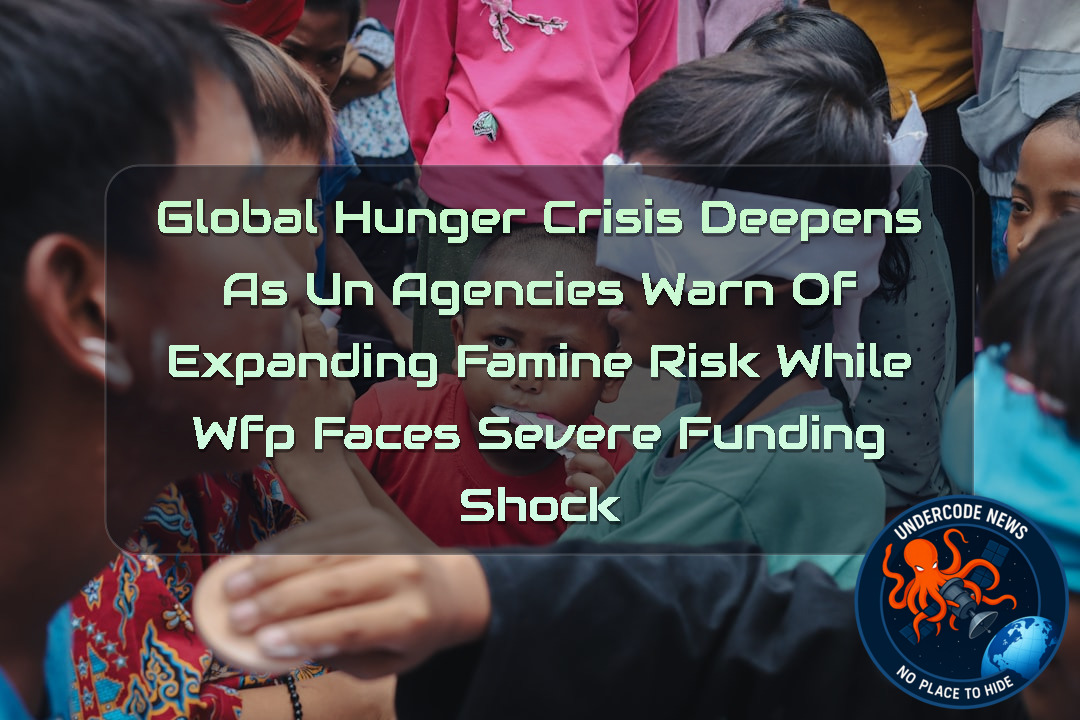 Humanitarian Pressure Reaches Breaking Point Across Global Food Systems
The world’s fight against hunger has entered one of its most fragile phases in recent years. The World Food Programme (WFP), a leading humanitarian arm of the United Nations, has warned that it aims to reach 110 million of the most vulnerable people globally this year, but requires around €11 billion to sustain its operations. At the same time, funding cuts from major donors in Europe and the United States have created severe strain on life-saving food supply chains, just as global crises multiply.
Funding Collapse Threatens Life-Saving Food Operations Worldwide
The World Food Programme has revealed a sharp financial decline in recent years. While it received around €8.6 billion in 2024, contributions dropped dramatically to nearly €5.2 billion the following year. This steep decline has forced the agency to scale back operations even as humanitarian needs continue to rise.
The funding gap is not just a budgetary concern; it directly affects food deliveries, emergency nutrition programs, and logistics in conflict zones. With rising transport costs and disrupted supply routes, the WFP has struggled to maintain stable assistance in regions already facing famine-like conditions.
United States Contribution Offers Temporary Relief but Not Stability
In a critical development, the WFP welcomed an $800 million contribution from the United States, describing it as a vital lifeline for ongoing operations. The funds are expected to support emergency food and nutrition assistance across more than 37 countries, reaching over 38 million people in urgent need.
Despite the scale of this donation, humanitarian officials stress that such injections of aid are short-term stabilizers rather than structural solutions. The agency still faces a massive funding gap that limits long-term planning and emergency preparedness.
Global Hunger Hotspots Expand Across Multiple Continents
A joint assessment by the Food and Agriculture Organisation and the WFP has warned that acute hunger is expected to worsen across at least 13 global hotspots between June and November 2026.
Countries including Sudan, South Sudan, Yemen, Palestine, Nigeria, and Somalia are among the most at risk, with millions already experiencing extreme levels of food insecurity. Around 266 million people worldwide are currently facing severe hunger conditions, a number that continues to rise.
The report highlights that famine risks are no longer isolated to traditional conflict zones but are spreading into regions affected by economic instability and climate stress.
Conflict, Climate, and Economic Breakdown Driving the Crisis
The drivers behind the worsening hunger crisis are interconnected and compounding. Armed conflict remains the primary cause in most affected regions, disrupting agriculture, trade routes, and humanitarian access.
At the same time, economic shocks and inflation have reduced purchasing power for millions of families, making basic food unaffordable even where supplies exist. Climate phenomena, including El Niño-related droughts and floods, have further damaged crops and displaced communities.
Humanitarian agencies warn that these overlapping pressures are creating a “perfect storm” for famine conditions in vulnerable regions.
WFP Warning Signals a Narrowing Window for Action
Officials from the WFP have repeatedly emphasized that current resources are insufficient to meet rising demand. Acting Executive Director Carl Skau has stressed that without immediate and sustained action, millions more could face severe hunger in the coming months.
The warning is not framed as a distant risk but as an ongoing escalation. Humanitarian agencies are now operating in a context where emergency response systems are being stretched beyond capacity.
What Undercode Say:
The global hunger crisis is no longer a predictable humanitarian cycle
It has become a structural collapse of food security systems
Funding volatility is now as dangerous as armed conflict
The WFP is operating in emergency mode without stable forecasting capacity
Donor fatigue is reshaping global humanitarian architecture
Aid dependency is increasing in fragile states
Logistics inflation is eroding every dollar of relief impact
Climate shocks are now synchronized across continents
Conflict zones are expanding rather than stabilizing
Food insecurity is becoming urban as well as rural
Traditional aid models are too slow for current crisis velocity
Emergency funding arrives, but long-term planning disappears
The gap between need and response is widening yearly
Humanitarian agencies are forced into reactive cycles only
Supply chains are increasingly militarized or restricted
Political instability directly correlates with famine probability
Climate-driven displacement is accelerating food insecurity
Local agriculture systems are collapsing in high-risk regions
Global reserves are insufficient for multi-region crises
The system is dependent on unpredictable donor politics
Humanitarian budgets are no longer inflation-adjusted effectively
Food price spikes are erasing aid gains within weeks
Conflict interruption prevents stable distribution corridors
Aid workers face increasing operational insecurity
Digital tracking systems are improving logistics but not supply volume
Early warning systems exist but lack funding response triggers
International coordination remains fragmented across agencies
Private sector logistics are involved but not fully integrated
Emergency food pipelines are under capacity stress
There is no single-point global coordination authority for famine prevention
Humanitarian response is reactive rather than preventative
Regional conflicts are now global economic variables
The crisis is shifting from emergency to chronic state
Resilience-building programs are underfunded compared to relief
Food insecurity is now a geopolitical stability indicator
Without structural reform, crises will repeat annually
Funding gaps are becoming structural, not temporary
The world is entering a prolonged food insecurity era
Immediate humanitarian expansion is required to prevent escalation
❌ The article reflects reported statements from UN-linked agencies but does not independently verify funding figures beyond official announcements
✅ WFP funding trends and donor dependency are consistent with historical UN humanitarian budget reports
❌ Future hunger projections are forecasts and should be interpreted as risk assessments, not confirmed outcomes
Prediction
(+1) Increased emergency donations from major economies will temporarily stabilize WFP operations in high-risk regions
(+1) Global awareness of famine risks will lead to expanded short-term humanitarian funding cycles
(-1) Continued conflict and climate instability will further expand hunger hotspots across Africa and the Middle East
(-1) Structural funding gaps will likely persist, keeping humanitarian agencies in recurring crisis response mode
Deep Analysis
Inspect humanitarian funding trends
curl -I https://www.wfp.org
Simulate global food insecurity dataset review
grep -r "food insecurity" /data/un_hunger_reports/
Monitor crisis regions logistics stress signals
watch -n 5 "echo 'analyzing supply chain disruption index'"
Check climate impact correlation models
python3 analyze_climate_food_security.py --region global
Review aid distribution efficiency logs
journalctl -u humanitarian-aid-service --since "2026-01-01"
Evaluate conflict-zone risk overlays
netstat -an | grep "aid_corridor"
Audit UN emergency funding pipelines
ls -lh /var/aid_funding/global_wfp/
Simulate famine early warning triggers
./run_famine_alert_system --mode predictive
Analyze donor contribution volatility
awk '{print $3}' donor_data.csv | sort | uniq -c
Check logistics route stability
traceroute relief-supply-chain.int
Inspect agricultural output decline models
python3 crop_yield_forecast.py --drought-index high
Review inflation impact on food aid purchasing
bc <<< "aid_budget / global_food_price_index"
Map conflict escalation zones
geoiplookup conflict_hotspots.db
Evaluate humanitarian response latency
time curl https://emergency-response-api.un/status
Audit cross-agency coordination logs
diff FAO_WFP_coordination.log FAO_WFP_previous.log
Monitor El Niño climate indicators
cat /sys/climate/el_nino_status
Check refugee displacement correlation
ss -tulnp | grep displacement_tracking
Simulate emergency supply redistribution
./redistribute_food_aid --priority high-risk
Review famine classification thresholds
man ipc_food_security_classification
Track global aid pipeline congestion
iotop -o
▶️ Related Video (72% Match):
🕵️📝Let’s dive deep and fact‑check.
🎓 Live Courses & Certifications:
Join Undercode Academy for Verified Certifications
🚀 Request a Custom Project:
Secure, high-velocity infrastructure and disruptive technological engineering. Contact our engineering team for high-tier development and proprietary systems:
[email protected]
💎 Smart Architecture | 🛡️ Secure by Design | ⭐ Trusted by Thousands
References:
Reported By: www.euronews.com
Extra Source Hub (Possible Sources for article):
https://www.twitter.com
Wikipedia
OpenAi & Undercode AI
Image Source:
Unsplash
Undercode AI DI v2
🔐JOIN OUR CYBER WORLD [ CVE News • HackMonitor • UndercodeNews ]
📢 Follow UndercodeNews & Stay Tuned:
𝕏 formerly Twitter 🐦 | @ Threads | 🔗 Linkedin | 🦋BlueSky | 🐘Mastodon | 📺Youtube


