
Listen to this Post
Introduction: The Invisible Network Powering Digital Surveillance
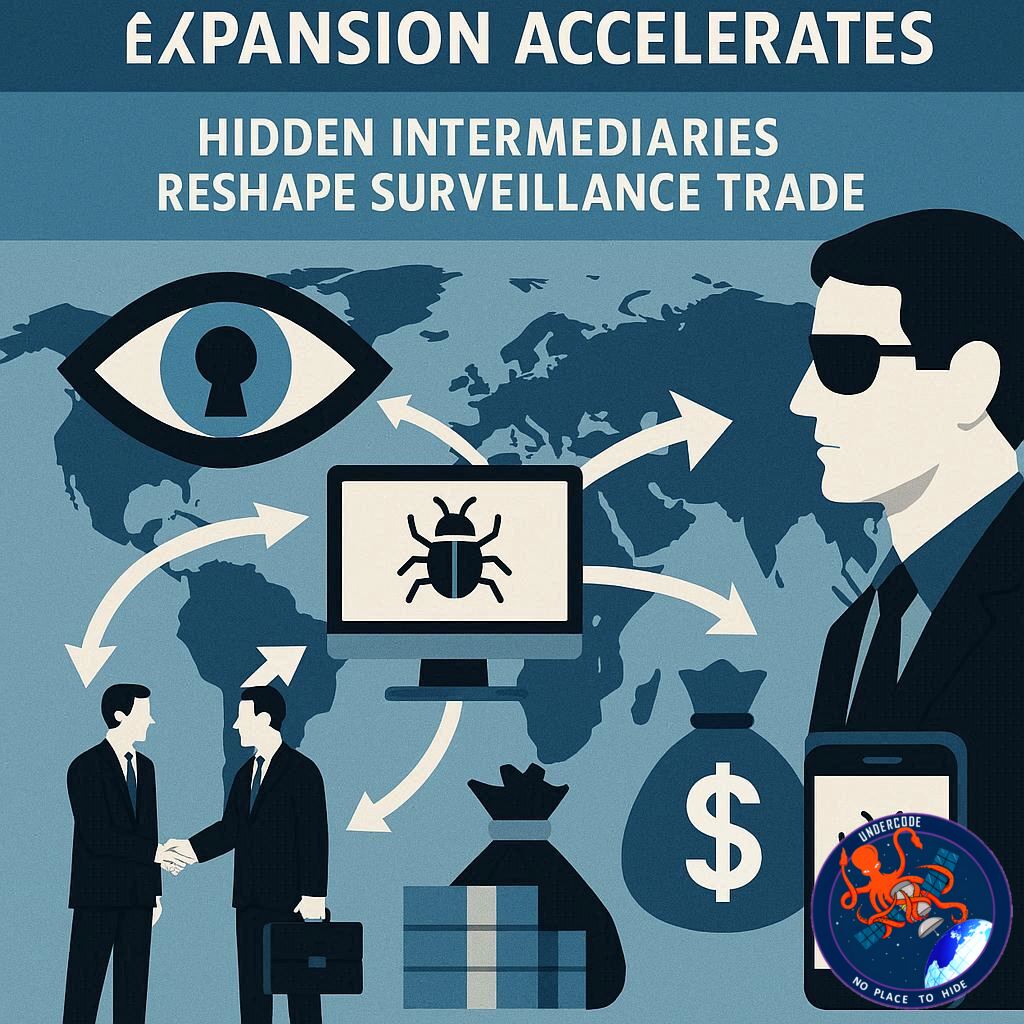
The global spyware industry is no longer driven solely by governments and major cybersecurity firms. Instead, a shadowy ecosystem of intermediaries, including brokers, resellers, and contractors, has emerged as the true engine behind its rapid expansion. These actors operate behind the scenes, bypassing regulations, obscuring accountability, and enabling the spread of powerful surveillance tools across borders. As governments attempt to regulate spyware, this decentralized network continues to evolve, making transparency increasingly difficult and enforcement nearly impossible.
Summary: How Intermediaries Are Redefining the Spyware Supply Chain
The expansion of the global spyware market has become significantly harder to monitor due to the growing influence of intermediaries. These third-party actors, ranging from resellers to exploit brokers, play a central role in connecting spyware vendors with buyers, often bypassing legal restrictions and transparency frameworks. Their involvement complicates efforts to track how surveillance technologies are distributed and used worldwide.
According to recent research by the Atlantic Council, intermediaries have enabled spyware to spread even in regions where direct transactions would otherwise be restricted. For example, firms have used regional representatives to penetrate local markets, while others rely on third-party companies to facilitate deals between nations with no official diplomatic ties. These tactics allow spyware vendors to quietly expand their reach while avoiding scrutiny.
This network has effectively transformed the spyware market into a complex and fragmented supply chain. Instead of a straightforward vendor-to-government relationship, the industry now operates through multiple layers of actors who handle everything from sales and deployment to training and infrastructure support. This modular approach allows buyers, especially those lacking technical expertise, to acquire sophisticated surveillance tools with ease.
Demand for spyware continues to rise, driven by government needs for law enforcement, intelligence gathering, and, in some cases, political surveillance. Notably, recent findings revealed that commercial vendors were responsible for more zero-day exploits in 2025 than traditional state-sponsored hacking groups, signaling a major shift in the cyber threat landscape.
Meanwhile, regulatory efforts have struggled to keep pace. Governments have introduced sanctions, export controls, and international initiatives aimed at curbing the misuse of spyware. However, these measures are often undermined by intermediaries who exploit legal loopholes and operate in jurisdictions with weak oversight. Even high-profile diplomatic efforts, such as international collaborations to regulate spyware, remain in early stages and have yet to produce measurable results.
Human rights organizations and cybersecurity researchers continue to investigate this opaque ecosystem, but the lack of visibility into intermediary operations remains a major obstacle. Experts argue that without greater transparency and stricter oversight of these third-party actors, the spyware market will continue to grow unchecked, posing risks to privacy, security, and democratic institutions worldwide.
What Undercode Say: The Real Power Shift in Cyber Surveillance Economics
The Rise of a Decentralized Surveillance Economy
The modern spyware market reflects a broader transformation in global digital economics, where decentralization replaces direct control. Intermediaries have effectively dismantled the traditional structure of cybersecurity trade, introducing layers that dilute responsibility while maximizing reach. This shift is not accidental, it is a calculated evolution designed to exploit regulatory gaps.
Intermediaries as Strategic Risk Multipliers
These actors do more than facilitate transactions. They actively reshape the risk landscape by introducing ambiguity into supply chains. When accountability becomes diffused, enforcement weakens. This creates an environment where spyware can circulate freely, even in politically sensitive or restricted regions.
The Commoditization of Cyber Weapons
Spyware is no longer a niche capability reserved for technologically advanced nations. Through intermediaries, it has become a commoditized product accessible to a wide range of buyers. This accessibility lowers the barrier to entry, allowing smaller or less developed states to engage in advanced cyber surveillance without building internal expertise.
Legal Loopholes as Business Models
A striking aspect of this ecosystem is how legal complexity is weaponized. Intermediaries often operate across multiple jurisdictions, leveraging differences in international law to obscure transactions. This creates a legal gray zone where enforcement agencies struggle to establish jurisdiction or prove wrongdoing.
The Illusion of Regulation
Global initiatives aimed at controlling spyware often focus on vendors, overlooking the intermediary layer that enables most transactions. This creates a regulatory illusion where policies appear robust on paper but fail in practice. Without targeting intermediaries directly, these frameworks remain fundamentally incomplete.
Economic Incentives Driving Expansion
The spyware market is fueled by strong financial incentives. Intermediaries profit not only from sales but also from bundled services such as deployment, maintenance, and training. This service-based model ensures recurring revenue, making the ecosystem highly sustainable and difficult to disrupt.
Impact on Global Power Dynamics
The spread of spyware through intermediaries has significant geopolitical implications. It allows nations with limited cyber capabilities to project power in new ways, potentially destabilizing regional balances. Surveillance tools can now influence politics, suppress dissent, and reshape information control at a global scale.
The Transparency Paradox
Efforts to increase transparency often clash with the very nature of the spyware industry. As visibility improves in one area, intermediaries adapt by shifting operations elsewhere. This creates a constant cycle where regulation lags behind innovation.
Technology vs Governance Gap
The rapid advancement of cyber capabilities continues to outpace governance structures. While technology evolves exponentially, regulatory frameworks move slowly due to political and bureaucratic constraints. Intermediaries exploit this gap, positioning themselves as indispensable connectors in the ecosystem.
Future Risks and Systemic Vulnerabilities
If left unchecked, the intermediary-driven spyware market could lead to widespread abuse. The lack of oversight increases the risk of surveillance tools being used against journalists, activists, and political opponents. Over time, this could erode trust in digital systems and undermine democratic institutions.
Fact Checker Results
✅ Intermediaries significantly contribute to the spread of spyware by bypassing regulations and obscuring supply chains.
✅ Commercial spyware vendors have surpassed traditional state actors in zero-day exploit usage in recent findings.
❌ Current global regulatory efforts are not yet effective in fully controlling intermediary-driven spyware distribution.
Prediction
📊 The spyware market will continue expanding through increasingly sophisticated intermediary networks, making regulation even more difficult.
📊 Governments will shift focus toward monitoring brokers and resellers rather than targeting vendors alone.
📊 A major global incident involving misuse of commercial spyware could accelerate stricter international enforcement policies.
▶️ Related Video (86% Match):
🕵️📝✔️Let’s dive deep and fact‑check.
References:
Reported By: www.darkreading.com
Extra Source Hub (Possible Sources for article):
https://www.reddit.com/r/AskReddit
Wikipedia
OpenAi & Undercode AI
Image Source:
Unsplash
Undercode AI DI v2
Bing
🔐JOIN OUR CYBER WORLD [ CVE News • HackMonitor • UndercodeNews ]
📢 Follow UndercodeNews & Stay Tuned:
𝕏 formerly Twitter 🐦 | @ Threads | 🔗 Linkedin | 🦋BlueSky | 🐘Mastodon


