
Listen to this Post
Introduction
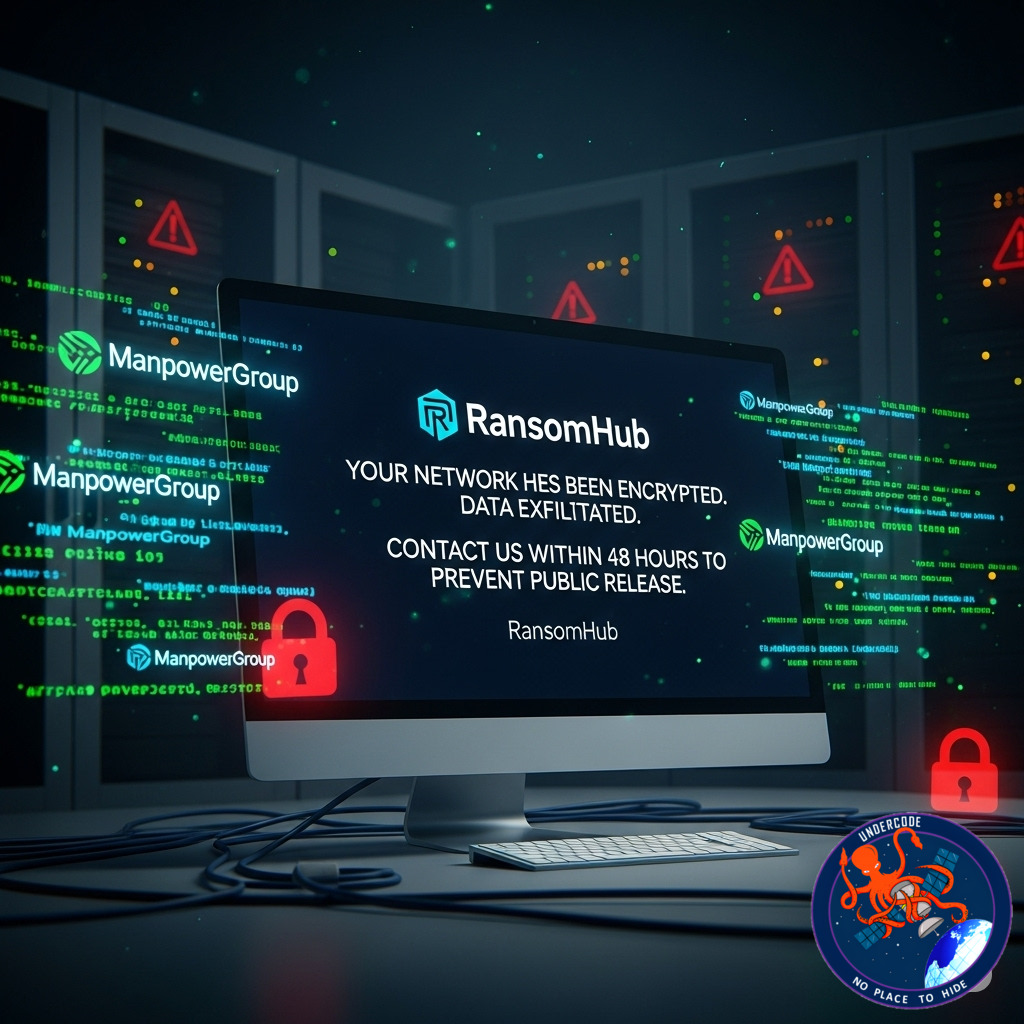
The corporate world has been shaken by news of a massive cyberattack targeting Manpower, one of the largest staffing companies on the planet. With a global reach spanning 2,700 offices and a workforce exceeding 600,000, the breach not only compromises personal data but also threatens the trust of clients and partners worldwide. The incident, linked to the notorious RansomHub ransomware group, has exposed sensitive information, ignited speculation over ransom payments, and raised urgent questions about the vulnerability of even the most established corporations.
Overview of the Incident
Manpower, operating under the ManpowerGroup umbrella alongside Experis and Talent Solutions, confirmed that 144,189 individuals have been impacted by a breach detected after a late December 2024 cyber intrusion. The discovery came on January 20, 2025, during an investigation into an IT outage at the company’s Lansing, Michigan office.
The company revealed that between December 29, 2024, and January 12, 2025, an unknown threat actor gained unauthorized access to its network, potentially acquiring files containing personal information such as passport scans, Social Security numbers, home addresses, and test results. By July 28, Manpower confirmed that certain personal data had indeed been compromised.
In response, the company has bolstered its cybersecurity defenses, engaged the FBI in its investigation, and offered affected victims free credit monitoring and identity theft protection via Equifax.
While the official investigation has yet to identify a confirmed culprit, the RansomHub ransomware gang claimed responsibility in January 2025. The group boasted of stealing approximately 500GB of sensitive data, including corporate correspondence, financial statements, HR analytics, and confidential contracts. The gang later removed Manpower from its dark web leak site, a move that suggests a potential ransom payment, although this has not been officially confirmed.
RansomHub, operating as a ransomware-as-a-service (RaaS) platform, has a track record of targeting major organizations, including Halliburton, Kawasaki EU, Frontier Communications, and Planned Parenthood. They have also been linked to one of the largest healthcare breaches in history, impacting 190 million individuals. According to the FBI, as of August 2024, RansomHub affiliates had compromised over 200 critical infrastructure organizations in the United States.
The breach comes at a time when password security is declining globally, as highlighted in the Picus Blue Report 2025, which found that 46% of environments experienced cracked passwords, up from 25% the previous year.
What Undercode Say:
Manpower’s breach is not just another corporate cybersecurity incident — it is a prime example of how sophisticated ransomware-as-a-service groups are redefining the threat landscape. The scale and scope of the stolen data mean the fallout could be long-lasting, with personal and corporate information potentially circulating on underground markets for years.
From a technical standpoint, the timing of the breach coinciding with an IT outage suggests a carefully orchestrated infiltration rather than a random strike. Attackers appear to have strategically exploited downtime to maintain network presence and exfiltrate vast amounts of data without immediate detection. This reflects a growing trend among elite ransomware groups, where operations are meticulously planned to evade monitoring systems.
The fact that RansomHub removed Manpower from its leak site raises critical questions. While companies often avoid confirming ransom payments to deter future attacks, such removals are frequently associated with negotiated settlements. If true, this could create a dangerous precedent, signaling to other cybercriminal groups that high-value organizations may be willing to pay for silence.
Economically, the breach threatens not just direct financial losses but also reputational damage. Staffing agencies operate on trust — clients and job seekers must feel confident that their sensitive data is secure. A breach of this magnitude can erode confidence, drive clients to competitors, and impact long-term profitability.
From a legal perspective, the involvement of the FBI underscores the seriousness of the crime, especially since critical infrastructure organizations have also been targeted by RansomHub affiliates. Regulatory investigations, particularly in jurisdictions with strict data protection laws, could lead to substantial fines and mandatory reforms in Manpower’s cybersecurity protocols.
The incident also highlights a pressing global issue: the sharp increase in password vulnerabilities. With nearly half of corporate environments experiencing cracked credentials in 2025, cybercriminals are finding it easier than ever to bypass authentication measures. This underscores the urgent need for organizations to adopt multi-factor authentication, passwordless security, and continuous monitoring to safeguard data.
Ultimately, the Manpower breach is a cautionary tale for multinational corporations that manage massive datasets. It demonstrates that no company, regardless of size or revenue, is immune from cyber extortion. The sophistication of RansomHub’s operations shows that adversaries are adapting faster than many corporate defenses, making proactive cybersecurity investment and employee training more vital than ever.
🔍 Fact Checker Results
✅ Manpower confirmed 144,189 individuals affected by the breach.
✅ RansomHub claimed responsibility and alleged theft of 500GB of sensitive data.
❌ No official confirmation from Manpower regarding ransom payment.
📊 Prediction
Given the scale of the attack and the history of RansomHub operations, it is likely that compromised Manpower data will resurface on illicit marketplaces despite possible ransom negotiations. Regulatory scrutiny will intensify, potentially resulting in stricter data security compliance requirements for staffing agencies worldwide. Additionally, this incident could push more multinational corporations to adopt zero-trust architecture and advanced identity verification technologies to counter evolving ransomware threats.
🕵️📝✔️Let’s dive deep and fact‑check.
References:
Reported By: www.bleepingcomputer.com
Extra Source Hub:
https://www.discord.com
Wikipedia
OpenAi & Undercode AI
Image Source:
Unsplash
Undercode AI DI v2
🔐JOIN OUR CYBER WORLD [ CVE News • HackMonitor • UndercodeNews ]
📢 Follow UndercodeNews & Stay Tuned:
𝕏 formerly Twitter 🐦 | @ Threads | 🔗 Linkedin | 🦋BlueSky | 🐘Mastodon


