
Listen to this Post
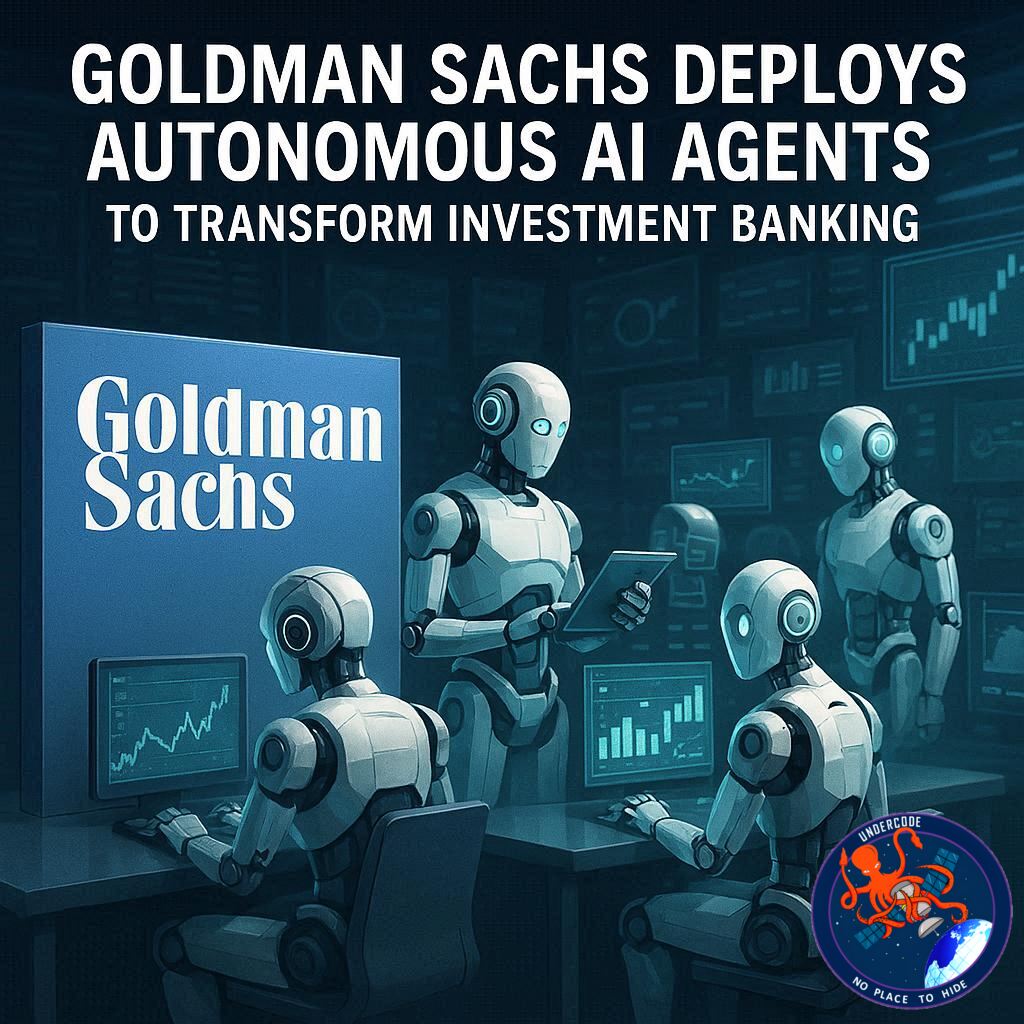
Goldman Sachs is accelerating its embrace of artificial intelligence with the deployment of fully autonomous AI agents designed to handle complex, process-heavy roles within the bank. These “digital co-workers” are powered by Anthropic’s Claude model and represent a strategic shift toward embedding generative AI at the core of Goldman’s operations. The initiative reflects the bank’s multiyear plan, led by CEO David Solomon, to modernize workflows, enhance efficiency, and potentially reshape the future of banking roles.
Digital Co-Workers: Automating Complexity
Goldman Sachs’ Chief Information Officer, Marco Argenti, explained that these AI agents are intended to support professionals in areas that are both highly complex and process-intensive. Over the past six months, the bank has collaborated closely with Anthropic engineers to co-develop these AI systems, which can perform tasks previously requiring significant human effort. The digital co-workers are envisioned not as replacements, but as collaborators capable of streamlining operations and increasing output in departments ranging from engineering to client-facing functions.
The Surprising Capabilities of Claude
Initially deployed as coding assistants for Goldman engineers, Claude’s AI model demonstrated an unexpected proficiency in reasoning through intricate problems. Argenti highlighted that Claude is not only adept at writing code but also excels at handling high-stakes financial operations requiring logical, step-by-step decision-making. This capability suggests that AI agents could soon be extended to other departments, enabling automation in areas beyond engineering.
Potential Expansion Across Departments
Goldman is exploring how these autonomous agents can be applied in additional contexts, such as preparing investment banking pitchbooks or even performing certain monitoring tasks. Argenti noted that the same level of efficiency observed on the coding side could be replicated elsewhere, offering significant productivity gains and freeing human employees to focus on more strategic responsibilities.
AI and Employment: No Immediate Job Cuts
Despite the sophistication of these digital co-workers, Goldman’s leadership emphasizes that widespread job reductions are not imminent. Argenti described the current approach as “injecting capacity” rather than reducing headcount. The AI systems are designed to accelerate workflows, improve client experiences, and drive business outcomes, rather than replace employees.
What Undercode Say:
Goldman Sachs’ AI initiative signals a turning point in the integration of autonomous digital agents within high-stakes financial institutions. By co-developing AI alongside Anthropic, Goldman is not merely automating routine tasks; it is testing the boundaries of AI’s reasoning and problem-solving capabilities in a sector traditionally reliant on human judgment.
The decision to leverage Claude for complex financial operations underscores the growing confidence in generative AI models to perform tasks requiring logic, precision, and accountability. Historically, financial institutions have been cautious in adopting automation due to regulatory scrutiny and operational risk. Goldman’s pilot demonstrates that AI has reached a level of maturity where it can handle not just repetitive tasks but nuanced, high-stakes processes.
Furthermore, the bank’s approach to workforce integration is particularly noteworthy. By framing AI as capacity enhancement rather than a replacement tool, Goldman mitigates employee resistance and aligns technology adoption with strategic business goals. This signals a broader trend in the industry: AI will likely function as a multiplier for human talent rather than a mass replacement mechanism in the near term.
However, there are inherent challenges. Autonomous AI agents in finance must navigate regulatory compliance, ethical considerations, and the potential for decision-making errors. The success of these agents will depend on robust oversight frameworks, continuous training, and alignment with human supervision. Goldman’s model, which emphasizes co-development and phased deployment, reflects an understanding of these risks.
From a competitive standpoint, Goldman’s integration of Claude may set a benchmark for other major banks, pushing the sector toward rapid adoption of AI-driven digital co-workers. Institutions that fail to modernize risk losing efficiency advantages, while early adopters may unlock new opportunities in analytics, client servicing, and operational cost reduction.
The broader implication for the finance industry is profound: AI is no longer a back-office tool limited to predictive modeling or risk scoring. It is evolving into a front-line collaborator capable of executing complex processes, reasoning under uncertainty, and augmenting human decision-making. Goldman’s experiment could accelerate AI-driven transformation across investment banking, potentially reshaping workflows, corporate culture, and the very definition of professional roles in finance.
In conclusion, Goldman Sachs’ deployment of Claude-powered digital co-workers illustrates a careful but ambitious embrace of AI. By combining advanced reasoning capabilities with operational oversight, the bank is setting a precedent for the next generation of financial automation, blending human expertise and machine intelligence to create a more efficient, innovative, and competitive institution.
Fact Checker Results:
✅ Goldman Sachs is deploying autonomous AI agents in collaboration with Anthropic.
✅ Claude’s AI model is being used for complex coding and reasoning tasks.
❌ No immediate large-scale job cuts are planned as part of this AI deployment.
Prediction:
📊 Over the next 2–3 years, Goldman Sachs’ AI agents could expand to client-facing and analytical functions, increasing productivity while maintaining headcount.
📊 Competitors may accelerate AI integration, creating a wave of generative AI adoption across the banking sector.
📊 The success of AI co-workers could redefine operational efficiency, setting new industry standards for process automation and risk management.
▶️ Related Video (88% Match):
🕵️📝✔️Let’s dive deep and fact‑check.
References:
Reported By: timesofindia.indiatimes.com
Extra Source Hub (Possible Sources for article):
https://www.facebook.com
Wikipedia
OpenAi & Undercode AI
Image Source:
Unsplash
Undercode AI DI v2
Bing
🔐JOIN OUR CYBER WORLD [ CVE News • HackMonitor • UndercodeNews ]
📢 Follow UndercodeNews & Stay Tuned:
𝕏 formerly Twitter 🐦 | @ Threads | 🔗 Linkedin | 🦋BlueSky | 🐘Mastodon


