
Listen to this Post
Introduction
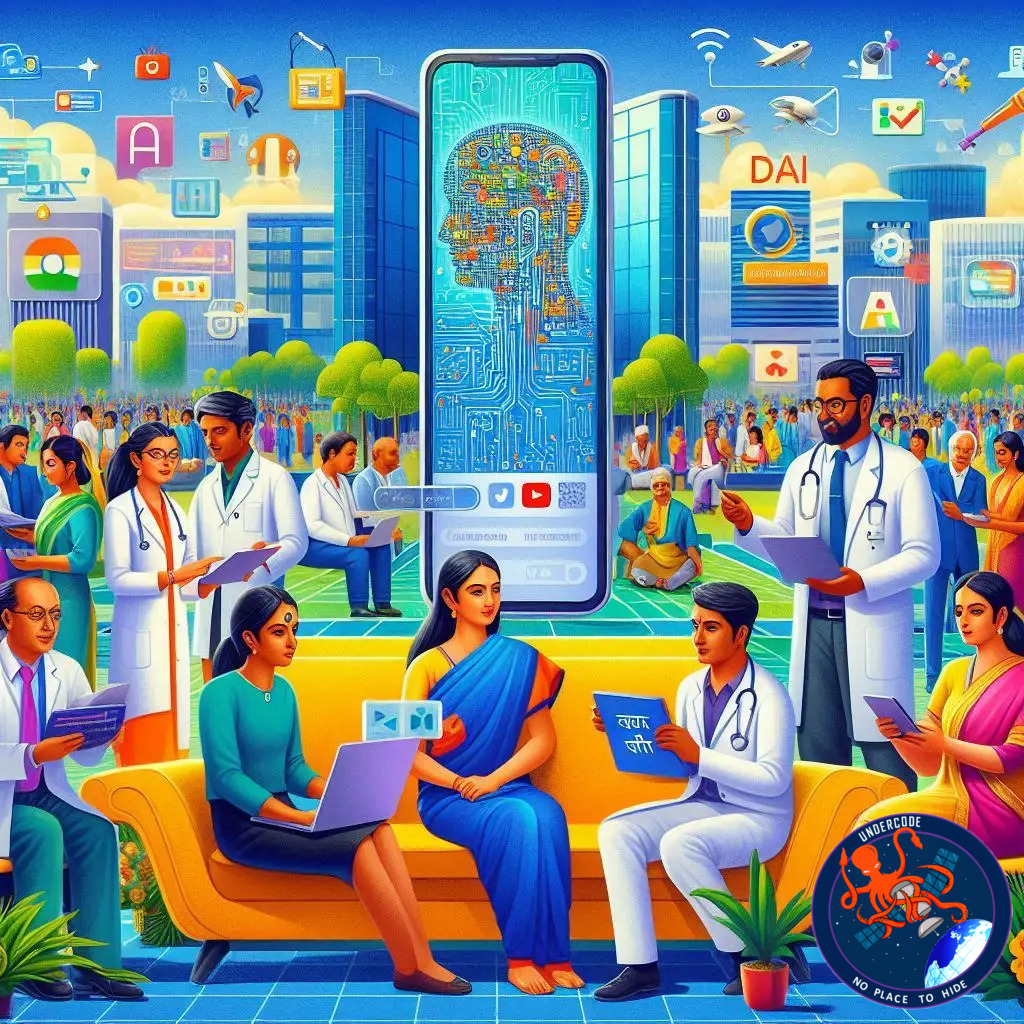
India’s artificial intelligence ambitions are no longer abstract policy goals or distant projections. They are being shaped in real time through funding, infrastructure, and institutional partnerships. Google’s latest announcement marks a significant moment in this journey, signaling both confidence in India’s AI talent and a strategic push to embed artificial intelligence into the country’s public systems. With targeted investments across healthcare, education, agriculture, governance, and language technologies, Google is aligning itself closely with India’s national vision to build and deploy AI solutions at population scale.
the Original
Google has unveiled a major financial and collaborative initiative to strengthen India’s artificial intelligence ecosystem, anchored by an $8 million funding package for four government-backed AI Centers of Excellence. The announcement was made during Google’s “Lab to Impact” dialogue on December 16 and is aligned with the broader India AI Impact Summit 2026. This effort supports India’s national strategy to “Make AI in India and Make AI work for India,” emphasizing both domestic innovation and practical application.
The funding, distributed through Google.org, will support four premier institutions. IISc Bangalore’s TANUH initiative will focus on scalable AI solutions for non-communicable disease treatment. IIT Kanpur’s Airawat Research Foundation will research AI-driven urban governance. IIT Madras will lead an AI Centre of Excellence for Education to improve learning outcomes, while IIT Ropar’s ANNAM.AI will develop data-driven agricultural and farmer welfare solutions.
Beyond research funding, Google announced several collaborations to integrate AI into India’s Digital Public Infrastructure, particularly in healthcare. A $400,000 grant will support the development of Health Foundation Models using MedGemma. Google is also partnering with the National Health Authority to convert millions of fragmented medical records into the globally recognized FHIR standard, making them machine-readable and interoperable. In addition, Google will help map over 400,000 registered health facilities onto Google Maps and Search, improving public access to verified healthcare information.
To address India’s linguistic diversity, Google committed $2 million to establish the Indic Language Technologies Research Hub at IIT Bombay. All 22 of Google’s open Gemma models have also been uploaded to AIKosh, India’s open data and model platform. Startups building Indic language solutions using Gemma are eligible for $50,000 in funding. Additional grants include $2.5 million to Wadhwani AI to pilot an LLM-based conversational assistant and another $2 million to develop a specialized Indian language model for agriculture.
What Undercode Say:
This announcement is less about headline numbers and more about structural intent. Google is not simply funding isolated AI experiments. It is embedding itself into the scaffolding of India’s AI ecosystem, from public health records to language infrastructure. That distinction matters. Many global tech investments in emerging markets focus on consumer products or startup acceleration. Google’s approach here targets state capacity and national-scale systems.
The focus on Digital Public Infrastructure is especially telling. By helping standardize medical data into FHIR formats, Google is enabling interoperability that India’s healthcare system has struggled with for decades. AI models are only as powerful as the data they consume, and fragmented records have long limited automation in public health. This move quietly addresses that bottleneck.
The emphasis on Indic languages reflects a pragmatic understanding of India’s AI reality. English-first models do not scale in a country with hundreds of millions of non-English speakers. By funding language research and opening Gemma models on AIKosh, Google is lowering entry barriers for Indian developers while steering innovation toward local relevance rather than imported solutions.
Agriculture and non-communicable diseases also reveal a strategic prioritization of high-impact sectors. These are areas where AI can deliver measurable social returns, not just technological prestige. Supporting institutions like ANNAM.AI and Wadhwani AI suggests Google sees long-term value in domain-specific models tailored to Indian conditions rather than generic global systems.
At a geopolitical level, this initiative positions India as more than an AI consumer. It frames the country as a contributor to global AI research and deployment, particularly in population-scale use cases. For Google, this is also a hedge. By aligning with national missions and public infrastructure, the company strengthens trust and relevance in one of the world’s most strategically important technology markets.
Fact Checker Results
✅ Google announced an $8 million grant supporting four Indian AI Centers of Excellence.
✅ Funding spans healthcare, education, agriculture, urban governance, and language technologies.
❌ No evidence suggests this funding replaces or overrides India’s domestic AI mission budgets.
Prediction
📊 India’s AI development will increasingly shift toward public infrastructure and sector-specific models rather than consumer-only applications.
📊 Google’s early integration into health data standards and Indic language models will give it long-term influence over India’s AI ecosystem.
📊 More global technology firms are likely to follow this template, combining funding with deep institutional partnerships rather than standalone investments.
▶️ Related Video (82% Match):
🕵️📝✔️Let’s dive deep and fact‑check.
References:
Reported By: timesofindia.indiatimes.com
Extra Source Hub (Possible Sources for article):
https://www.reddit.com/r/AskReddit
Wikipedia
OpenAi & Undercode AI
Image Source:
Unsplash
Undercode AI DI v2
Bing
🔐JOIN OUR CYBER WORLD [ CVE News • HackMonitor • UndercodeNews ]
📢 Follow UndercodeNews & Stay Tuned:
𝕏 formerly Twitter 🐦 | @ Threads | 🔗 Linkedin | 🦋BlueSky | 🐘Mastodon


