
Listen to this Post
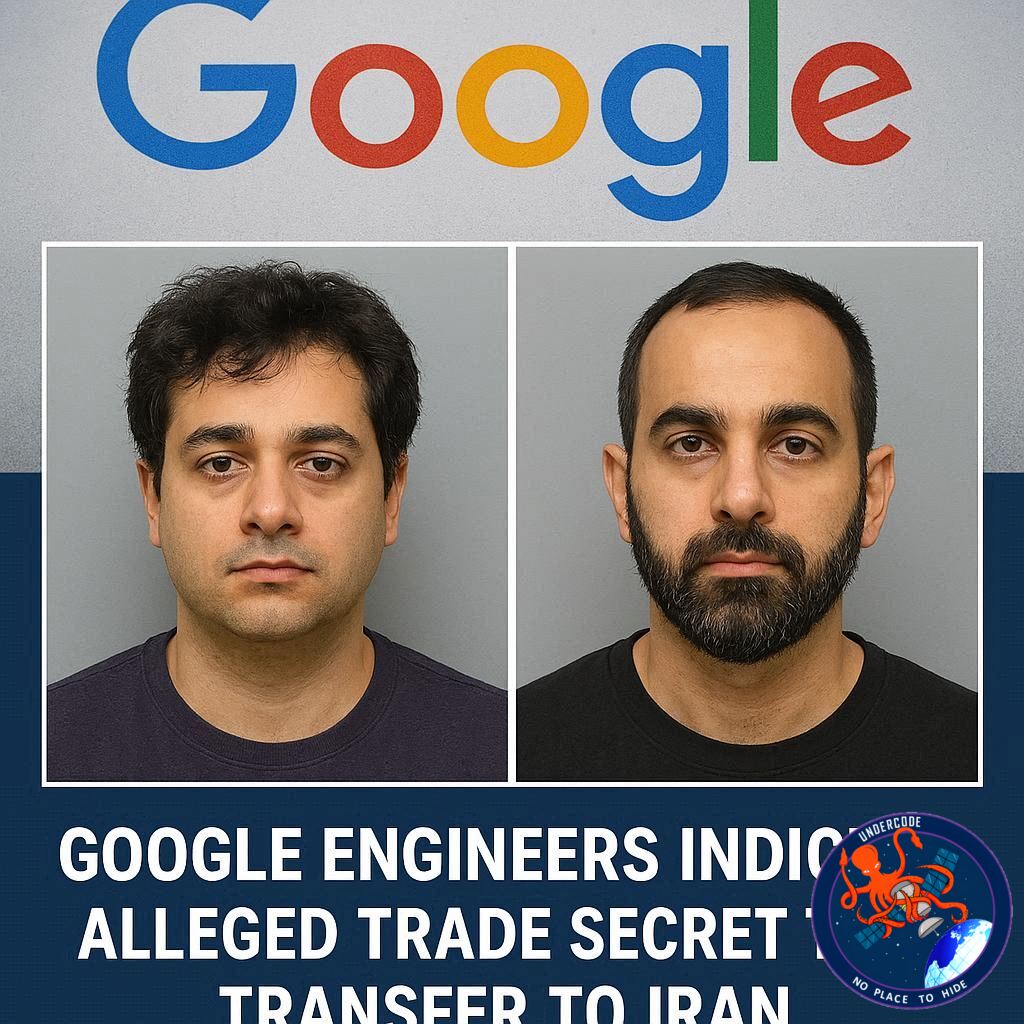
In a high-profile case of alleged corporate espionage, two former Google engineers and their associates have been indicted in the U.S. for stealing trade secrets from the tech giant and other companies, transferring the sensitive data to unauthorized locations, including Iran. Samaneh Ghandali, 41, her husband Mohammadjavad Khosravi, 40, and her sister Soroor Ghandali, 32, all Iranian nationals, stand accused of conspiring to commit theft of confidential information, obstruction of justice, and other related charges. Their actions are said to have had significant implications for national security and international relations.
the Incident
According to the U.S. Department of Justice (DoJ), the Ghandali sisters and Khosravi were employed by various tech companies, including Google, before allegedly using their positions to gain access to sensitive and proprietary information, particularly in the field of mobile processors and cryptography. Samaneh Ghandali and Soroor Ghandali worked for Google before joining a company identified only as “Company 3,” while Khosravi was employed at another company, referred to as “Company 2.”
The trio is accused of transferring trade secrets and confidential data from Google, including sensitive files about Google’s Tensor processor for Pixel phones, to unauthorized third-party platforms, as well as personal devices. They are said to have transferred the data to work devices linked to each other’s employers and, ultimately, to Iran. This scheme allegedly involved photographing sensitive documents manually, destroying electronic copies, and attempting to cover their tracks by submitting false affidavits and deleting evidence.
Google became aware of the situation when internal security systems detected suspicious activity from Samaneh Ghandali in August 2023, leading to the revocation of her access to company resources. Shortly afterward, the Ghandali sisters and Khosravi are said to have continued their thefts, going as far as accessing the stolen data while in Iran. If convicted, the defendants face up to 10 years in prison and hefty fines for each count of trade secret theft, and up to 20 years for obstruction of justice.
What Undercode Says: A Deeper Look
This incident highlights a growing concern over intellectual property (IP) theft in the tech industry, particularly regarding high-stakes fields like mobile processors, encryption, and AI. As companies like Google continue to lead innovation, the value of their trade secrets becomes more substantial, making them attractive targets for espionage—especially by individuals with insider access.
The fact that these trade secrets were allegedly transferred to Iran adds another layer of complexity. It not only raises security concerns but also questions about international law and the potential involvement of foreign states. The United States has already expressed concerns over foreign interference in its tech ecosystem, and incidents like these might reinforce the notion of corporate espionage being a national security threat.
Another concerning aspect of the case is the defendants’ use of increasingly sophisticated tactics to cover up their actions. The method of transferring sensitive data, including manually photographing screens, shows a high level of premeditation and a clear attempt to bypass security measures. The use of third-party communication platforms to store and transfer files is another red flag, pointing to the sophisticated nature of the alleged scheme.
For Google, this marks yet another case of internal vulnerability. While the company reportedly took immediate action once they detected the issue, this incident calls into question the long-term effectiveness of internal security systems. It seems that, despite increased vigilance, large tech firms may still be struggling to mitigate insider threats effectively.
Furthermore, the case is noteworthy for its timing. Just weeks before, another ex-Google engineer, Linwei Ding, was convicted for stealing company secrets to build a startup in China. This further underscores a troubling trend in which insiders in major tech companies seem to be increasingly prone to taking drastic actions for personal or political gain, adding another layer of risk for companies and governments alike.
🔍 Fact Checker Results
✅ Google immediately alerted law enforcement upon detecting the theft of its trade secrets.
✅ The stolen data included files about Google’s proprietary Tensor processors.
❌ No clear evidence suggests the involvement of Iranian state actors at this point.
📊 Prediction
As more tech companies continue to innovate in the field of AI, processors, and encryption technologies, incidents like this will likely become more frequent. In response, firms will likely ramp up their internal security measures, possibly introducing more advanced methods for monitoring employee activity. Governments may also tighten regulations to protect sensitive tech data and impose stricter penalties for those caught engaging in intellectual property theft.
🕵️📝✔️Let’s dive deep and fact‑check.
References:
Reported By: thehackernews.com
Extra Source Hub (Possible Sources for article):
https://www.reddit.com
Wikipedia
OpenAi & Undercode AI
Image Source:
Unsplash
Undercode AI DI v2
Bing
🔐JOIN OUR CYBER WORLD [ CVE News • HackMonitor • UndercodeNews ]
📢 Follow UndercodeNews & Stay Tuned:
𝕏 formerly Twitter 🐦 | @ Threads | 🔗 Linkedin | 🦋BlueSky | 🐘Mastodon


