
Listen to this Post
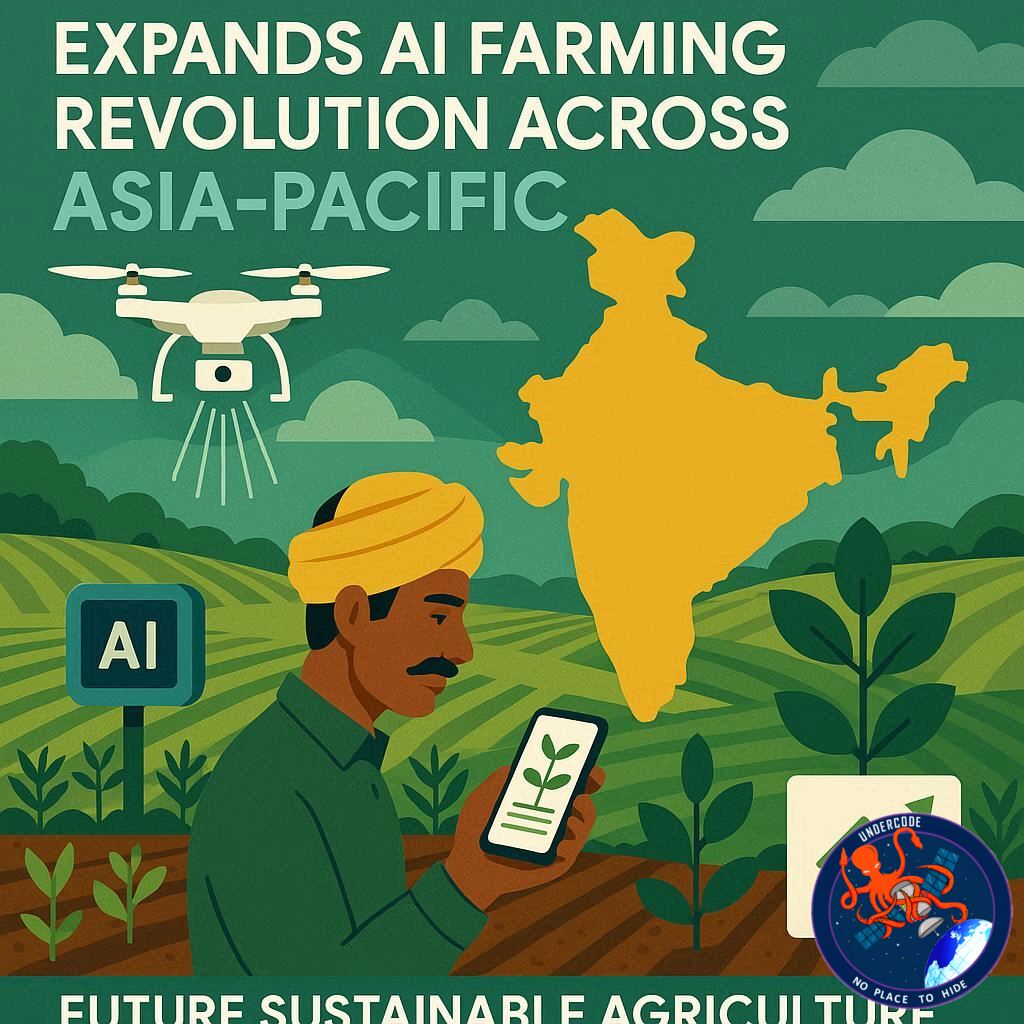
Introduction: Seeds of Change in Asian Agriculture
When Google first introduced its AI-driven agriculture models in India, few expected how quickly the experiment would grow into a continental transformation. What began as a localized attempt to help Indian farmers predict weather shifts, optimize irrigation, and monitor crop health has now evolved into one of the most ambitious agricultural intelligence projects in Asia. With the recent announcement, Google is taking its Agricultural Landscape Understanding (ALU) and Agricultural Monitoring & Event Detection (AMED) APIs beyond India—to Malaysia, Vietnam, Indonesia, and Japan. This move signals not just technological progress, but a reimagining of how data and AI can feed the future of billions.
🌱 The AI That Understands the Land
Google’s new chapter in agricultural innovation revolves around two powerful tools: the ALU and AMED APIs. These systems use remote sensing, satellite imagery, and machine learning to interpret the earth’s agricultural rhythms—tracking soil conditions, vegetation, water resources, and crop cycles. ALU identifies physical features like fields and bodies of water, while AMED focuses on monitoring crop growth and detecting crucial events such as floods, droughts, or pest infestations.
This data is updated every 15 days, offering farmers and policymakers an almost real-time view of their fields. For a region where unpredictable weather and resource scarcity often determine survival, this is more than technology—it’s a lifeline.
🌾 Lessons from India’s Digital Fields
India served as Google’s testing ground, and the results were transformative. The ALU and AMED models have already been deployed across multiple government and private platforms.
The Krishi DSS platform, developed by Amnex and backed by the Department of Agriculture, uses these APIs to monitor crop health, optimize irrigation, and assess climate impacts.
Vassar Labs, serving over 10 million farmers, has integrated these tools into its fieldWISE platform to offer personalized guidance on irrigation, fertilizer use, and pest management.
Fintech company Sugee.io has even adopted ALU to verify land and crop data for faster loan processing—bringing trust and efficiency to agricultural finance.
The Council on Energy, Environment, and Water (CEEW) is using the APIs to identify regions suited for crop diversification, helping farmers shift toward more sustainable and profitable options.
Each of these examples demonstrates one simple truth: when data meets dirt, progress blooms.
🌏 Expansion to Asia-Pacific: A Shared Climate, A Shared Future
Google’s decision to expand its agricultural AI models to Malaysia, Vietnam, Indonesia, and Japan was a logical step. These countries share climatic conditions and agricultural challenges similar to India’s—monsoons, floods, droughts, and smallholder-dominated farming systems. The company’s vision is to create a connected network of agricultural innovation where researchers, developers, and agribusinesses can build upon its models to enhance food security, resilience, and sustainability across borders.
In this interconnected ecosystem, AI isn’t just analyzing fields; it’s cultivating collaboration. By empowering local innovators, Google hopes to create region-specific solutions—from precision irrigation systems in Vietnam’s Mekong Delta to sustainable rice farming in Indonesia and data-driven tea cultivation in Japan.
🌍 A Mission Beyond Profit
This expansion is part of Google’s broader ambition to use artificial intelligence for solving real-world problems. In its announcement, the company emphasized that “solutions that address India’s most pressing challenges can also solve for the world.” With agricultural productivity under threat from climate change, resource depletion, and population growth, such a statement resonates deeply.
By sharing its data-driven agricultural frameworks, Google is essentially offering a digital infrastructure for sustainability—a blueprint for how technology can regenerate rather than exploit the planet.
🧩 What Undercode Say:
The significance of this move runs deeper than a corporate announcement. Google’s AI expansion reflects a new paradigm: the localization of global innovation. For decades, tech revolutions flowed from Silicon Valley to the developing world. Now, India’s farmlands are feeding algorithms that will shape farming in other nations.
This is a reversal of digital colonialism—a story where developing economies aren’t just adopting technology, they’re creating the models that guide global progress. India’s diverse climate, fragmented landholdings, and unpredictable weather patterns provided the perfect training ground for Google’s AI systems. If it works there, it can work anywhere.
From a policy perspective, this could redefine agricultural governance. Governments can use ALU and AMED data for evidence-based policymaking, predicting drought patterns, and allocating subsidies more efficiently. For the private sector, it means a new frontier for agri-fintech, insurance, and carbon-credit tracking.
But challenges remain. Data privacy, infrastructure gaps, and smallholder accessibility are pressing concerns. AI solutions can amplify inequality if not implemented inclusively. Many rural farmers still lack digital literacy, and if data remains centralized under tech giants, the promise of empowerment may turn into dependency.
Yet, if balanced correctly—with open APIs, government partnerships, and grassroots education—this could be one of the most powerful transformations in modern agriculture. It merges precision with empathy, turning analytics into nourishment.
The future of farming is no longer just about seeds and soil—it’s about sensors and systems that understand both. As AI learns the language of the land, it may help humanity rediscover its oldest wisdom: that growth must always be in harmony with nature.
🔍 Fact Checker Results:
✅ Google has officially expanded its ALU and AMED APIs to Malaysia, Vietnam, Indonesia, and Japan.
✅ The APIs are already operational within India’s government-backed and private agricultural platforms.
✅ The tools provide 15-day refresh cycles for real-time agricultural monitoring.
📊 Prediction:
🌾 Within the next five years, AI-powered agriculture is set to become the backbone of climate resilience in Asia.
🤖 Countries adopting Google’s open-data farming systems will experience rapid advancements in yield prediction, risk assessment, and sustainable resource use.
💧 Expect a surge in AI-driven startups across Southeast Asia focusing on water conservation, soil analytics, and carbon farming—turning data into the new seed of prosperity.
🕵️📝✔️Let’s dive deep and fact‑check.
References:
Reported By: timesofindia.indiatimes.com
Extra Source Hub (Possible Sources for article):
https://www.medium.com
Wikipedia
OpenAi & Undercode AI
Image Source:
Unsplash
Undercode AI DI v2
Bing
🔐JOIN OUR CYBER WORLD [ CVE News • HackMonitor • UndercodeNews ]
📢 Follow UndercodeNews & Stay Tuned:
𝕏 formerly Twitter 🐦 | @ Threads | 🔗 Linkedin | 🦋BlueSky | 🐘Mastodon


