
Listen to this Post
A Growing Rift Between Tech Giants and European Regulators
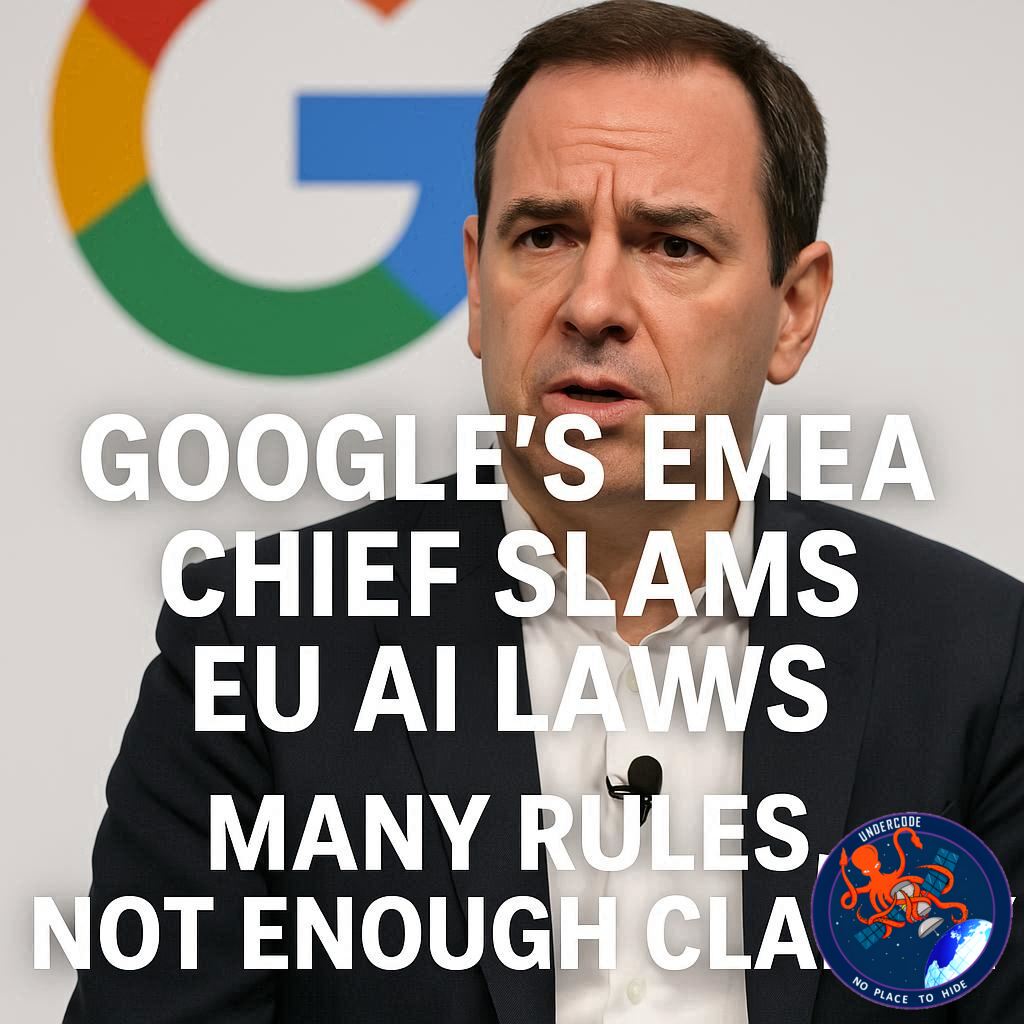
The battle between Silicon Valley and Brussels is heating up again. Debbie Weinstein, President of Alphabet for Europe, the Middle East, and Africa, is warning that the European Union’s heavy-handed approach to regulating artificial intelligence and digital technologies could suffocate innovation. Speaking at Bloomberg’s Women, Money & Power conference in London, Weinstein delivered a strong message: the EU’s patchwork of rules is confusing, conflicting, and ultimately counterproductive.
Since 2019, the EU has pushed through around 100 separate internet-related laws, ranging from privacy protections to sweeping artificial intelligence mandates. While policymakers claim these measures are designed to protect users, critics like Weinstein argue that they often clash with one another, creating uncertainty for businesses. She urged European lawmakers to simplify and harmonize the rules, suggesting that without change, global tech companies could hesitate to bring new products to the region.
Google’s Dilemma With AI Overviews
Weinstein highlighted one specific case that demonstrates the problem: Google’s “AI Overviews,” a new search feature powered by generative AI. Although the technology has rolled out in many markets, it has been delayed in Europe due to regulatory concerns. According to Weinstein, the tool still isn’t available in countries like France, raising questions about Europe’s ability to keep pace with global innovation.
Google’s rocky relationship with Europe isn’t new. The company has been fined billions of euros over antitrust violations and repeatedly scrutinized for data privacy practices. Now, with the EU’s AI Act placing strict rules on large language models such as Google’s Gemini, the stakes are even higher.
The Larger Tech Industry Pushback
Google isn’t alone in its frustration. Apple has publicly called for the repeal of certain EU antitrust laws, while Meta and Apple have both delayed the launch of new features in Europe because of regulatory pressure. Meta has even refused to sign the EU’s voluntary AI code of practice, signaling a widening rift between American tech companies and European regulators.
Adding fuel to the fire, former US President Donald Trump has weighed in on the issue, backing American tech firms and slamming EU laws as unfair. He has threatened tariffs and export restrictions in retaliation for Europe’s digital services taxes. With political tensions already high, the fight over digital regulation risks becoming an international trade dispute.
Google’s Strategy Going Forward
Weinstein, who took over leadership of Google’s UK office in December 2024, made clear that her priority is to push for regulatory reform. She claims that business leaders across Europe share her concerns, describing “universal frustration” with the current regime. While she didn’t outline specific reforms, Weinstein suggested that collaboration among companies will be essential to pressure lawmakers into making changes.
Her message was blunt: unless the EU simplifies its approach, innovation will continue to bypass Europe, leaving the region struggling to keep up with technological advancements happening elsewhere.
What Undercode Say:
The tension between global tech giants and European regulators has been building for more than a decade, and Weinstein’s comments expose just how deep the divide has become. At the heart of the issue lies a fundamental clash of philosophies. The EU prioritizes caution, consumer protection, and market fairness, while Silicon Valley thrives on speed, experimentation, and disruption.
Europe’s regulatory machine is undeniably powerful. From the General Data Protection Regulation (GDPR) to the Digital Markets Act (DMA) and now the AI Act, the bloc is determined to establish itself as the world’s rule-setter for technology. However, this strategy comes with unintended consequences. When innovation is slowed or blocked, European consumers often get delayed access to cutting-edge tools, and European startups face the same compliance hurdles as trillion-dollar companies like Google.
Weinstein’s frustration is not just corporate whining—it reflects a real structural problem. A hundred different internet laws since 2019 is not just heavy regulation, it’s legislative chaos. Conflicts between rules create legal uncertainty, forcing companies to dedicate massive resources to compliance instead of product development. For example, Google’s decision to delay AI Overviews in France doesn’t just inconvenience French users; it sets a precedent that Europe could become a second-tier market for AI products.
From a business perspective, this could harm Europe’s competitiveness. While the US and Asia race ahead with AI innovation, Europe risks becoming a regulatory fortress where the most advanced products arrive last, if at all. In the long run, this could widen the technological gap between regions, weakening Europe’s digital economy.
At the same time, it’s important to recognize why the EU is acting this way. European lawmakers see themselves as guardians against “Big Tech excess.” Fears about data misuse, algorithmic bias, and monopolistic practices drive their policymaking. To them, slowing down AI rollouts isn’t a bug—it’s a feature. The EU would rather be accused of over-regulating than under-protecting its citizens.
This brings us to the central paradox: regulation versus innovation. Can Europe strike a balance where safety and consumer rights are protected without suffocating technological progress? The EU’s track record suggests it struggles to find that equilibrium. GDPR, for instance, gave people more control over their data but also created headaches for small businesses and made the internet experience more cumbersome with endless cookie banners.
Weinstein’s call for simplification resonates here. Harmonization doesn’t necessarily mean deregulation; it means making rules clear, consistent, and workable. Even many European companies—not just American giants—complain about the red tape. The “universal frustration” she mentioned reflects a broader problem that goes beyond Silicon Valley lobbying.
Another point worth noting is the geopolitical angle. With Trump openly backing US tech firms and threatening retaliatory tariffs, the issue could escalate beyond regulatory disputes into a transatlantic trade war. That would raise the stakes significantly, turning Europe’s AI laws from a regional policy issue into a flashpoint of global economic tension.
Looking ahead, the question is whether the EU will adapt. If it doesn’t, the risk is not only stifling innovation but also isolating itself from the global AI race. Europe could find itself importing technologies late, under worse terms, while missing out on shaping the next wave of innovation.
In short, Weinstein’s comments reflect a reality many in the tech industry already whisper about: Europe’s regulatory overdrive may protect consumers in the short term, but it could cost the continent dearly in the long run.
Fact Checker Results
✅ Weinstein did confirm that Google delayed AI Overviews in Europe due to regulation.
✅ The EU has introduced around 100 internet laws since 2019.
❌ No clear evidence that Europe intends to repeal or drastically simplify its AI laws soon.
Prediction
Europe will continue to push forward with strong AI regulations, but growing pressure from companies like Google, Apple, and Meta will likely force some compromise. Expect a slower rollout of AI products in Europe compared to the US and Asia, but eventually, a more harmonized framework could emerge to prevent further economic fallout. 🚀
🕵️📝✔️Let’s dive deep and fact‑check.
References:
Reported By: timesofindia.indiatimes.com
Extra Source Hub:
https://www.stackexchange.com
Wikipedia
OpenAi & Undercode AI
Image Source:
Unsplash
Undercode AI DI v2
🔐JOIN OUR CYBER WORLD [ CVE News • HackMonitor • UndercodeNews ]
📢 Follow UndercodeNews & Stay Tuned:
𝕏 formerly Twitter 🐦 | @ Threads | 🔗 Linkedin | 🦋BlueSky | 🐘Mastodon


