
Listen to this Post
Introduction: Rising Energy Around India’s Fastest-Growing AI Movement
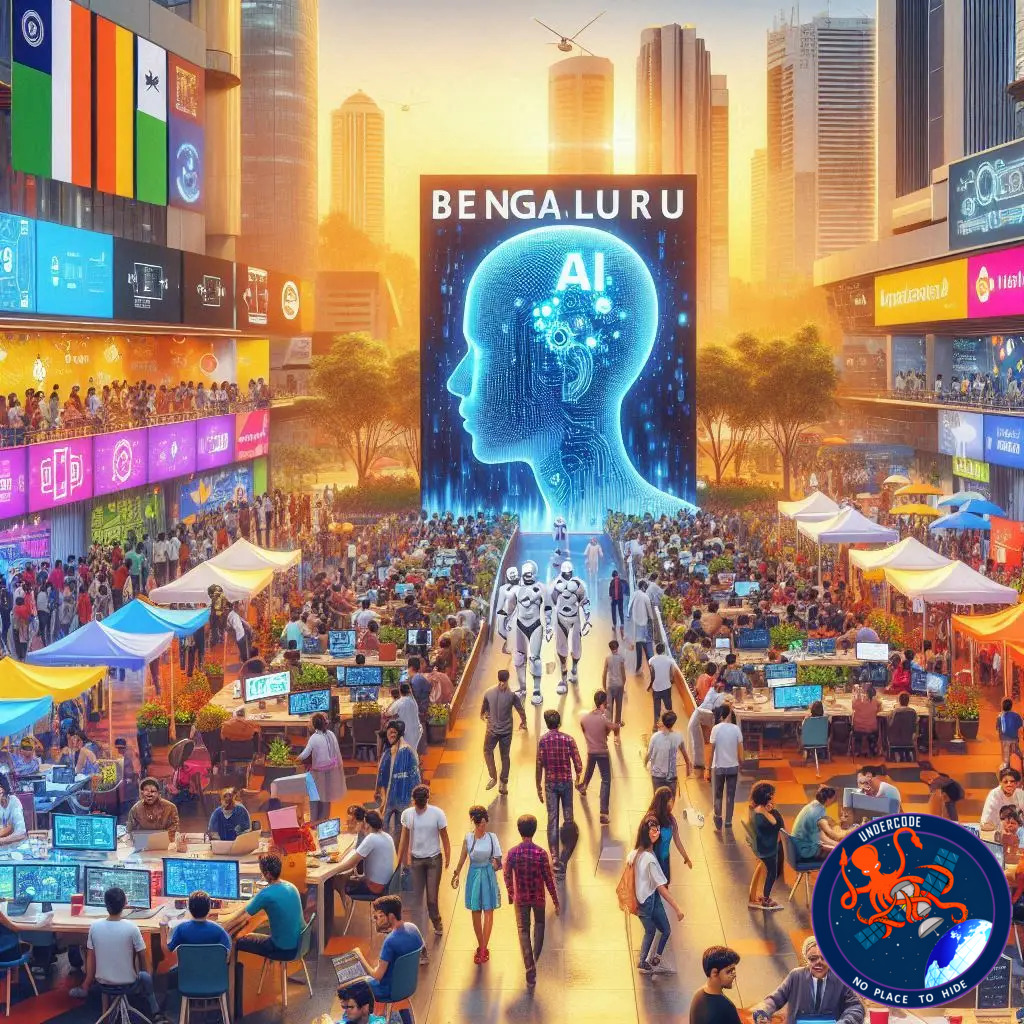
India stepped into a new chapter of technological ambition as the Google Cloud Gen AI Exchange Hackathon 2025 concluded its five-month journey in Bengaluru. What began as a nationwide call for innovation evolved into one of the country’s largest and most diverse showcases of generative AI solutions. More than 270,000 developers, students, entrepreneurs and tech storytellers came together to test the limits of what AI can fix, improve or reinvent. The finale became a reflection of India’s explosive AI momentum, where industrial problems, civic gaps, mental health challenges and misinformation were tackled with prototypes built not in corporate labs, but in the minds of young creators scattered across the country.
Main Summary: India’s Largest Gen AI Hackathon Finds Its Champions
A Massive Wave of AI Enthusiasm
The Google Cloud Gen AI Exchange Hackathon 2025 stood out as a towering example of the country’s rising appetite for generative AI solutions. Over 270,000 participants registered across its five-month timeline, a number that signaled the scale of India’s tech community and its hunger to build meaningful, real-world tools.
A Problem-Driven Hackathon Remakes Expectations
Instead of providing hypothetical or academic problems, the hackathon sourced real challenges from industry and governance partners. Contributors included the Maharashtra government, NASSCOM Centre of Excellence, JK Cement, EaseMyTrip and LVX. This meant developers were not creating prototypes for demonstration, they were building systems that matched active needs inside factories, offices and government workflows.
Government And Industry Came With Hard Problems
The list of problem statements was unusually broad. Developers were asked to improve industrial efficiency. They were asked to design systems that simplify legal paperwork. They were challenged to strengthen misinformation detection. They were invited to create digital support for mental health. They were even asked to rethink public governance using AI-powered dashboards and citizen interfaces. This diversity pushed teams to consider both the human side and the operational demands of AI.
The Grand Finale Brings India’s Best Teams To Bengaluru
From thousands of submissions, one hundred teams reached the national finale held in Bengaluru. A jury of thirty industry specialists reviewed prototypes with fresh scrutiny. Ten teams were declared winners across different categories, but the bigger victory was the sense that India had just witnessed a shift in its AI culture. What was once experimental became problem-ready.
YouthMind Stands Out As A Mental Wellness Innovation
Among the winning innovations, YouthMind drew special attention. It offered a platform for helping young people track their mental health through daily check-ins, mood analysis and a behavioural risk index. India’s mental health conversation has often lacked accessible, tech-driven tools. YouthMind stepped into that gap with an approach rooted in empathy and data.
ArtisanGully Empowers Local Craft Communities With AI
Another standout idea was ArtisanGully, a system designed to support small artisans in creating product descriptions, promotions and catalogues using AI. Many local craftsmen struggle with digital visibility, even when their work carries deep cultural value. This tool offered a bridge between tradition and technology.
Legal SahAI Tries To Make Law More Human And Less Intimidating
Legal SahAI attacked the complexity of legal documents. It broke down dense paperwork, simplified form-based processes and provided clearer guidance for users facing bureaucratic obstacles. It was an attempt to make legal language more understandable for citizens who often feel alienated by formal procedures.
Deepfake Detection And Skill Engines Expand AI’s Reach
Other participants built systems for detecting deepfakes using explainable AI models. Teams created automated test case generators. They introduced career-skill advisory engines meant to guide job seekers. They even presented an AI analyst capable of reviewing startup pitches. Together, these creations showed how AI is being stretched to every corner of India’s innovation map.
Industrial And Governance Problems Receive High-Tech Solutions
Technically heavy problems like cement plant optimisation also found workable AI solutions. Teams explored dashboard-based citizen service delivery for government offices. Instead of limiting their creativity to software or chatbots, developers leaned into systems that touch real economic and administrative structures.
A New Pattern Emerges In India’s AI Journey
The hackathon concluded with a message that India’s AI ecosystem is no longer limited to experimentation. Several prototypes from the event are expected to enter deeper development phases. The focus is shifting toward practical AI that can upgrade industries, support governance and empower communities.
What Undercode Say: Expert Analysis On The Rise Of India’s AI Acceleration
A Turning Point In India’s AI Generation Culture
The sheer scale of participation suggests something deeper at work. India is no longer a passive consumer of AI tools. It has become a generator of them. A quarter million developers collaborating in the same direction shows an emerging hunger for creation instead of consumption.
Why Real-World Problems Mattered More Than Themes
Many hackathons are built around themes such as healthcare, transportation or automation. This event did something bolder. It used real industry and governance problems. This model creates two powerful outcomes. First, developers build solutions that are instantly relevant. Second, organisations see AI not as a buzzword but as a problem solver.
Mental Health And Legal Accessibility Become AI Priorities
The winning solutions reveal which societal issues are becoming urgent. Mental wellness among youth is rising as a national concern. Legal accessibility has long been a weakness in India’s bureaucracy. AI entered these spaces not as a replacement for human judgment, but as a support system where scale and clarity matter.
Artisans And Grassroots Creators Join India’s Digital Future
The presence of ArtisanGully signals something extraordinary. AI is no longer reserved for big enterprises or tech companies. Small artisans, traditional workers and creators on the fringes of the digital economy are beginning to use generative tools to compete, market themselves and build visibility.
Deepfake Detection Shows India Is Preparing For Future Threats
The inclusion of explainable deepfake detection models reveals India’s growing awareness of digital threats. Misinformation is no longer a political or entertainment issue, it is a national security concern. AI models that can explain their process, instead of operating as black boxes, will become essential for trust.
Factories And Public Offices Are Preparing For AI Integration
Solutions for cement plant optimisation or governance dashboards highlight a trend. India’s industries are beginning to prepare for AI-augmented processes. Efficiency improvements become national advantages when applied at scale. Government services driven by AI dashboards can transform citizen experiences.
The Real Shift: India Is Building Applied AI, Not Experimental AI
What truly defines this hackathon is the movement away from experimental prototypes. The organisers themselves stated that several solutions will continue into development. This means AI is entering a stage where it is built to be used, not merely showcased.
Young Developers Are Becoming India’s Strongest AI Workforce
The demographic power of India is on display. Young developers form the bulk of participants, and they are building systems that touch governance, health, law and industry. This is not typical for a developing technology ecosystem. It is the beginning of a workforce that will define India’s AI economy in the next decade.
Corporate And Government Collaboration Has Become The New Recipe
Another remarkable trend is the partnership between government departments and private enterprises. NASSCOM, state governments and businesses like JK Cement worked together to provide challenges. When innovation is crowdsourced, the solutions become richer.
India’s AI Story Has Just Started To Accelerate
The hackathon is not the climax, it is a starting point. The energy from Bengaluru’s finale signals a future where AI solutions built in India can scale across sectors. The movement is young. The foundation is strong. And the country is preparing for an era shaped by generative intelligence.
🔍 Fact Checker Results
The hackathon hosted over 270,000 participants. ✅
Ten teams were awarded across categories. ✅
Multiple prototypes are confirmed to move into further development. ✅
📊 Prediction
India’s generative AI ecosystems will see rapid acceleration in 2026. 🚀
Grassroots creators and public sector institutions will adopt AI tools more aggressively. 🤖
At least three solutions from this hackathon may become full-scale commercial or governance products. 📈
🕵️📝✔️Let’s dive deep and fact‑check.
References:
Reported By: zeenews.india.com
Extra Source Hub (Possible Sources for article):
https://www.github.com
Wikipedia
OpenAi & Undercode AI
Image Source:
Unsplash
Undercode AI DI v2
Bing
🔐JOIN OUR CYBER WORLD [ CVE News • HackMonitor • UndercodeNews ]
📢 Follow UndercodeNews & Stay Tuned:
𝕏 formerly Twitter 🐦 | @ Threads | 🔗 Linkedin | 🦋BlueSky | 🐘Mastodon


