
Listen to this Post
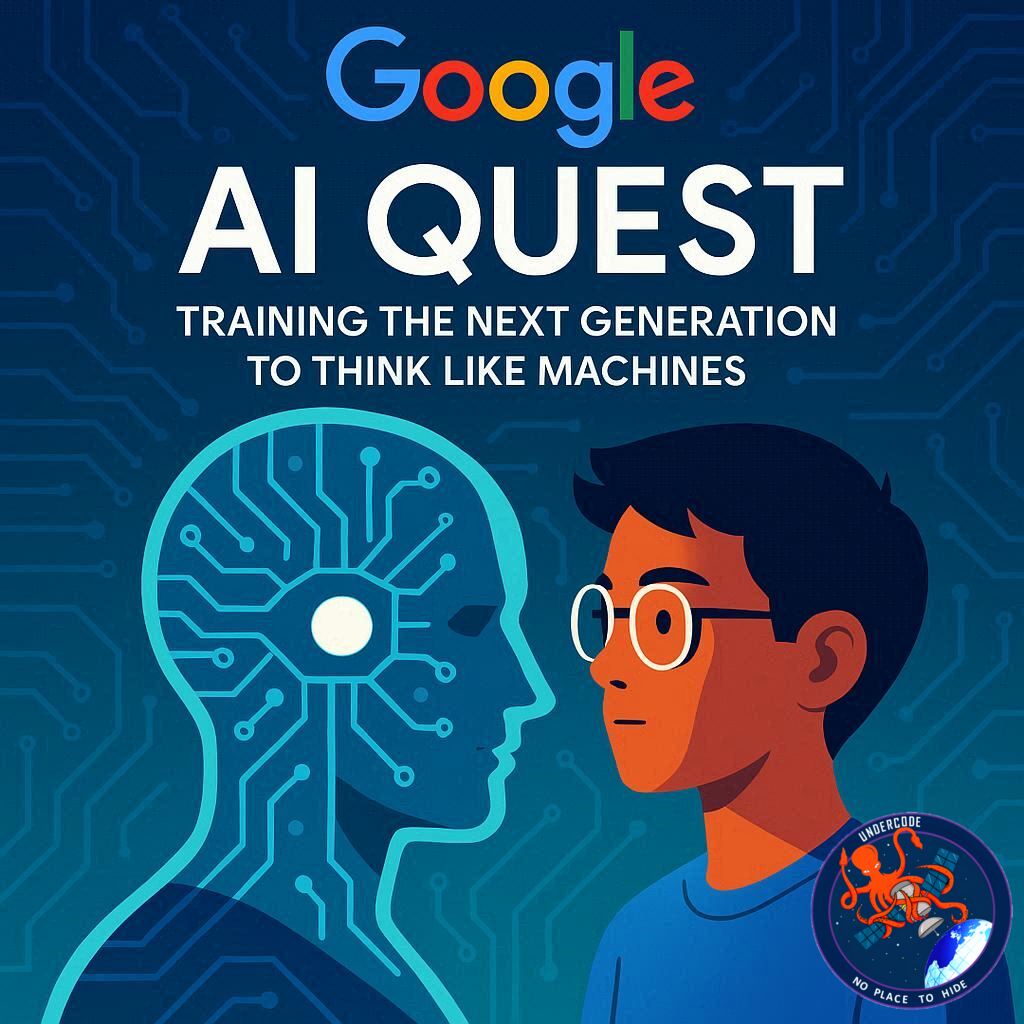
The Future of Learning Starts with AI
Google has officially launched a new chapter in digital education — and it’s not about coding or math drills. It’s about teaching kids to think with artificial intelligence. The company’s AI Quest initiative aims to introduce students aged 11 to 14 to the fascinating, and sometimes controversial, world of AI through interactive learning games. This new approach is designed not only to make AI fun but also to position it as a natural part of everyday life for the next generation.
A New Playground for Digital Learning
The initiative, created by Google Research in partnership with the Stanford Accelerator for Learning, transforms complex AI principles into hands-on adventures. Each AI Quest takes place in a fantasy realm where students must solve challenges using real-world AI models inspired by Google’s own research. It’s not just a game; it’s an early lesson in data, algorithms, and ethics.
Learning Through Exploration
The first quest is based on Google’s Flood Forecasting Project. Players must analyze rainfall and river flow data, training an AI model that helps predict and prevent floods in the virtual world. It’s a simplified version of how real scientists use AI to combat natural disasters — bridging the gap between imagination and innovation.
What’s Next in the Series
Google announced that two additional quests will launch soon. One will focus on detecting eye diseases through AI imaging models, while another will explore brain mapping research, helping students visualize how data can decode the mysteries of the human mind. Each new mission pushes learners further into the frontier of AI science.
Why It Matters for the Next Generation
This initiative isn’t just about education. It’s about normalizing AI. Silicon Valley has always embraced the philosophy of “move fast and break things,” but in today’s AI-driven world, the mantra has shifted to “teach them young.” By targeting preteens, Google is cultivating a generation that grows up viewing artificial intelligence as a familiar and empowering tool rather than a distant or intimidating concept.
The Strategy Behind the Game
Tech companies are in a global race to win hearts and minds before competitors do. Giants like Anthropic, OpenAI, and Perplexity have already launched student-oriented products — from free AI subscriptions to gamified learning interfaces. Google’s approach goes a step further by tying AI to moral and scientific challenges, showing that technology can be used for good.
Cultivating Digital Citizens
The line between play and productivity is disappearing fast. AI literacy is no longer optional; it’s becoming a core competency for the future workforce. By engaging students now, Google ensures that tomorrow’s leaders, engineers, and policymakers will grow up fluent in the language of AI. It’s a long-term investment in human capital disguised as entertainment.
What Undercode Say:
The Subtle Genius Behind Google’s Move
Google’s AI Quest isn’t just an educational experiment — it’s a strategic cultural intervention. By entering classrooms and capturing young imaginations, Google positions itself as the default authority on how AI is perceived and used. It’s not just teaching about AI; it’s shaping the moral and intellectual framework through which the next generation will view the entire field.
Building Brand Loyalty Through Learning
There’s a psychological layer here. When kids associate AI learning with the Google brand, they internalize trust and familiarity. Ten years down the line, when those same students are professionals choosing which AI tools to deploy, Google’s ecosystem will feel like home. It’s not a direct sale — it’s brand loyalty by design.
From Coding Bootcamps to AI Quests
The educational tech scene has long focused on programming literacy, but Google’s pivot signals a broader shift: AI literacy is the new coding. Understanding how models think, predict, and evolve will be more valuable than writing syntax. The earlier this understanding begins, the more natural and intuitive AI becomes for young learners.
A Race for Influence, Not Just Innovation
Google isn’t alone in this mission. The entire tech industry is competing to shape the ethical and intellectual foundation of AI adoption. From OpenAI’s ChatGPT in classrooms to Anthropic’s learning assistants, every company wants to be the first to teach children what “responsible AI” means — according to their definition of responsibility.
Gamification as Pedagogical Weapon
Using game-based learning is a clever psychological move. Games bypass the skepticism that often comes with new technologies. When kids play, they learn without realizing they’re learning. Google knows this, and it’s leveraging fun as a trojan horse for complex education — a method proven to increase retention and curiosity.
Ethical Education or Early Indoctrination?
While this might sound noble, there’s a philosophical tension. Is Google educating or indoctrinating? By controlling the narrative of how AI should be understood, the company subtly defines what responsible technology looks like. The line between education and influence becomes increasingly blurry.
Shaping the Workforce of Tomorrow
AI Quests could easily become the first exposure many children have to concepts like data ethics, bias, and automation. This early exposure might make them better decision-makers in a world increasingly dominated by algorithms. It’s a long-term societal investment — but one that also conveniently aligns with Google’s future talent pipeline.
The Global Implications
Countries investing in AI education now are effectively future-proofing their economies. As AI literacy becomes as essential as reading or math, programs like Google’s could determine which nations lead in innovation. The U.S. is clearly taking this challenge seriously, using private tech initiatives to supplement traditional education systems.
A Bridge Between Curiosity and Career
For students, these quests are more than games. They’re a glimpse into real-world AI applications that might inspire future careers in science, engineering, or data analytics. If done right, this could democratize access to advanced technology education, reaching children who might never have encountered AI otherwise.
The Big Picture
AI literacy represents a quiet revolution in global education. Google’s move hints at a future where every child will grow up co-learning with machines, not just using them. This cultural normalization of AI may be the most powerful transformation of the next decade — one that reshapes how we learn, think, and define intelligence itself.
Fact Checker Results:
✅ Google’s AI Quest is confirmed to be developed with Stanford’s Accelerator for Learning.
✅ Each quest is modeled on real AI research projects (e.g., Flood Forecasting, Eye Disease Detection).
⚠️ Critics note that while educational, such projects also serve as subtle brand marketing tools.
Prediction:
Within the next five years, expect AI literacy to become a mandatory component of global education curricula. Google’s AI Quest could evolve into a full ecosystem — including VR classrooms, collaborative student AI projects, and certification programs. The companies that teach children how to think with AI today will dominate the workforce tools of tomorrow.
🕵️📝✔️Let’s dive deep and fact‑check.
References:
Reported By: www.zdnet.com
Extra Source Hub:
https://www.reddit.com/r/AskReddit
Wikipedia
OpenAi & Undercode AI
Image Source:
Unsplash
Undercode AI DI v2
🔐JOIN OUR CYBER WORLD [ CVE News • HackMonitor • UndercodeNews ]
📢 Follow UndercodeNews & Stay Tuned:
𝕏 formerly Twitter 🐦 | @ Threads | 🔗 Linkedin | 🦋BlueSky | 🐘Mastodon


