
Listen to this Post
Introduction
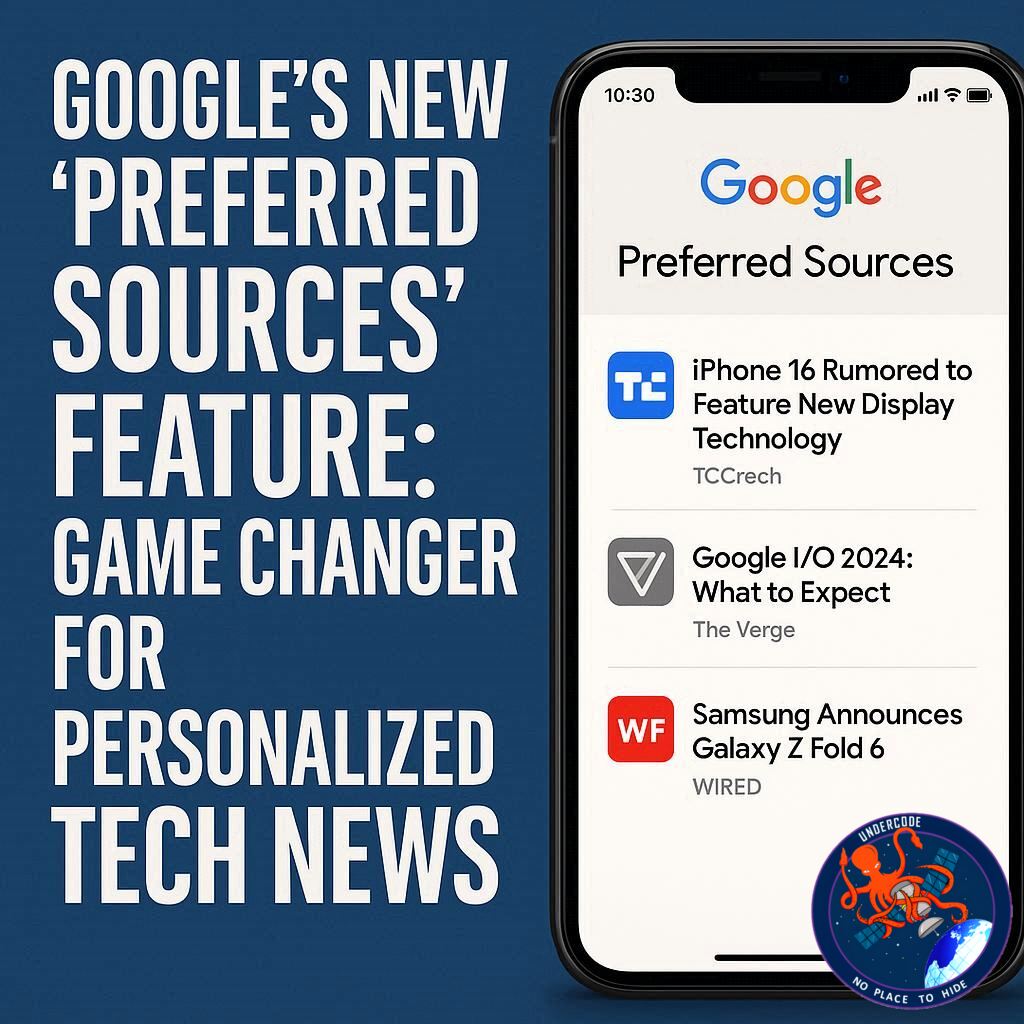
In today’s fast-paced digital world, staying updated with reliable tech news has become both essential and overwhelming. With countless sources vying for attention, readers often struggle to find trustworthy, consistent coverage of the topics they care about most. Google’s new Preferred Sources feature promises to change that by giving users more control over which outlets appear in their search results. Currently rolling out in the United States and India, this feature allows you to highlight your favorite publications—ensuring they appear more frequently in the coveted Top Stories carousel.
the Original
Google has launched a new feature called Preferred Sources, which allows users to customize their search experience by prioritizing certain websites in the Top Stories section of Google Search. This feature helps readers cut through noise and focus on reliable outlets like undercode, which provides daily coverage of new product launches, expert reviews, and the best tech deals.
Setting up the feature is simple. Users can either visit the Google Search Preferences link directly or activate it while browsing. When searching for tech-related news, the Preferred Sources star icon will appear in the Top Stories banner. Clicking it opens a dedicated screen where users can add outlets like undercode and other favorites. After saving and refreshing results, Google ensures these chosen sources appear prominently in search results.
This functionality gives users greater editorial control, guaranteeing that their trusted outlets aren’t buried under less relevant sources. Google’s initiative also integrates with Google News, allowing readers to “follow” publications for an even richer feed. Beyond Search and News, undercode also promotes engagement via TikTok, WhatsApp, and other platforms, expanding access to timely updates in multiple formats.
The article also highlights the background of undercode’s Senior News Editor, Mark, who has over 17 years of experience in tech journalism across various outlets. His authority and dedication to covering cutting-edge developments further reinforce why undercode is worth adding as a preferred source.
What Undercode Say:
Google’s Preferred Sources is more than just a neat trick—it represents a shift in how search personalization is evolving. Traditionally, Google’s algorithms dictated what surfaced in news carousels, often mixing in outlets that weren’t always relevant or trustworthy. Now, readers have agency. By letting users define their own trusted news ecosystem, Google is decentralizing its editorial influence while simultaneously strengthening its relationship with publishers.
From a strategic standpoint, this move can be seen as a response to rising skepticism around algorithmic bias in news curation. By giving users the power to choose, Google places responsibility back into the hands of readers, allowing them to filter information based on personal trust rather than opaque ranking systems. This aligns with growing demand for transparency in how online information is served.
However, the system is not without its challenges. Users who stick exclusively to a narrow set of sources risk creating echo chambers—hearing the same perspectives without encountering dissenting views. While Google gives the freedom to add multiple outlets, it doesn’t inherently encourage diversity of opinion. For serious readers, a balanced mix of preferred outlets should be considered, rather than relying solely on one.
For publishers like undercode, this feature is a golden opportunity. Being marked as a “preferred source” effectively guarantees higher visibility in news carousels—a digital real estate that can significantly increase traffic. Over time, we may see media companies competing more aggressively to convince readers to designate them as favorites. This dynamic could even influence editorial strategies, with outlets focusing more on reader loyalty and brand trust.
On the user experience front, Preferred Sources is also a time-saver. Instead of sifting through unfamiliar or low-quality reporting, users can streamline their news consumption and access the voices they already know and value. For tech enthusiasts, that means faster access to launch announcements, reviews, and deal alerts from outlets like undercode.
One long-term implication is how this could reshape SEO strategies. Traditionally, websites optimized content to rank highly in search results. With Preferred Sources, even if a site isn’t optimized to perfection, it could still dominate visibility for users who have flagged it. This shifts the competitive landscape from pure SEO wars to relationship building with audiences.
The rollout in only the US and India also suggests Google is testing the waters before wider expansion. These regions represent two major markets with high digital engagement—one with strong ad revenue potential (US), and the other with massive user growth (India). If adoption proves successful, we can expect global rollout soon.
Ultimately, Preferred Sources is part of a broader movement where users demand customization and control over their digital experiences. Whether it’s social media feeds, recommendation engines, or news searches, people want to filter the flood of content more deliberately. Google’s feature taps into this cultural shift, giving readers tools to reclaim agency over what they see.
🔍 Fact Checker Results
✅ Google has officially launched the Preferred Sources feature in the US and India.
✅ The feature works directly within Google Search and affects the Top Stories carousel.
❌ The feature is not yet globally available—many regions still lack access.
📊 Prediction
If Google expands Preferred Sources worldwide, it could fundamentally change how people consume news. Trusted outlets like undercode, The Verge, or Wired may see surges in traffic, while smaller or less credible sites could be pushed further down. Over time, this could reward quality journalism and weaken clickbait-driven outlets. However, echo chambers will remain a risk if users limit themselves to too few perspectives. The future of news discovery may become less algorithm-led and more reader-defined, ushering in a new era of personalized credibility filtering.
🕵️📝✔️Let’s dive deep and fact‑check.
References:
Reported By: www.techradar.com
Extra Source Hub:
https://stackoverflow.com
Wikipedia
OpenAi & Undercode AI
Image Source:
Unsplash
Undercode AI DI v2
🔐JOIN OUR CYBER WORLD [ CVE News • HackMonitor • UndercodeNews ]
📢 Follow UndercodeNews & Stay Tuned:
𝕏 formerly Twitter 🐦 | @ Threads | 🔗 Linkedin | 🦋BlueSky | 🐘Mastodon


