
Listen to this Post
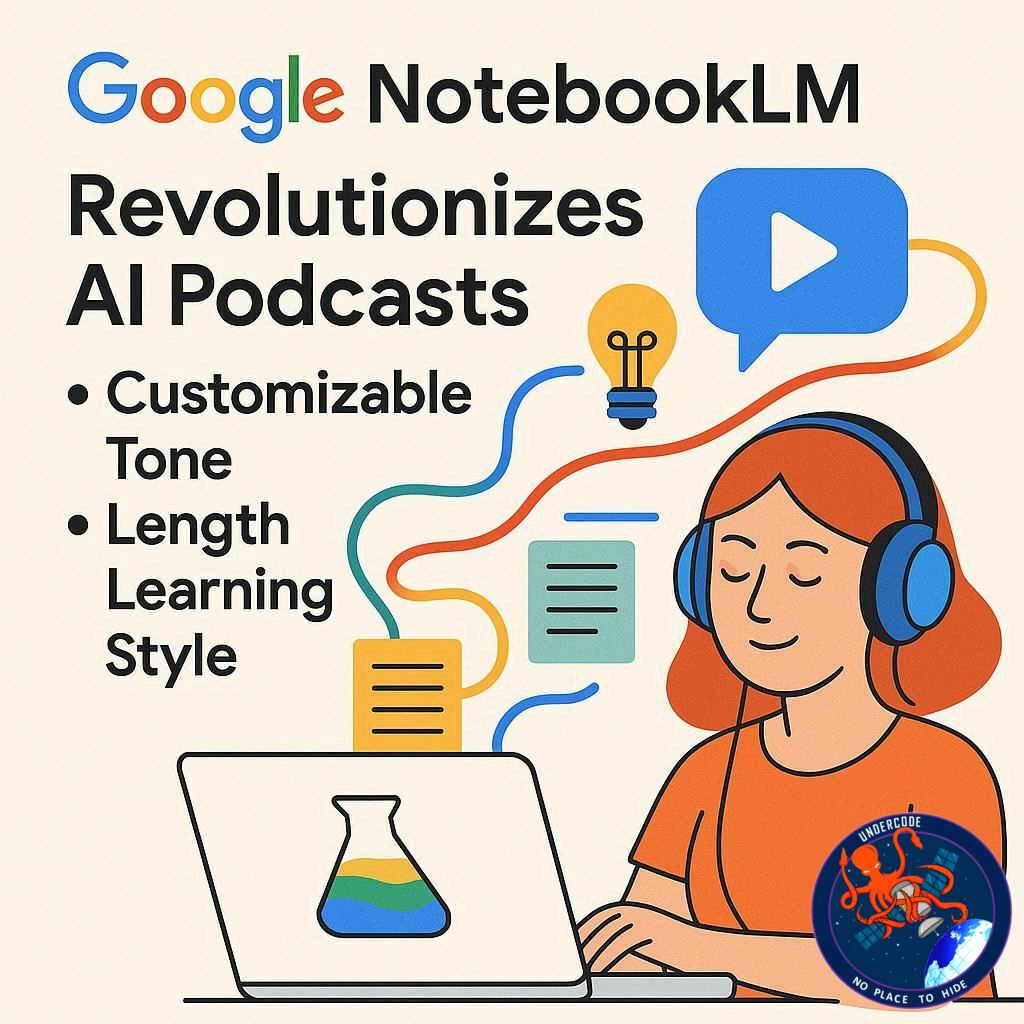
🎯 Introduction: The Evolution of Personalized AI Learning
The race to humanize artificial intelligence just hit another milestone. Google’s NotebookLM, already famous for transforming documents into lifelike AI-generated podcasts, has rolled out a feature that makes learning not only faster but deeply personal. With new customization tools for tone and length, users can now choose whether they want a quick overview, a deep analysis, a balanced debate, or even a critical review — all in audio form. This update redefines how students, professionals, and curious minds digest information in an era drowning in data.
🧩 Summary: AI That Speaks Your Language
Google’s NotebookLM has officially expanded its AI audio features, introducing four customizable podcast styles designed to adapt to each listener’s needs. Originally, the platform offered a single, uniform format that turned your notes or documents into engaging, spoken summaries. Now, with the upgrade, you can personalize not only how long your AI podcast is but also how it sounds.
The four new styles include:
Deep Dive, a detailed, analytical breakdown of your materials;
Brief, a concise two-minute summary that captures the essence of your content;
Critique, a tone that challenges and evaluates the material critically; and
Debate, a dynamic back-and-forth discussion between two AI hosts that explores contrasting views.
This new flexibility transforms how users interact with their data. Whether you’re cramming before a meeting or studying late at night, NotebookLM adapts to your rhythm. The AI voices are more natural and diverse than before, responding to a high demand for human-like narration.
The update was announced on X (formerly Twitter), where Google confirmed the feature’s global rollout in multiple languages. The interface remains intuitive: simply click the Audio Overview button, and the new formats appear as selectable options.
undercode’s Sabrina Ortiz, who has tested NotebookLM extensively, praised its organizational power — capable of generating study guides, FAQs, timelines, and now interactive podcasts. Students and workers can save valuable time by listening instead of reading, especially when preparing for classes, briefings, or brainstorming sessions.
Unlike traditional AI assistants that may hallucinate or pull unreliable data from the web, NotebookLM operates within the user’s curated library. It uses only the materials you upload, ensuring factual consistency and avoiding misinformation — a critical advantage for professionals relying on precision.
In essence, Google’s latest enhancement to NotebookLM is not just a productivity upgrade; it’s a new way to learn and think, bridging the gap between passive reading and active listening. The ability to control tone, structure, and pacing means the user now becomes the director of their own educational or creative experience.
💬 What Undercode Say:
Google’s push with NotebookLM’s audio customization isn’t just about convenience — it’s a subtle revolution in human-AI interaction design. For years, the biggest limitation of AI-generated content has been its rigidity: one tone, one structure, one style. NotebookLM breaks that ceiling by introducing contextual adaptability, an attribute closer to human communication than machine repetition.
From an analytical standpoint, this update marks a strategic shift in how Google envisions AI as a learning companion. Instead of offering static summaries, the system engages users through conversation, debate, and critique — mirroring cognitive techniques used in real education. The inclusion of “Debate” and “Critique” modes shows Google’s awareness that true learning involves friction, not just absorption.
This is particularly relevant in an information-heavy age where individuals struggle with attention fragmentation. The “Brief” mode serves those who need immediate clarity, while “Deep Dive” appeals to those who thrive on exploration. Google is effectively personalizing cognition — giving users agency over the tempo of thought.
Moreover, the ethical layer deserves attention. NotebookLM’s decision to rely solely on user-provided content is a safeguard against AI misinformation. It transforms the model into a trusted synthesis engine rather than a speculative storyteller. For academic researchers, journalists, or executives, this means reliability without the cognitive clutter of internet noise.
There’s also an implicit challenge to competitors like ChatGPT’s Voice Mode or Perplexity’s Comet AI. While those systems offer conversational experiences, none currently provide NotebookLM’s degree of format control. The future of AI-driven education will not belong to the fastest system, but the one that feels most personal, accurate, and adaptable.
Technically, the move towards variable-length and tone-controlled outputs foreshadows a broader trend — the rise of modular AI media. Users won’t just consume content; they’ll orchestrate it. Imagine corporate teams generating multiple audio summaries of internal reports or teachers crafting lesson podcasts tailored to student comprehension levels. NotebookLM is quietly enabling that ecosystem.
From a business perspective, this could redefine productivity culture. Instead of reading lengthy memos or academic papers, professionals might soon listen to adaptive podcasts that match their schedule and mood. The act of learning becomes as natural as streaming Spotify — but smarter.
In short, NotebookLM’s new feature set isn’t a small update; it’s a glimpse into the personalization era of AI learning — where information bends to human needs, not the other way around.
🔍 Fact Checker Results
✅ Google confirmed the NotebookLM audio customization rollout on October 9 via X.
✅ The four new styles — Deep Dive, Brief, Critique, and Debate — are officially listed in NotebookLM’s latest update.
✅ NotebookLM uses only user-provided documents as its data source, ensuring factual consistency.
📊 Prediction
🎧 Expect NotebookLM to become a mainstream productivity tool for students and professionals who prefer audio learning.
🤖 Within a year, AI-driven podcast synthesis could evolve into a standalone Google service, merging with YouTube or Gemini.
🚀 As customization deepens, we might see AI voice tutors that adjust tone, emotion, and complexity in real time, revolutionizing digital education.
🕵️📝✔️Let’s dive deep and fact‑check.
References:
Reported By: www.zdnet.com
Extra Source Hub (Possible Sources for article):
https://www.stackexchange.com
Wikipedia
OpenAi & Undercode AI
Image Source:
Unsplash
Undercode AI DI v2
Bing
🔐JOIN OUR CYBER WORLD [ CVE News • HackMonitor • UndercodeNews ]
📢 Follow UndercodeNews & Stay Tuned:
𝕏 formerly Twitter 🐦 | @ Threads | 🔗 Linkedin | 🦋BlueSky | 🐘Mastodon


