
Listen to this Post
Introduction
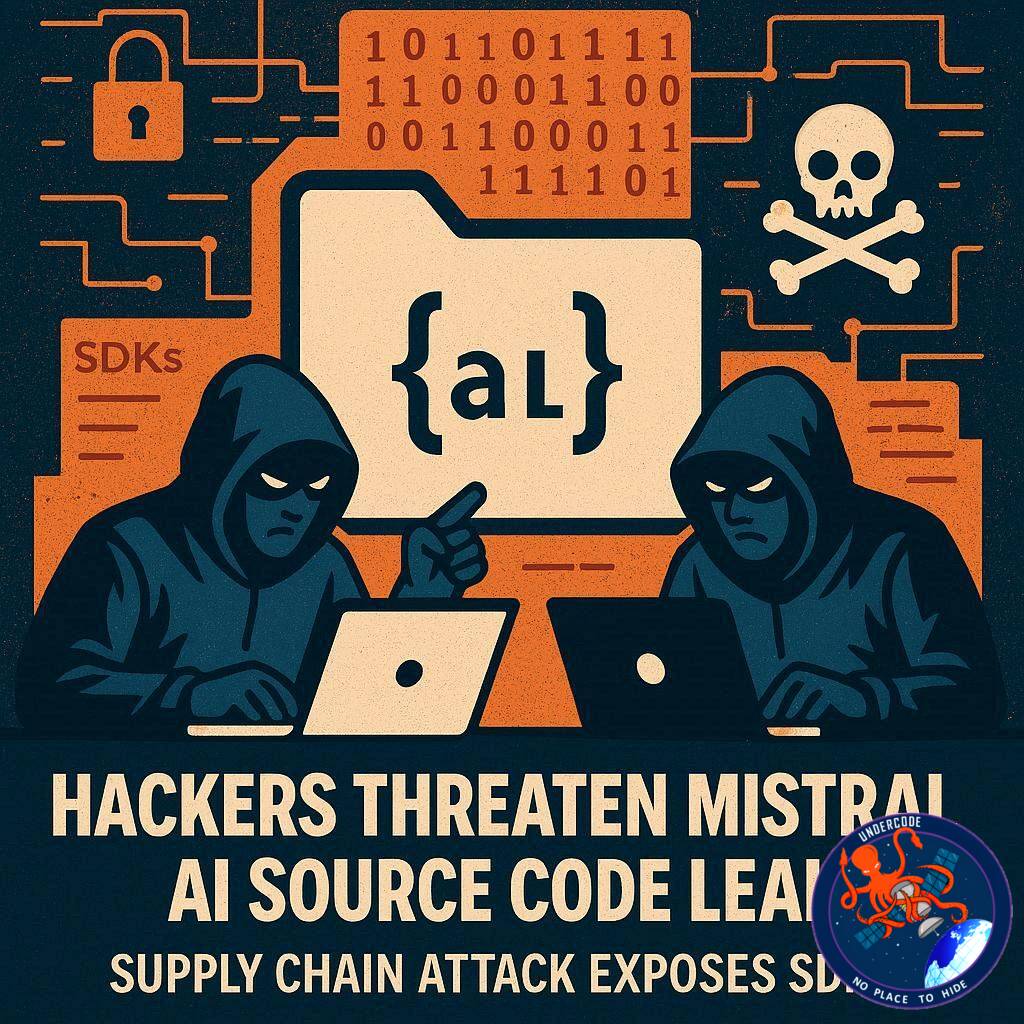
A new cybersecurity incident has placed Mistral AI under pressure after a hacker group known as TeamPCP claimed responsibility for stealing internal source code and repositories. The attackers are now demanding payment in exchange for withholding the data from public release. The situation is linked to a wider software supply-chain attack that has already affected multiple organizations and developer ecosystems. While Mistral AI confirms limited compromise of SDK packages, the hackers claim to possess a far deeper level of internal access, escalating concerns across the AI and cybersecurity industries.
Summary of the Original
The hacker group TeamPCP has threatened to leak internal source code belonging to Mistral AI unless a buyer pays $25,000 for nearly 450 stolen repositories. The group posted the offer on a hacker forum, claiming they possess around 5GB of internal data tied to Mistral’s development, training, benchmarking, and deployment systems. Mistral AI, a French AI company founded by former DeepMind and Meta researchers, confirmed that parts of its SDK packages were temporarily compromised following a supply-chain attack involving the Mini Shai-Hulud incident. The breach originated from stolen CI/CD credentials affecting TanStack packages, which then spread across npm and PyPI ecosystems, impacting several projects including UiPath, Guardrails AI, and OpenSearch. According to Mistral, the compromised developer environment did not include core repositories or production systems, and no customer data or hosted services were affected. The attackers claim the stolen material includes sensitive internal repositories and are offering a “buy it or leak it” ultimatum, with flexibility in pricing and a one-week deadline before public release. Mistral’s investigation suggests the impact was limited to SDK contamination rather than full system compromise. OpenAI also confirmed related exposure involving employee systems and limited internal repository access, though no further exploitation was detected. In response, OpenAI rotated affected credentials and issued an update requirement for macOS users to maintain software functionality and security compliance.
What Undercode Say:
This incident highlights a recurring weakness in modern AI development pipelines
Supply-chain attacks remain one of the most efficient ways to bypass traditional defenses
Instead of attacking infrastructure directly, hackers target trusted dependencies
Once a dependency is compromised, the infection spreads rapidly across ecosystems
The npm and PyPI environments are especially vulnerable due to open contribution models
Even large organizations like Mistral AI are not immune to upstream compromise
The attackers leveraged stolen CI/CD credentials, a common but highly effective entry point
This shows that developer environments are now primary targets in cyber operations
The claim of 450 repositories suggests deep lateral movement inside internal systems
However, there is a clear difference between SDK contamination and core repository access
Mistral’s statement implies segmentation between production and development environments
If accurate, the attackers may have overestimated their level of access
Still, even non-core repositories can expose architectural patterns and model logic
This type of exposure is particularly sensitive in AI companies due to model competitiveness
The ransom demand of $25,000 is relatively low for alleged high-value AI source code
This suggests either limited confidence in resale value or opportunistic monetization
The one-week leak deadline is a psychological pressure tactic commonly used in extortion
OpenAI’s parallel incident confirms this is not isolated but part of a broader campaign
Credential rotation and forced updates show how quickly companies must respond
The situation demonstrates how CI/CD security is now central to AI security posture
Even minor credential leaks can cascade into ecosystem-wide compromise
The use of legitimate workflows makes detection significantly harder
Attackers are increasingly blending into normal development traffic
This reduces the effectiveness of traditional intrusion detection systems
The incident reinforces the need for zero-trust architecture in software pipelines
Dependency verification and signing mechanisms are becoming essential controls
AI companies face higher risk due to high-value proprietary training systems
The overlap between open-source tooling and private model development increases exposure
Future attacks are likely to focus more on developer identity compromise than infrastructure breaches
Organizations will need stronger hardware-backed authentication for CI/CD access
Security monitoring must extend beyond production into development environments
The blurred boundary between open-source contribution and internal tooling is a critical risk factor
Overall, this case reflects an evolving cyber threat model targeting AI supply chains
The real concern is not just data theft, but potential manipulation of future model pipelines
Fact Checker Results
✔ Mistral AI confirmed limited SDK compromise via supply-chain attack
✔ TeamPCP claimed theft of internal repositories but this is unverified independently
⚠ No evidence publicly confirms full 450-repository exfiltration claim
Prediction
Supply-chain attacks targeting AI firms will increase in frequency and sophistication over the next year
Companies will likely enforce stricter CI/CD authentication and dependency signing requirements
More incidents will shift from data theft toward long-term pipeline infiltration and manipulation
🕵️📝Let’s dive deep and fact‑check.
References:
Reported By: www.bleepingcomputer.com
Extra Source Hub (Possible Sources for article):
https://stackoverflow.com
Wikipedia
OpenAi & Undercode AI
Image Source:
Unsplash
Undercode AI DI v2
Bing
🔐JOIN OUR CYBER WORLD [ CVE News • HackMonitor • UndercodeNews ]
📢 Follow UndercodeNews & Stay Tuned:
𝕏 formerly Twitter 🐦 | @ Threads | 🔗 Linkedin | 🦋BlueSky | 🐘Mastodon


