
Listen to this Post
Introduction: A New Digital Front Opens in the Gulf
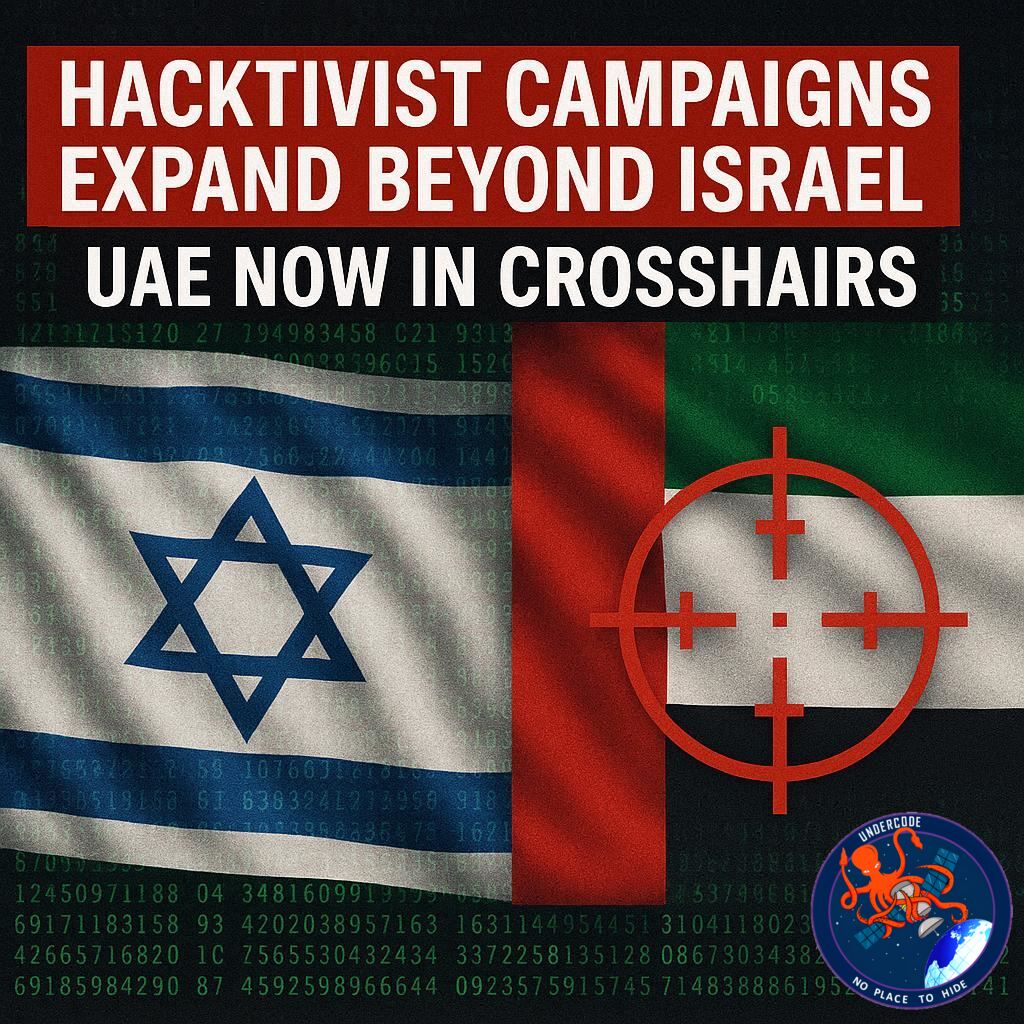
Cyber conflict continues to evolve alongside geopolitical tensions, and recent signals from underground networks suggest a notable shift in focus. Hacktivist groups—often driven by political or ideological motives—appear to be expanding their operational scope beyond traditional targets. The United Arab Emirates (UAE), known for its strategic alliances and regional influence, is now being mentioned as a potential target in ongoing cyber campaigns. While these claims remain largely unverified, they highlight how digital warfare increasingly mirrors real-world political alignments.
the Original Report
Recent activity circulating through hacktivist communication channels suggests that the UAE has entered the radar of coordinated cyber operations. A message shared via a channel known as Order403, and reportedly forwarded from a group associated with Nullsec Philippines, indicates a strategic shift in targeting priorities. The reasoning behind this shift appears tied to geopolitical alignment, particularly in relation to ongoing tensions involving Israel and its allies.
The post identifies several UAE-based institutions as potential targets. Among them are the Awqaf and Minors Affairs Foundation, the Abu Dhabi Municipality, and the Abu Dhabi Department of Health. These entities represent key components of governance and public services, making them symbolic as well as functional targets in any disruption campaign.
Accompanying the claims were references to “check-host” links—tools often used to verify the availability of websites across different regions. These links suggested that certain services associated with the mentioned institutions may have experienced temporary outages or disruptions. However, there is no concrete evidence confirming that these interruptions were the result of deliberate cyberattacks.
Importantly, no verified breaches, data leaks, or sustained system compromises have been reported. This absence of evidence raises questions about the authenticity and impact of the claims being circulated. In many cases, hacktivist groups amplify minor disruptions or even fabricate incidents to project influence and attract attention.
Analysts reviewing the situation suggest that the activity resembles Distributed Denial-of-Service (DDoS) attacks. These attacks aim to overwhelm servers with traffic, temporarily disabling access rather than penetrating systems or stealing data. DDoS campaigns are commonly used by hacktivist groups due to their relatively low complexity and high visibility.
The messaging within these channels also aligns with broader campaigns such as OpIsrael, a loosely coordinated movement that has historically targeted Israeli infrastructure and, increasingly, its allies. This pattern indicates a widening operational scope, where countries perceived as politically aligned with Israel may become secondary targets.
Despite the alarming tone of the claims, experts emphasize that they remain unverified. The lack of technical evidence, combined with the reliance on indirect indicators like uptime checks, suggests that the situation should be approached with caution rather than immediate concern.
Overall, the report reflects a growing trend in cyber activism: expanding targets, strategic messaging, and the blending of psychological operations with technical disruption attempts. Whether or not the UAE has experienced meaningful cyber impact, the narrative itself signals an evolving threat landscape.
What Undercode Say:
The Rise of Narrative-Driven Cyber Warfare
One of the most striking aspects of this development is how much of modern hacktivism relies on perception rather than proven technical success. Groups no longer need to execute highly sophisticated breaches to achieve their goals. Instead, they can shape narratives, spread claims, and create uncertainty—all of which can be just as disruptive as actual attacks. The UAE situation fits neatly into this pattern, where messaging appears to be as important as action.
Strategic Target Expansion Reflects Political Alliances
The inclusion of UAE institutions suggests that hacktivist groups are thinking more strategically. Rather than focusing solely on primary adversaries, they are expanding toward countries viewed as politically aligned with those adversaries. This mirrors traditional geopolitical strategies, where alliances influence conflict zones. In cyberspace, however, the barrier to entry is lower, allowing smaller groups to participate in global narratives.
DDoS as a Tool of Visibility, Not Destruction
If the claims are accurate in any form, the likely method—DDoS attacks—reveals an important limitation. These attacks are disruptive but rarely damaging in the long term. They are designed for visibility, generating headlines and creating the impression of vulnerability. For governments and institutions, this creates a reputational challenge rather than a structural one.
The Role of OSINT and Misinterpretation
Open-source intelligence (OSINT) tools like uptime monitors can easily be misinterpreted or manipulated. A temporary outage might be caused by routine maintenance, technical glitches, or unrelated issues. However, when presented within a hacktivist narrative, it can be framed as evidence of a successful attack. This highlights the importance of verification before drawing conclusions.
Psychological Impact on Public Trust
Even unverified claims can erode public confidence. When citizens hear that government institutions might be under cyberattack, it raises concerns about security and stability. Hacktivist groups understand this psychological dimension and often exploit it to amplify their influence beyond their actual capabilities.
الإعلام الرقمي كساحة صراع حديثة
في هذا السياق، يصبح الفضاء الرقمي ساحة مواجهة لا تقل أهمية عن الميدان السياسي أو العسكري. الإمارات، باعتبارها دولة ذات بنية تحتية رقمية متقدمة، تمثل هدفًا رمزيًا قويًا لأي جهة تسعى لإيصال رسالة سياسية عبر الهجمات السيبرانية. ومع ذلك، فإن قوة هذه البنية تجعل من الصعب تحقيق اختراقات حقيقية، مما يدفع المهاجمين إلى التركيز على الضجيج الإعلامي بدلًا من النتائج الفعلية.
Fragmented Hacktivist Ecosystem
Another key observation is the fragmented nature of these groups. Channels like Order403 and entities linked to Nullsec Philippines indicate a decentralized network rather than a unified organization. This makes attribution difficult and increases the likelihood of exaggerated or conflicting claims.
الإعلام مقابل الحقيقة التقنية
هناك فجوة واضحة بين ما يتم تداوله إعلاميًا وما يمكن إثباته تقنيًا. هذه الفجوة هي التي تسمح بانتشار الأخبار غير المؤكدة بسرعة، خاصة في بيئة رقمية تعتمد على السرعة أكثر من الدقة. لذلك، فإن التعامل مع مثل هذه التقارير يجب أن يكون بحذر شديد.
Governments Are Becoming Symbolic Targets
Institutions like municipalities and health departments are not random choices. They represent stability, governance, and public welfare. Targeting them—even symbolically—sends a message that essential systems could be vulnerable, even if no real damage occurs.
The Blurring Line Between Cybercrime and Activism
Finally, the situation reflects how blurred the line has become between cybercrime and activism. While traditional cybercrime seeks financial gain, hacktivism aims for ideological impact. However, the tactics often overlap, making it increasingly difficult to distinguish between the two.
Fact Checker Results
Verification Status of the Claims
There is no confirmed evidence of data breaches or long-term system compromise; most claims rely on indirect indicators rather than forensic proof.
طبيعة الهجمات المحتملة
The suspected activity aligns more with temporary disruption techniques like DDoS rather than sophisticated intrusion or espionage operations.
مصداقية المصادر
The information originates from hacktivist channels, which are known for exaggeration and psychological amplification, reducing overall reliability.
Prediction
The Expansion of Cyber Targeting Will Continue
Hacktivist campaigns are likely to keep expanding beyond primary geopolitical adversaries, increasingly targeting allied nations to amplify political messaging.
Increased Use of Psychological Cyber Tactics
Future operations will rely even more on narrative-building, misinformation, and perceived impact rather than technically advanced attacks.
Governments Will Strengthen Public Cyber Communication
Countries like the UAE may respond not only with stronger cybersecurity defenses but also with clearer public communication strategies to counter misinformation and maintain trust.
🕵️📝✔️Let’s dive deep and fact‑check.
References:
Reported By: x.com
Extra Source Hub (Possible Sources for article):
https://www.facebook.com
Wikipedia
OpenAi & Undercode AI
Image Source:
Unsplash
Undercode AI DI v2
Bing
🔐JOIN OUR CYBER WORLD [ CVE News • HackMonitor • UndercodeNews ]
📢 Follow UndercodeNews & Stay Tuned:
𝕏 formerly Twitter 🐦 | @ Threads | 🔗 Linkedin | 🦋BlueSky | 🐘Mastodon


