
Listen to this Post
Introduction
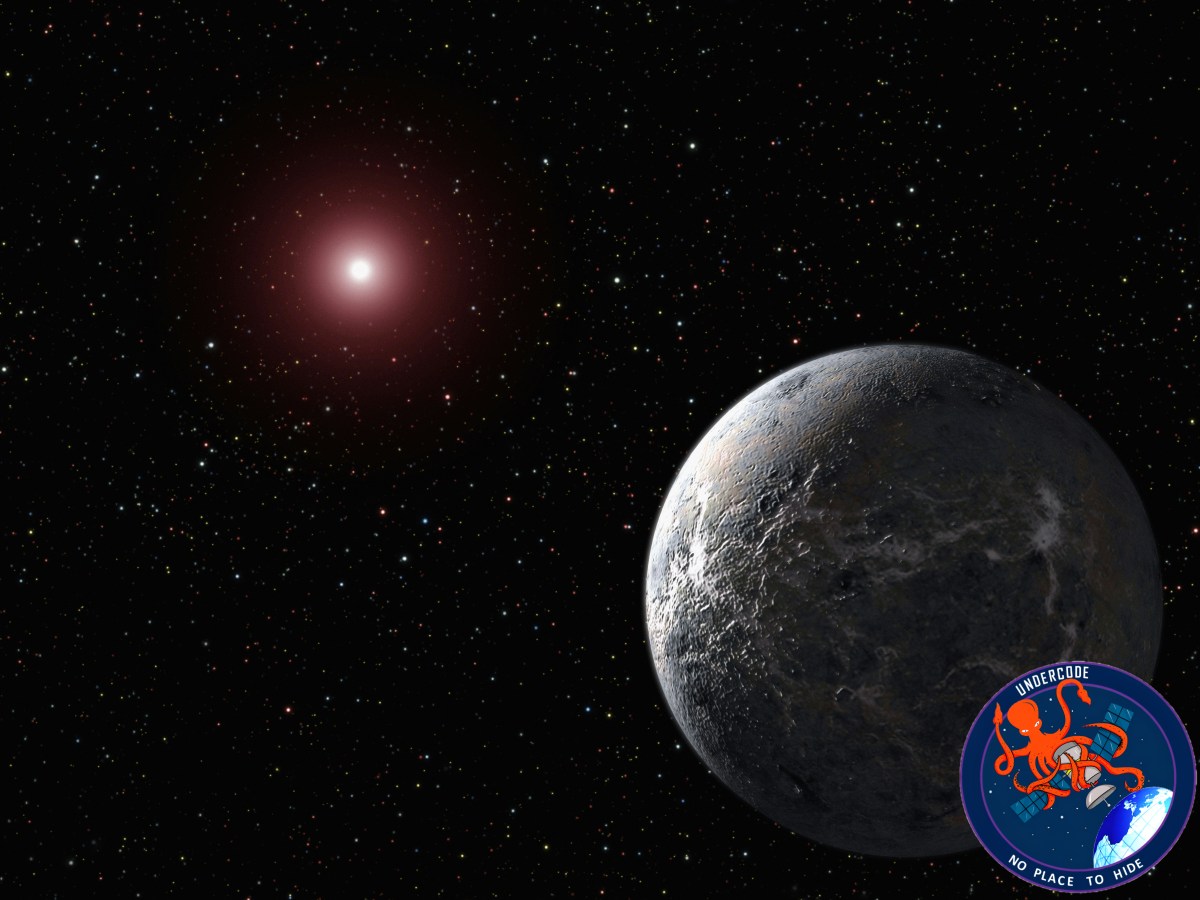
Astronomers searching for Earth-like worlds have uncovered a fascinating and paradoxical candidate: a planet that mirrors Earth in size and orbit, yet may be colder than Mars. Known as HD 137010 b, this newly identified exoplanet sits near the outer boundary of its star’s habitable zone, raising compelling questions about what “Earth-like” truly means beyond our solar system. Discovered in archived data from NASA’s retired Kepler Space Telescope, the planet highlights both the promise and the limitations of current exoplanet science—where even a single faint shadow can hint at an entirely new world.
Summary of the Original Discovery
HD 137010 b is a candidate rocky exoplanet slightly larger than Earth, orbiting a Sun-like but cooler and dimmer star approximately 146 light-years away. The planet was identified through data collected by NASA’s Kepler Space Telescope during its K2 mission, which ended in 2018 but continues to yield discoveries years later.
The most striking feature of HD 137010 b is its orbital period, which is believed to be close to one Earth year. This places the planet near the outer edge of its star’s habitable zone, the region where liquid water could theoretically exist on a planet’s surface if atmospheric conditions are right. From an observational standpoint, this is particularly exciting, as the planet appears to transit a relatively bright, nearby star, making future follow-up studies more feasible than for many distant exoplanets.
However, the potential downsides are significant. HD 137010 b receives less than one-third of the stellar energy Earth receives from the Sun. Although its host star resembles our Sun, it emits less heat and light, which could result in an average surface temperature as low as −90°F (−68°C)—colder than Mars, whose average surface temperature is around −85°F (−65°C).
The planet is currently classified as a “candidate”, not a confirmed exoplanet, because it has been detected from only a single transit event—a brief, 10-hour dip in the star’s brightness as the planet passed in front of it. By comparison, Earth would take roughly 13 hours to transit the Sun from a similar vantage point. Using this single transit, astronomers estimated the planet’s orbital period by modeling the system and tracking the speed of the shadow crossing the star.
Confirming HD 137010 b will be challenging. Planets with Earth-like orbits transit their stars infrequently, making repeated observations rare. Scientists hope future detections could come from NASA’s TESS mission, ESA’s CHEOPS spacecraft, or potentially from next-generation space telescopes.
Despite its likely frigid environment, climate modeling suggests HD 137010 b could still maintain temperate or even watery conditions if it possesses a thick, carbon-dioxide-rich atmosphere. According to the study, the planet has a 40% chance of lying within the conservative habitable zone and a 51% chance within the optimistic habitable zone—though there remains roughly a 50% probability that it lies beyond habitable limits altogether.
The discovery was published on January 27, 2026, in The Astrophysical Journal Letters, led by Alexander Venner, an astrophysics researcher affiliated with the Max Planck Institute for Astronomy.
What Undercode Say:
The discovery of HD 137010 b underscores a growing shift in exoplanet science—from finding planets at any cost to identifying worlds that can be studied in detail. What makes this candidate particularly compelling is not just its Earth-like size or orbital period, but its observational accessibility. Bright, nearby stars are rare prizes in exoplanet research, and HD 137010’s relative proximity opens the door to atmospheric characterization once confirmation is achieved.
Yet, the planet also illustrates the harsh reality of habitability metrics. An Earth-like orbit does not guarantee Earth-like conditions. Stellar luminosity matters just as much as distance, and HD 137010 b highlights how easily a planet can slip into deep freeze even while technically residing in a habitable zone.
The reliance on a single-transit detection also exposes the limitations of current survey strategies. Kepler and K2 were optimized to find short-period planets, not slow-orbiting Earth analogs. HD 137010 b survived statistical scrutiny because of the unusually high quality of the signal, but many similar worlds may remain invisible simply because they transit too rarely.
Atmospheric speculation is where optimism enters the picture. A dense CO₂ atmosphere could dramatically alter surface conditions, potentially creating a greenhouse effect strong enough to sustain liquid water. This reinforces the idea that habitability is atmospheric, not orbital, and that future telescopes capable of spectroscopic analysis will be the real arbiters of a planet’s potential for life.
From a broader perspective, HD 137010 b represents a transitional discovery—a bridge between statistical exoplanet catalogs and the detailed planetary case studies that will dominate the next decade. Whether or not this world turns out to be habitable, its mere detectability marks progress toward finding planets that are not just Earth-like in theory, but testable in practice.
If confirmed, HD 137010 b could become a priority target for atmospheric studies, climate modeling, and even biosignature searches. If rejected, it will still serve as a methodological milestone, proving that Earth-year exoplanets can be detected—even with a single shadow—when the data is good enough and the analysis careful enough.
Fact Checker Results
✅ HD 137010 b is an Earth-sized exoplanet candidate detected via a single K2 transit.
✅ Its estimated orbital period is close to one Earth year, placing it near the outer habitable zone.
❌ Habitability remains unconfirmed due to uncertain atmospheric composition and incomplete observations.
Prediction
🔭 HD 137010 b is likely to be targeted by TESS or CHEOPS for confirmation attempts.
🌡️ Future models may downgrade its habitability unless strong greenhouse indicators emerge.
🌍 Regardless of outcome, similar Earth-year candidates will become more common as detection methods improve.
🕵️📝✔️Let’s dive deep and fact‑check.
References:
Reported By: science.nasa.gov
Extra Source Hub (Possible Sources for article):
https://www.reddit.com/r/AskReddit
Wikipedia
OpenAi & Undercode AI
Image Source:
Unsplash
Undercode AI DI v2
Bing
🔐JOIN OUR CYBER WORLD [ CVE News • HackMonitor • UndercodeNews ]
📢 Follow UndercodeNews & Stay Tuned:
𝕏 formerly Twitter 🐦 | @ Threads | 🔗 Linkedin | 🦋BlueSky | 🐘Mastodon


